

Decked out in neon safety vests and yellow hard hats, the construction workers lay on their stomachs before a low stone wall. Their tools were not nail guns or jackhammers, but tiny paintbrushes. Delicately, they filled in dozens of names etched into stone.
They weren't laboring on some ordinary bricks-and-mortar edifice. They were making public art -- a monument to fallen firefighters on the Capitol grounds in St. Paul.
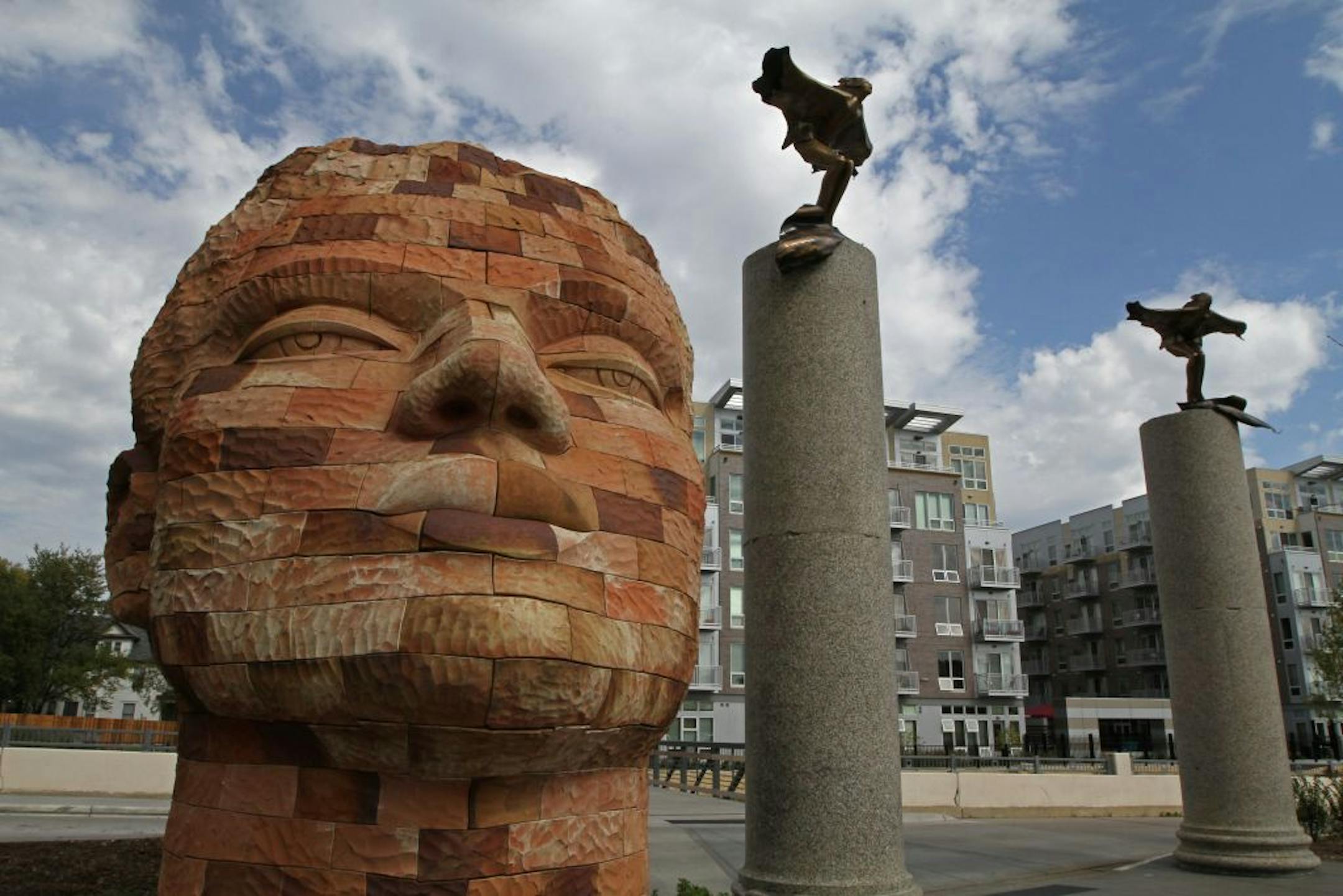
Similar scenes are playing out across the country as cities turn to public art to fuel a sense of fun or drama that enlivens urban streets, parks and transit stations.
In St. Paul, $4.5 million in public art is being touted as key to the ambience envisioned for the Central Corridor light-rail line and its terminus, Union Depot. With the help of a hefty injection of federal money, each of 18 stops along University Avenue will feature original art appropriate to each site, such as portraits of black leaders including Roy Wilkins at the Victoria Avenue stop to evoke the old Rondo neighborhood.
From Lilliputian statues along the High Line walkway in New York to the giant silver sculpture affectionately called "The Bean" in Chicago's Millennium Park, the idea of using art to create appealing urban environments is gathering steam, even in a tight economy.
In fact, economic development is being used as a pro-art argument, as other Midwest cities including St. Louis, Kansas City and Des Moines look to Chicago's investment in art as a boon to tourist dollars.
"Public art is about making a space special and memorable," said Josh Collins, communications manager for the Ramsey County Regional Railroad Authority. "It gives people a sense of community and pride. They're not just walking through some place. They're walking through a great place they'll want to come back to and tell their friends about."
Private money for 'public' art


