

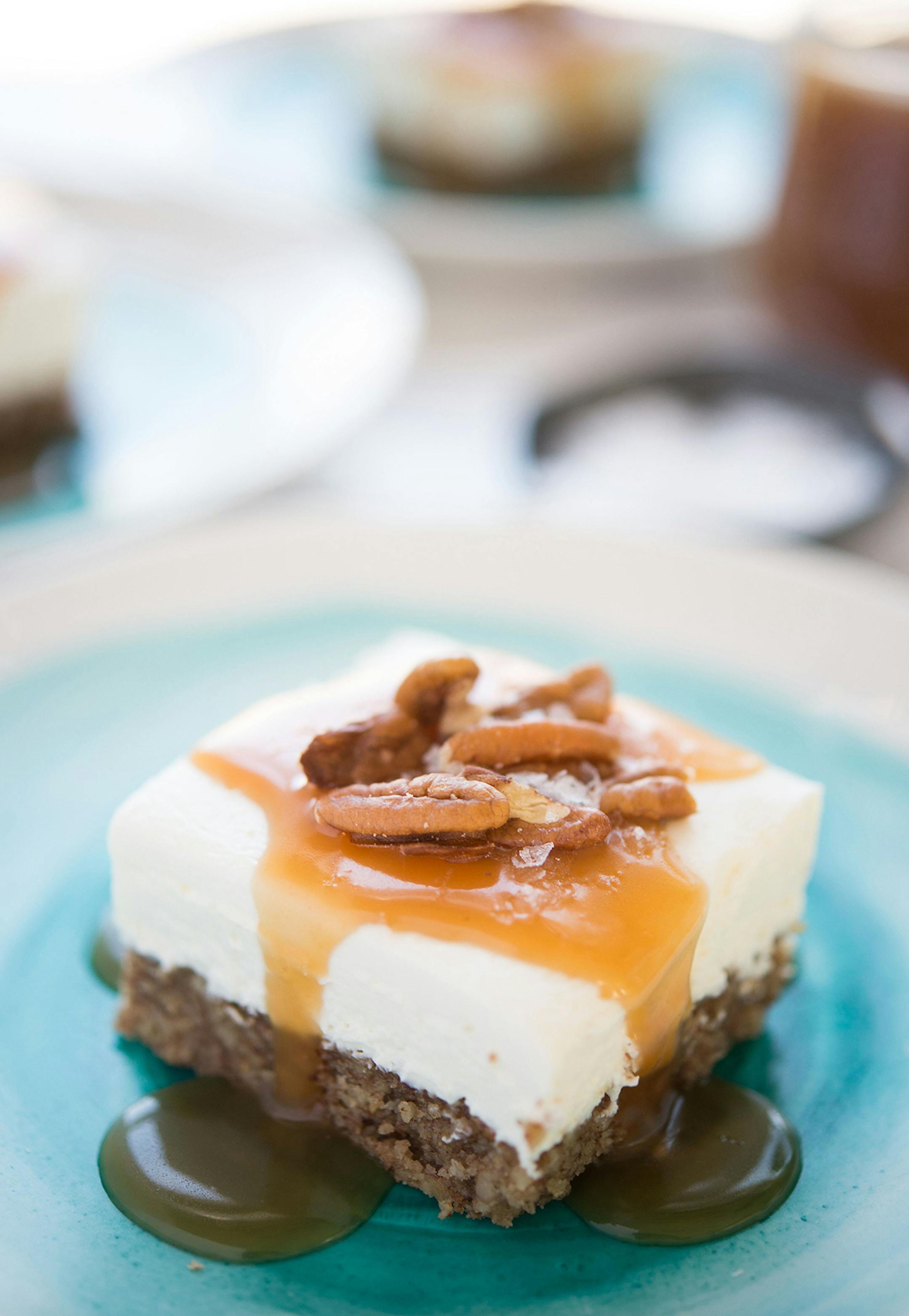
It's time you get to know labneh. And if you're already in the know, it's time you use labneh to make cheesecake bars.
Labneh is cheese made from strained thick yogurt. It's commonly eaten for breakfast with olive oil and bread in Mediterranean and Middle Eastern countries. At stores you'll find it in the refrigerated section, sometimes labeled as "yogurt cheese." But if you don't see it there, it's very simple to make your own.
The texture of labneh is comparable to thick yet spreadable cream cheese, and the flavor is slightly saltier and a tad more sour-tasting. But the similarities are enough that labneh makes a natural substitution wherever you'd typically use cream cheese: on bread and bagels, in dips, spread over crackers with chutney or jam, and stirred into hot pasta.
Last but certainly not least is the use of labneh in these updated cheesecake bars that are sophisticated, but still approachable. They require three distinct steps: make the crust, make the filling and make the sauce. But don't worry about any of these steps being fussy — the no-bake filling simplifies the process and also helps ensure that the probiotic benefits of the labneh are not destroyed with heat. Just be ready to wait for everything to cool, which will require a special sort of restraint that is definitely worth it in the end.
Salted caramel sauce is a natural fit to complement the creamy filling and pecan crust. You will have more than enough to garnish these bars, so you can store leftovers in a jar in the refrigerator, covered, up to a month. And remember, the addition of honey to the sauce adds a depth and complexity that will draw the "ooohs" and "aaahs" you've been waiting for.
Labneh Cheesecake Bars With Salted Honey Sauce
Serves 9 to 12.
Note: Labneh is a type of Middle Eastern fermented yogurt cheese – comparable to cream cheese – that has been strained to remove the whey. If you can't find it at a store, you can easily make your own. The recipe below makes just the amount you will need for these cheesecake bars.
For the pecan crust:


