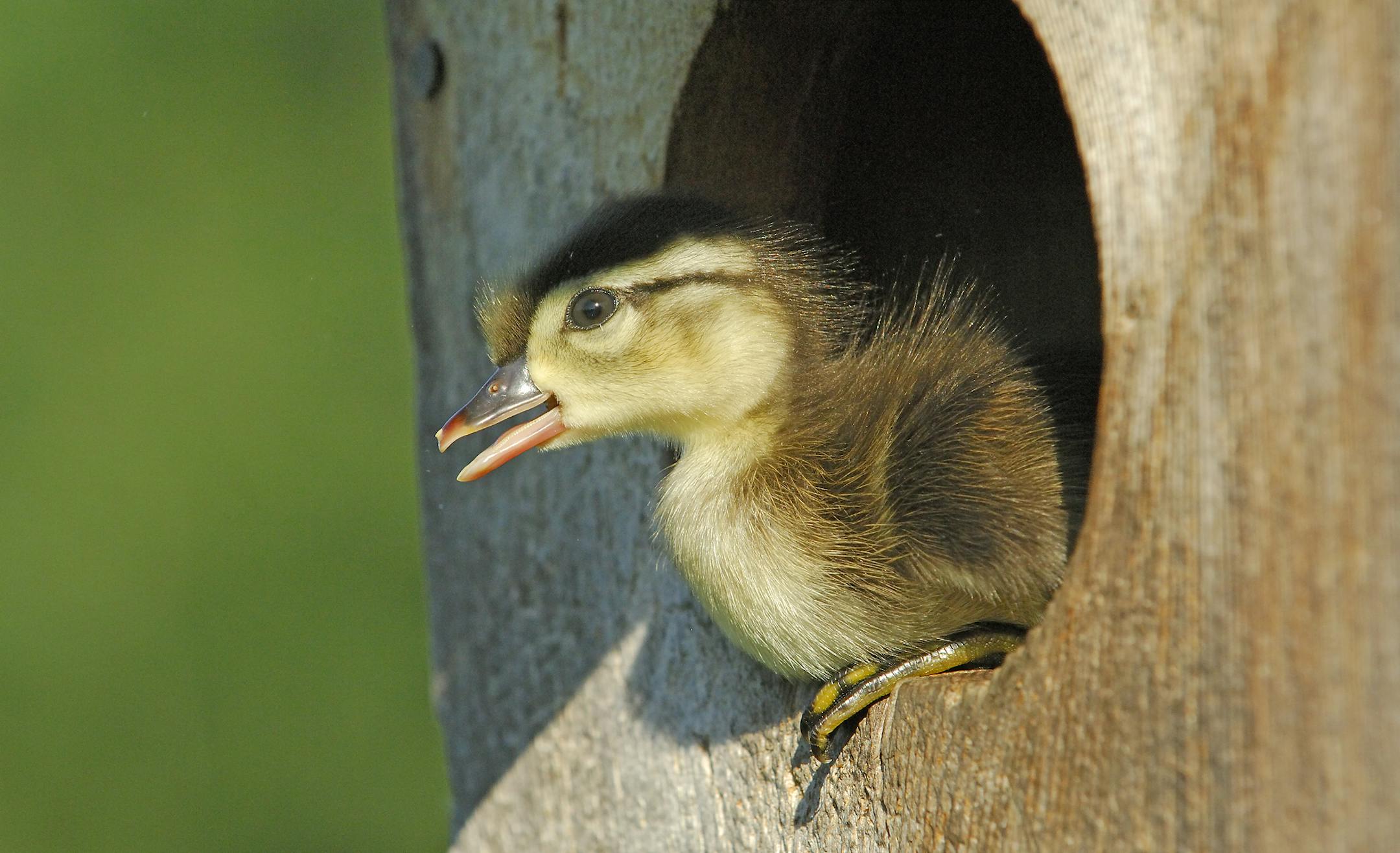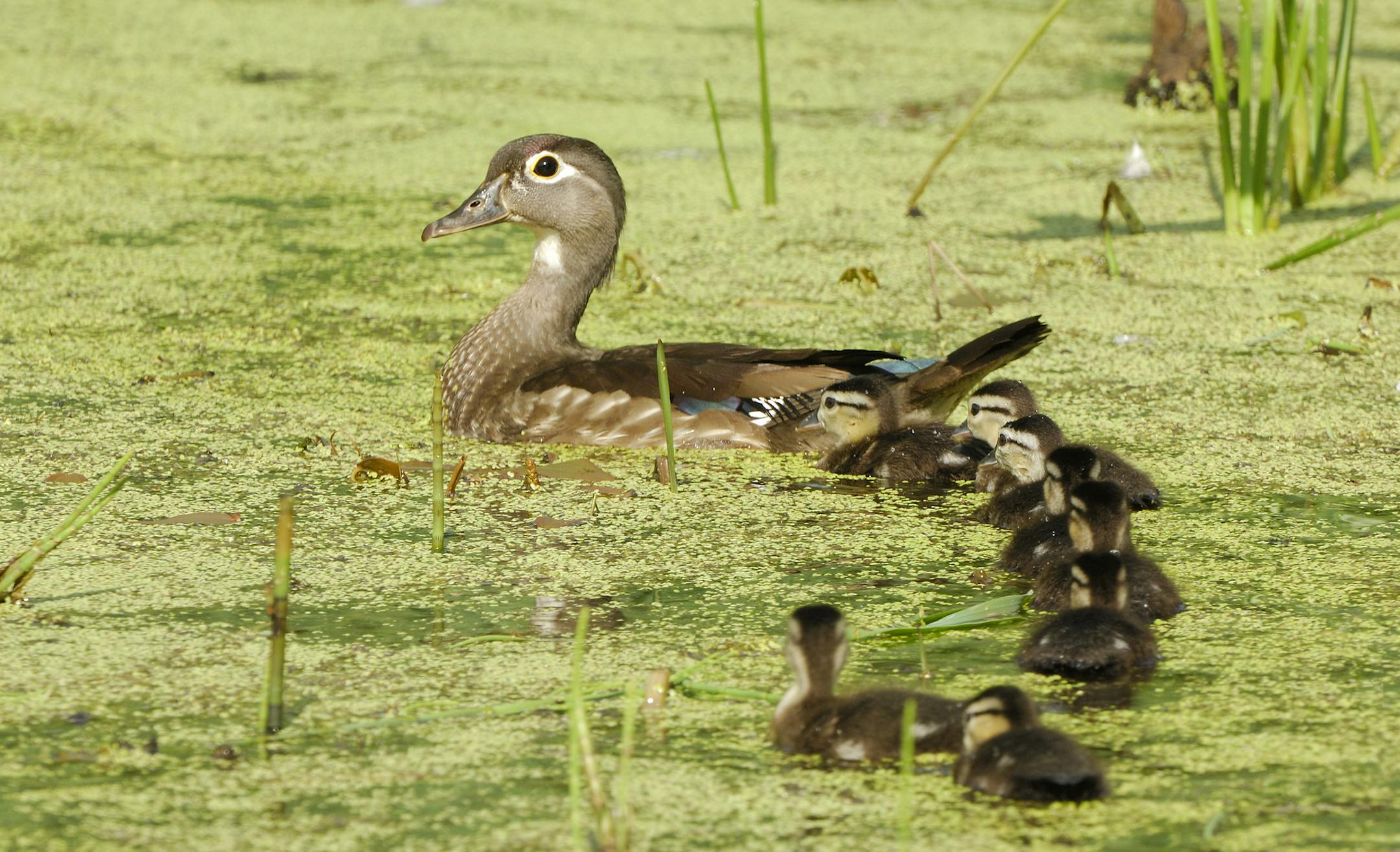
BRAINERD – Last week, a brood of 1-day-old wood duck ducklings — 11 in all — leapt into life from a wood duck nesting box I placed on my acreage located a few miles south of town.
It was gratifying to know I had provided a safe haven for the hen wood duck while she had spent the past 30 days or so incubating her clutch.
But all was not rosy on the Marchel property.
Of the 13 nesting boxes I monitor on my land, the hen wood duck occupied one of only four boxes being used. Two of those boxes were occupied by hooded mergansers, the other by a hen wood duck. Last spring only five of my wood duck nesting boxes were used.
During a typical spring about eight or nine of my boxes are occupied. We all know this spring, weather-wise, was far from typical. My ponds were ice covered into early May. Was that the reason for my lack of occupied nesting boxes? Is the fact that the Minnesota's wood duck bag limit was raised from two birds daily to three starting in 2011 a reason. Or does the fact the duck hunting season in Minnesota has opened a week earlier the past two seasons, resulting in a higher kill of local wood ducks, have an effect on the number of birds returning in the spring?
I realized, of course, two years of limited nesting of wood ducks on my land is no reason to jump to conclusions of any kind. Some research was in order.
My first contact was Roger Strand, of New London, Minn. Strand has placed and maintained wood duck nesting boxes dating to the early 1950s. He is the editor of Newsgram, a publication produced three times per year by the Wood Duck Society. Strand monitors about 100 wood duck nesting boxes in the New London area and is known nationwide as an authority on wood ducks.
"Despite the late spring thaw, about the only change I've noted this spring is wood duck nesting is about three to four weeks behind," Strand said.