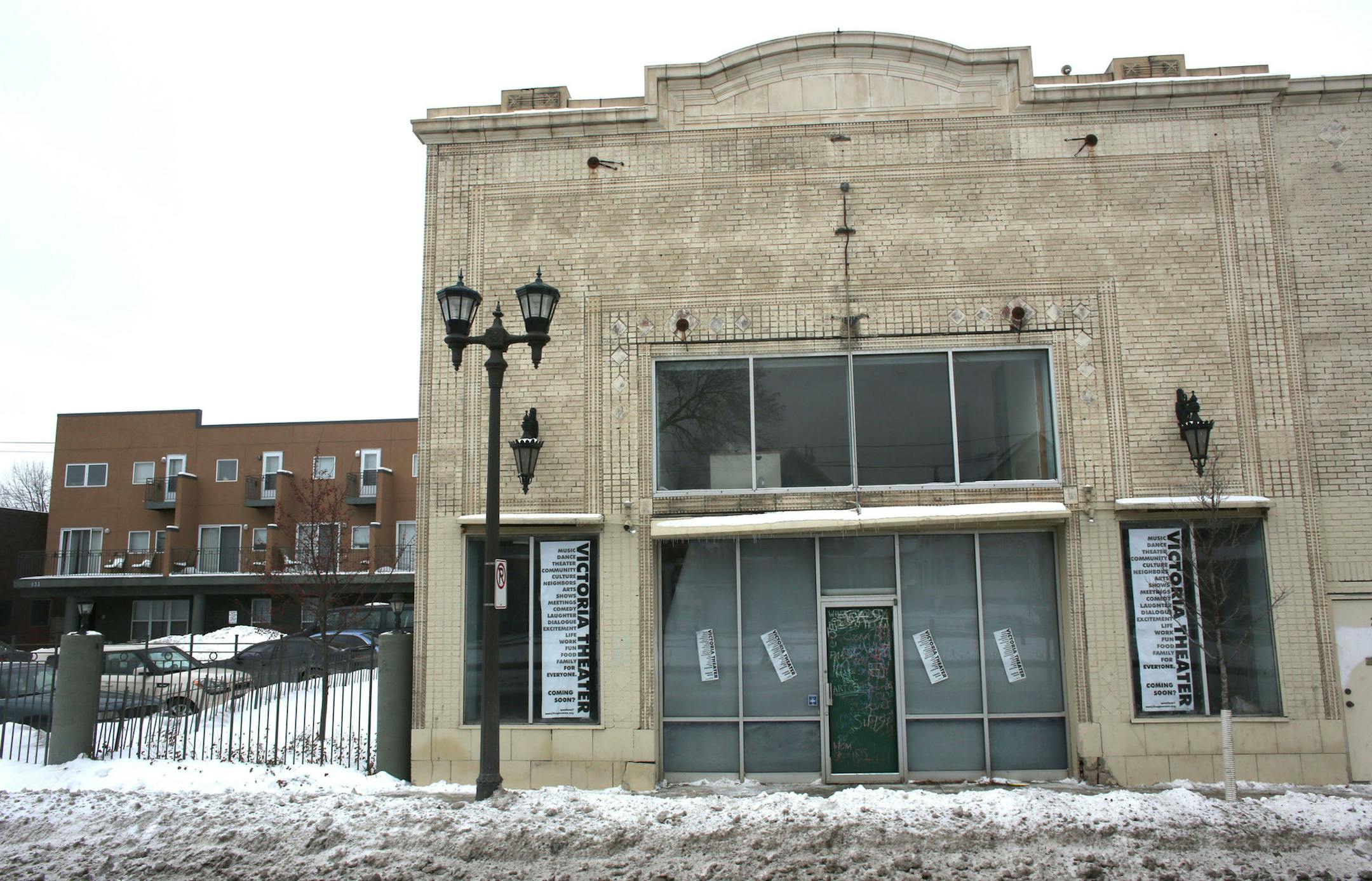
Behind its Beaux Arts-style brick facade overlooking University Avenue, the Victoria Theater is a gutted shell of its former self, a long silent cabaret and movie house still looking for redemption.
But if a consortium of St. Paul-based arts groups can succeed in buying the 99-year-old building and restoring it as a community music and cultural center, it could make "the name Frogtown … synonymous with fun," neighbor Denise Mwasyeba said.
The Victoria Theater Arts Initiative started down that path Thursday as it announced the theater's purchase by the Twin Cities Community Land Bank, a nonprofit that will hold the property for 18 months in hopes that the consortium can raise enough money in the meantime to buy it for redevelopment.
"This is just a beginning, so we hope that all of you will continue to support this endeavor in any way that you can," City Council Member Dai Thao told a group of supporters who gathered inside the unheated building. "Let's co-imagine a vibrant theater full of energy, full of life, full of mystery and creativity."
Frogtown leaders believe the Victoria is just what they need to turn around the image of their often maligned community, along with other proposed and recent developments such as the Frogtown Farms nature sanctuary project, the Frogtown Square retail and apartment complex at University and Dale, and the Daily Diner Frogtown.
The Victoria was built in 1915 to show silent movies, and during Prohibition it became a nightclub that offered dancing and floor shows. Its heyday ended in the 1930s, when it became a lighting store, which it remained into the 1980s.
But in its relatively short time in the spotlight, the Victoria made history. It's one of the rare remaining local designs of Franklin Ellerbe, whose St. Paul architectural firm became one of the largest in the country. It was raided at least a few times by the feds for illegal alcohol sales.
And its house band, the Victoria Cafe Orchestra, recorded a song in 1927 — "Moonshiner's Dance" — that eventually found its way onto the Anthology of American Folk Music, a collection of recordings that some consider the most important in U.S. popular music. The record was a big reason why the City Council named the Victoria a heritage preservation site in 2011.