

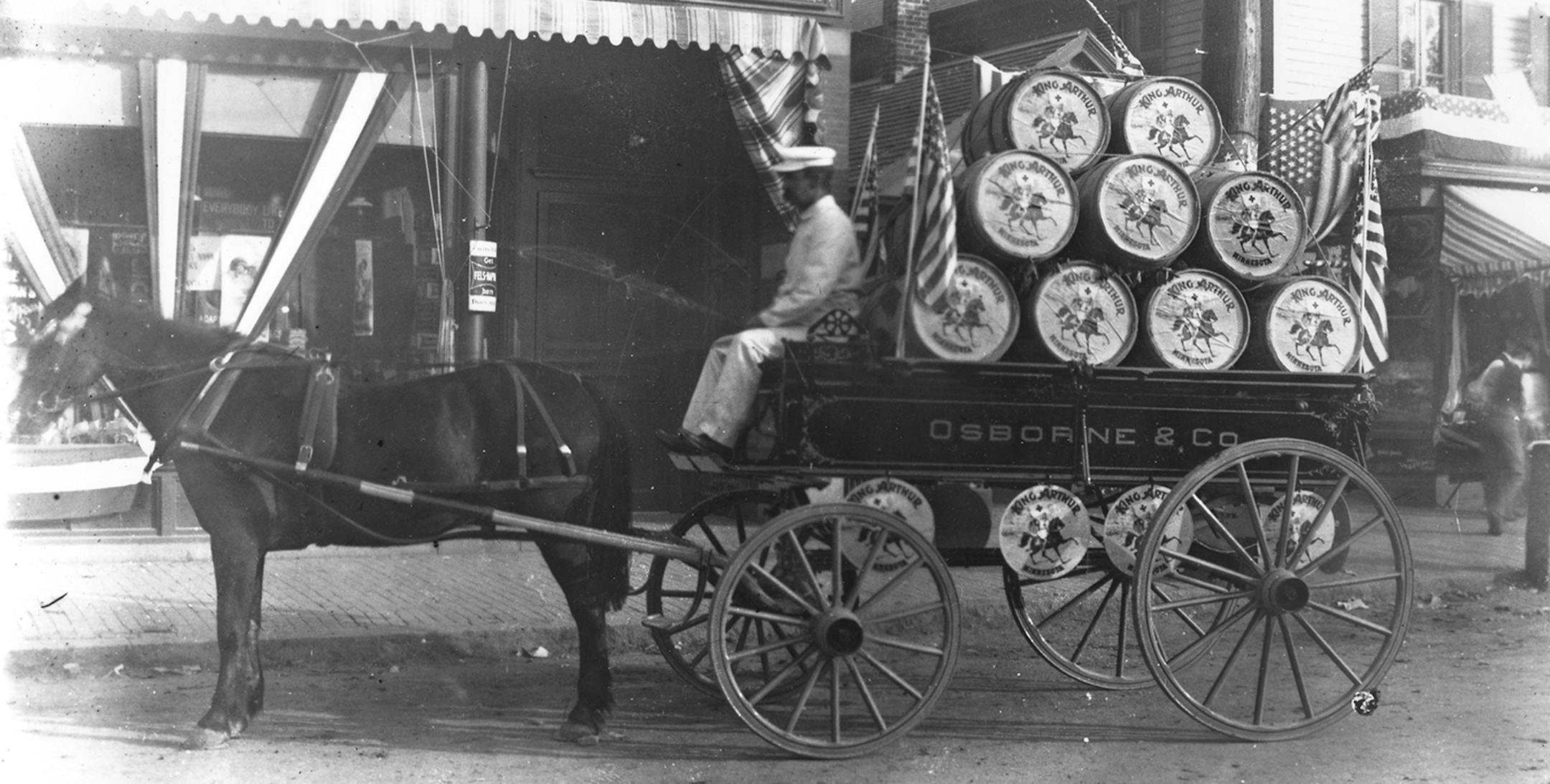
The 226-year history of King Arthur Flour is proudly displayed throughout its complex in Norwich, Vt. What appears to be missing is an actual flour mill.
Indeed, King Arthur Flour has never actually made flour. It has instead purchased flour from sources closer to the wheat itself — England, at first, when the company was based in Boston, and now the western and Midwestern U.S., including Kansas, Colorado and North Dakota.
Today its flour is all made from U.S. wheat, said company spokeswoman Katie Walker; none is from genetically modified wheat. The company has been employee-owned for 12 years and is a regular workplace award winner.
King Arthur has a historic connection to Minneapolis, which of course was the flour milling capital of the world from the late 19th century well into the first half of the 20th. A company director visited Minneapolis in 1889 and struck a deal to buy some of the flour made by Northwestern Consolidated Milling, which made Ceresota flour. A short time later, some of the company's flour was distributed in Boston in barrels stamped with the words "King Arthur Minnesota" surrounding the familiar flag-carrying knight on horseback.
In Minnesota, General Mills' Gold Medal Flour and Pillsbury still inspire loyalty among bakers.
But David Cargo, vice president of communications for the St. Paul Bread Club, an informal group of Twin Cities area bread enthusiasts, said King Arthur is popular among the club's bakers for its consistency and relatively high protein content. Protein, specifically gluten, is what traps the gas given off as yeast digests the sugars in wheat, causing bread to rise.
BILL MCAULIFFE


