For more than 30 years, I have had the honor of baking with many Russians. Of the many cultures I've worked with, no group has been more connected to their food. Since the fall of the Soviet Union, several cookbooks have been released that illustrate how to prepare Russian fare, but until now there has not been a volume that captures the spirit of the people who do the cooking.
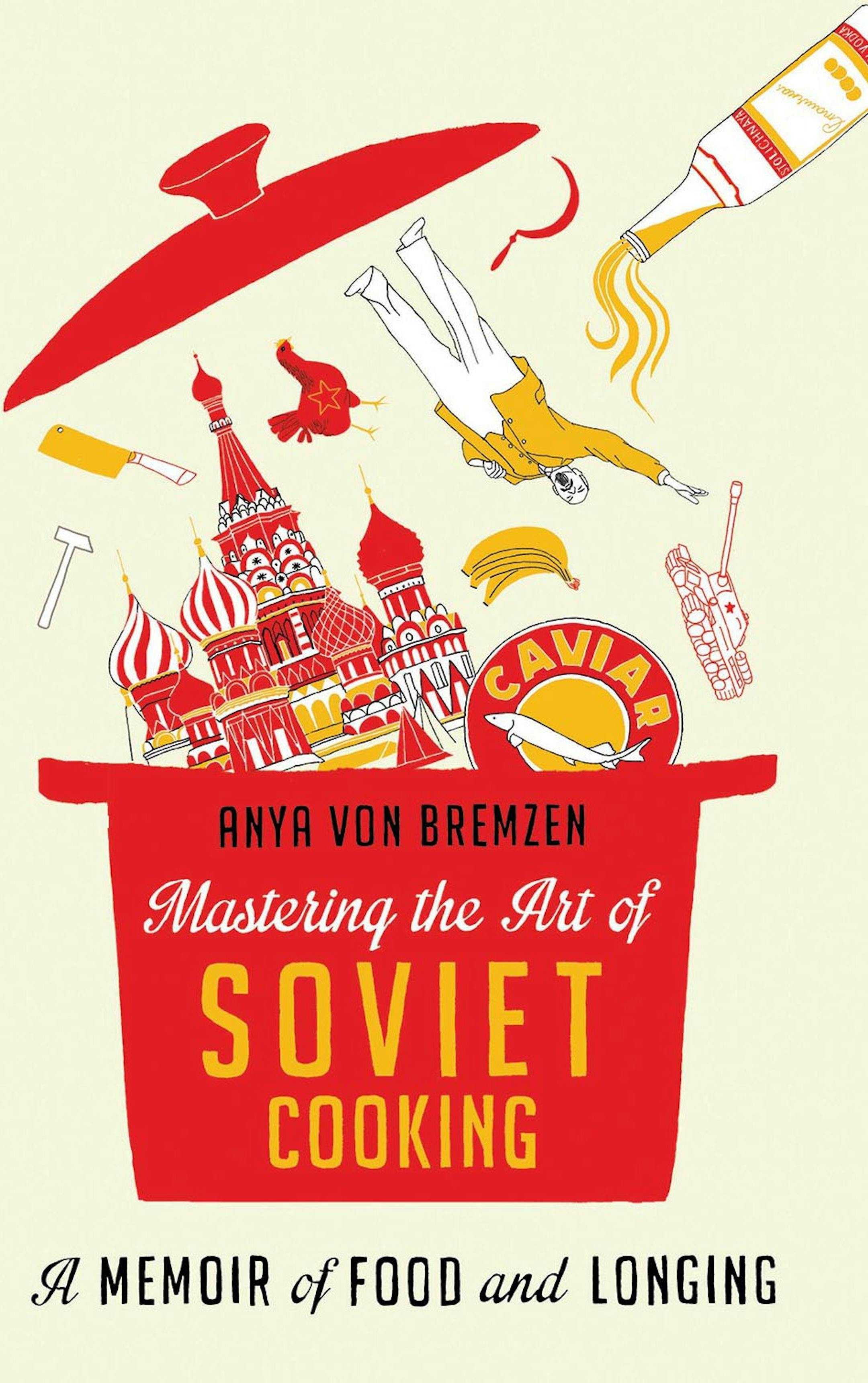
Anya von Bremzen has done that with "Mastering the Art of Soviet Cooking: A Memoir of Food and Longing." Though she has written numerous books, this current work serves as a companion to her 1990 award-winning cookbook, "Please to the Table," an almanac-sized resource that contains hundreds of recipes spanning 11 time zones and 15 former Soviet Republics. For those of us immersed in Russian cuisine (at Saint Agnes Bakery, where I work, we prepare all manner of Russian breads and pastries), this recent project makes her Russia's answer to Betty Crocker.
"Mastering the Art of Soviet Cooking" is presented as a tragi-comic memoir of feasts, famines and three generations, but for me it's more like a collection of fantastic stories that you hear only when sitting on a bar stool or in a church pew.
The template for her latest work is unorthodox. Each chapter starts off with Von Bremzen and her mother in a small apartment kitchen, trying to replicate meals that pay tribute to the memories of the Soviet era, decade by decade. They long ago emigrated from the Soviet Union to the United States. In most instances, these kitchen sessions segue into accounts of Soviet history, where Von Bremzen uses her family as ambassadors who walk us across a time line that spans an entire century. We hear stories about crowded communal apartments and kitchens, about drinking rituals and the nation's cookbook, "The Book of Tasty and Healthy Food." And we hear about food shortages and famine.
Her mother, Larisa, sets a dark tone when describing Stalinist Moscow in the '30s. By the '70s, we visit the Ministry of Health's Mausoleum Research lab, where Von Bremzen's father worked with a team of 150, whose sole responsibility was to keep Lenin looking immortal in his tomb.
For the historian, Von Bremzen offers remarkable — and personal — insight about the Cold War, its politics, military strategy and the human suffering that accompanied it. "As the first Soviet generation to grow up without ruptures and trauma — no purges, no war, no cathartic de-Stalinization, we belonged to an age when even cats on the street recognized the State's epic utopian project as farce. We, Brezhnev's grandchildren, played hopscotch on the ruins of idealism," she writes.
Her analysis is enlightening, including one comparing the lines of people at the Lenin mausoleum, at Stalin's funeral and at the American National Exhibit in Sokolniki Park, where babushkas wait for free samples from Pepsi.
In one touching moment, a ban on former citizens is lifted and Von Bremzen and her mother are finally allowed to return home for a visit. Over a dozen years have passed since either of the women has seen Anya's father. The trio's reunion is bittersweet as a new character surfaces.