

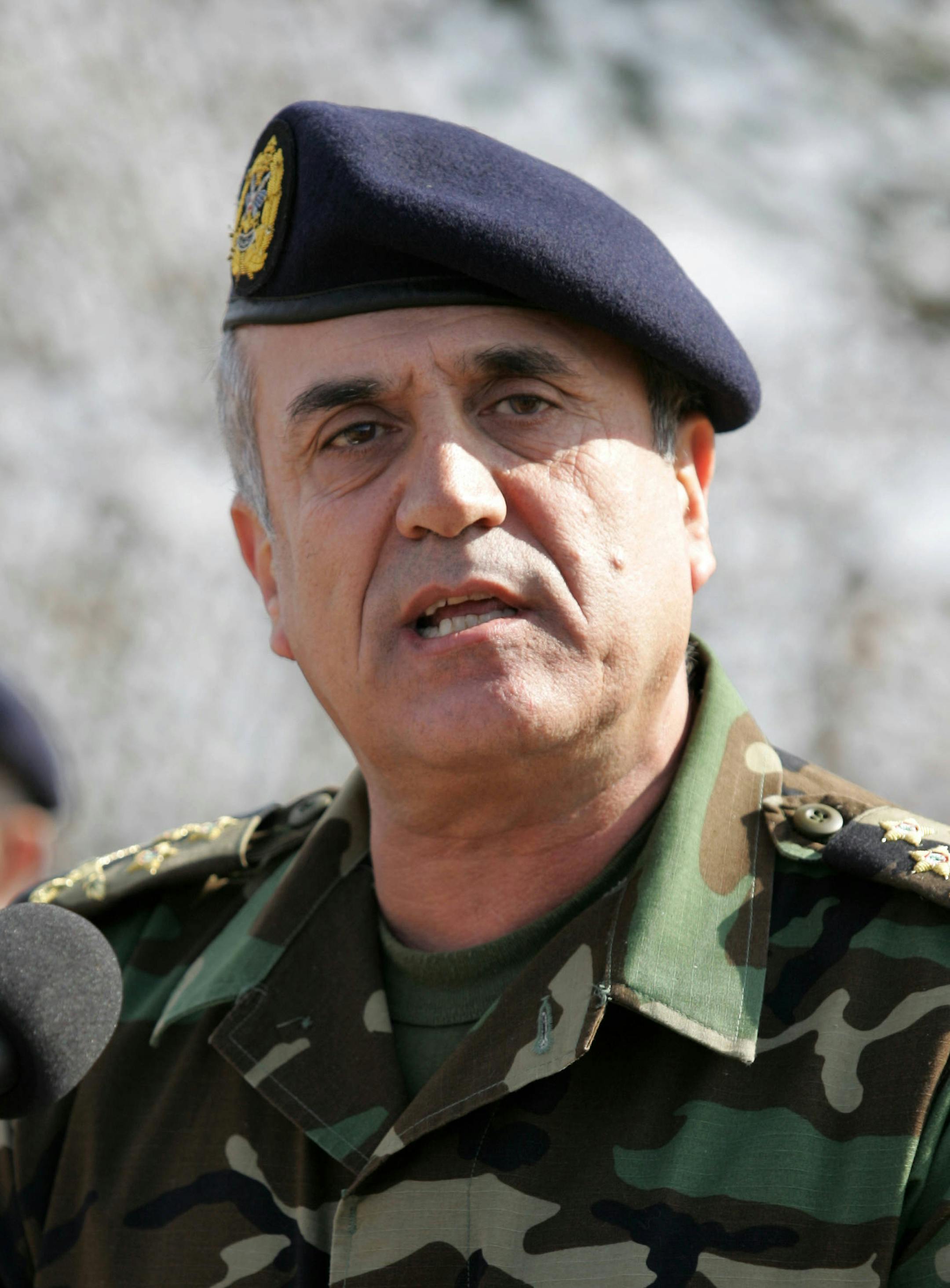
Compromise candidate
Suleiman, 59, is seen as a neutral figure in a country where nearly every politician is considered either in the pro- or anti-Syrian camp. He is also seen as strong enough to ensure neither side dominates the other. For many, that has made him the ideal compromise candidate to become president, a post that was left dangerously empty after Emile Lahoud's term ended last week with Lebanon's divided factions unable to agree on a successor.
Political tempering
Suleiman, was appointed head of Lebanon's army in 1998 and was considered a supporter of Syria, which dominated the country through thousands of troops stationed in Lebanon. But as Damascus' power diminished, Suleiman emerged more independent.
Earning respect
Suleiman, a Maronite Catholic, has won praise for keeping the army together and deterring violence. He earned admiration over the summer for the army's defeat of Fatah Islam, an Al-Qaida-inspired militant group that fought in a Lebanese Palestinian refugee camp. He also has distanced himself from Hezbollah, which once had close cooperation with the military.
Maintaining security
He called on his 56,000-strong army to ignore the politics "and listen to the call of duty" amid the political deadlock over replacing Lahoud. "The nation is at stake and you are its defenders. Do not be lenient and do not be inactive," he said.


