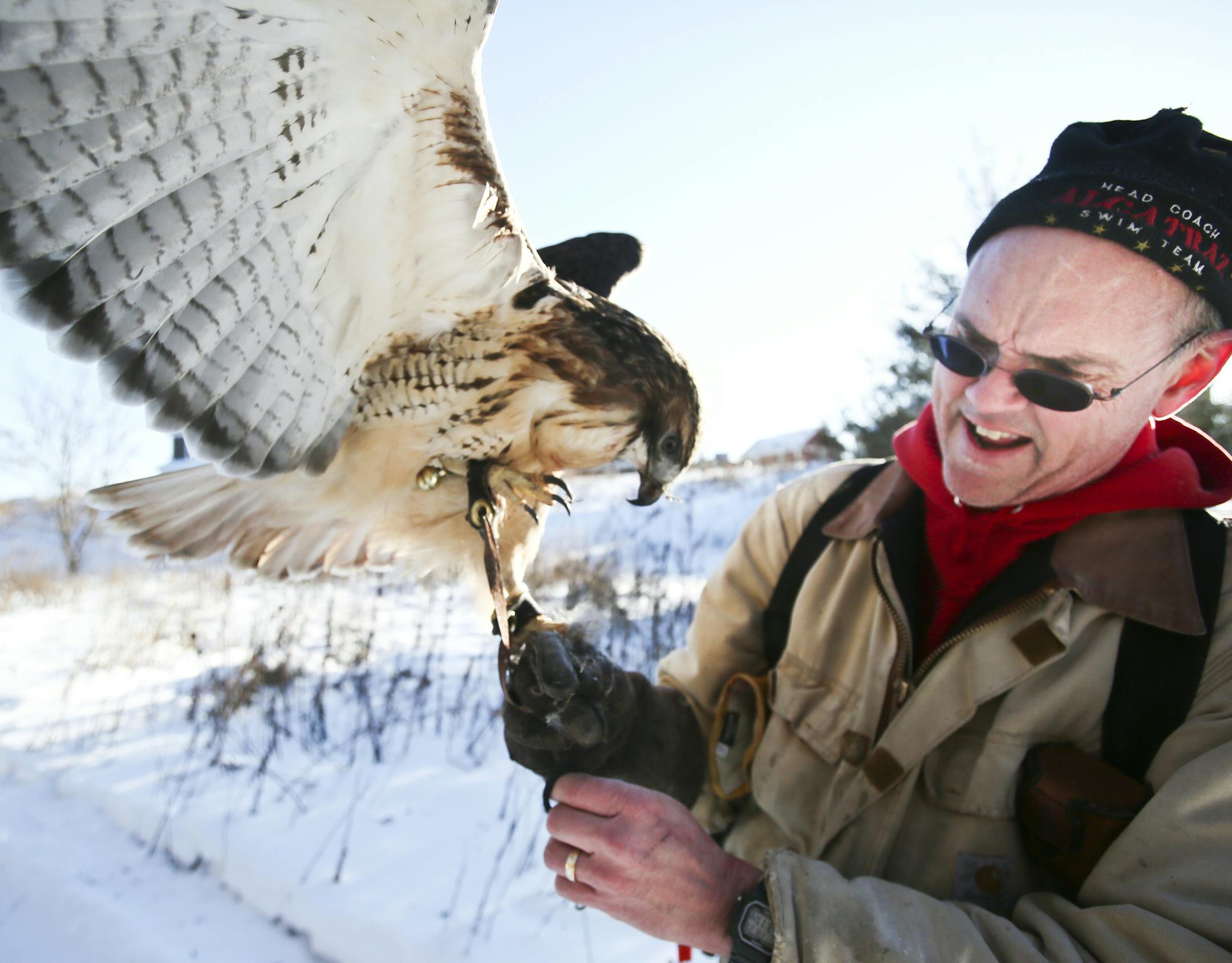
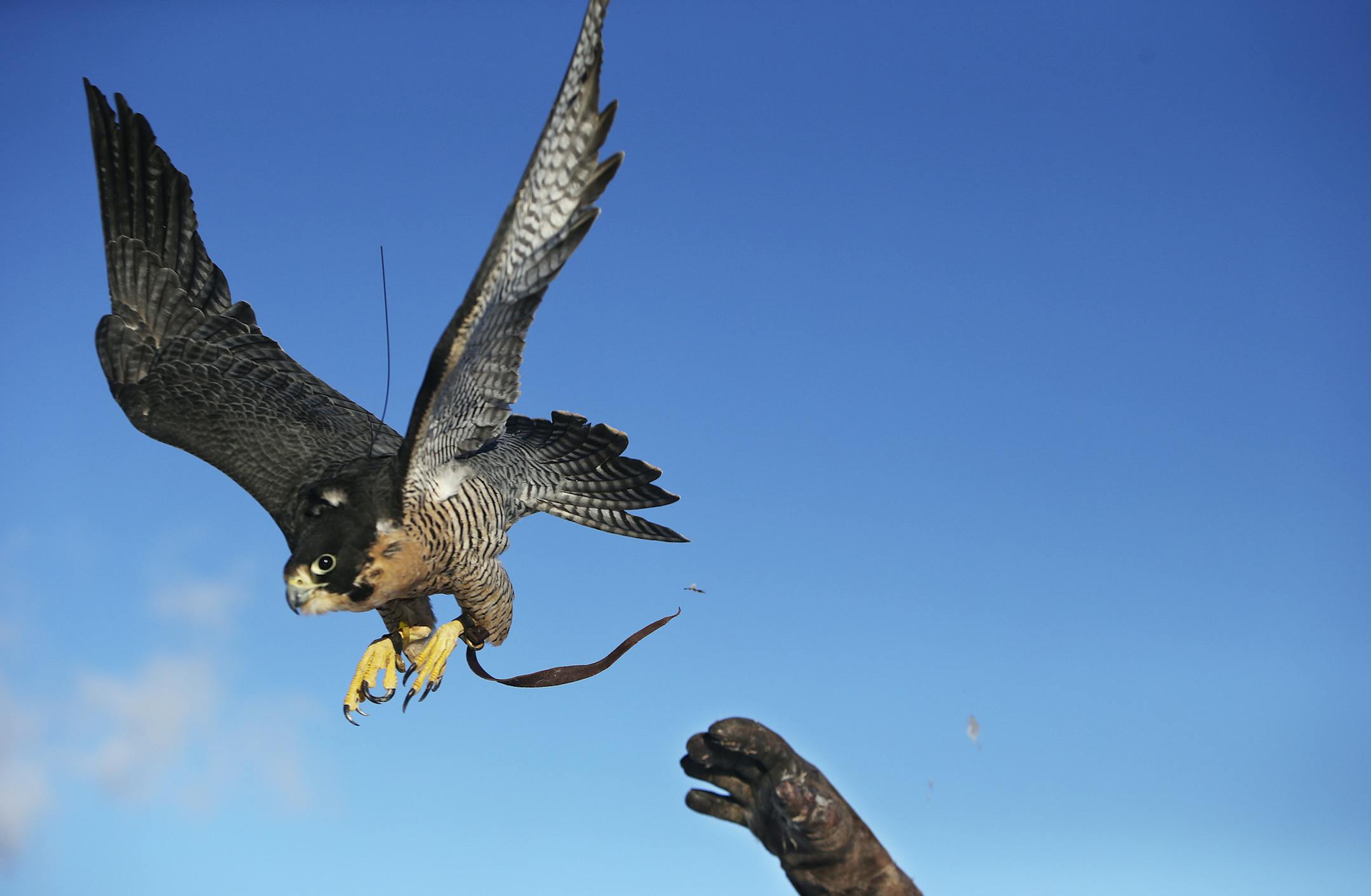
The other day, on the edge of a wooded ravine covered with shin-deep snow, Andy Weaver cast his red-tailed hawk from a gloved hand, then watched as the bird gained altitude and circled a brief moment before perching high in a bare-limbed tree. This was in the east metro, and expensive new homes encircled the ravine, one color-coordinated to the next, each designed to suggest a time long past.
Which was appropriate, because Weaver, one of Minnesota's cadre of about 60 licensed falconers, was practicing a sport as ancient as any, dating perhaps to 800 B.C.
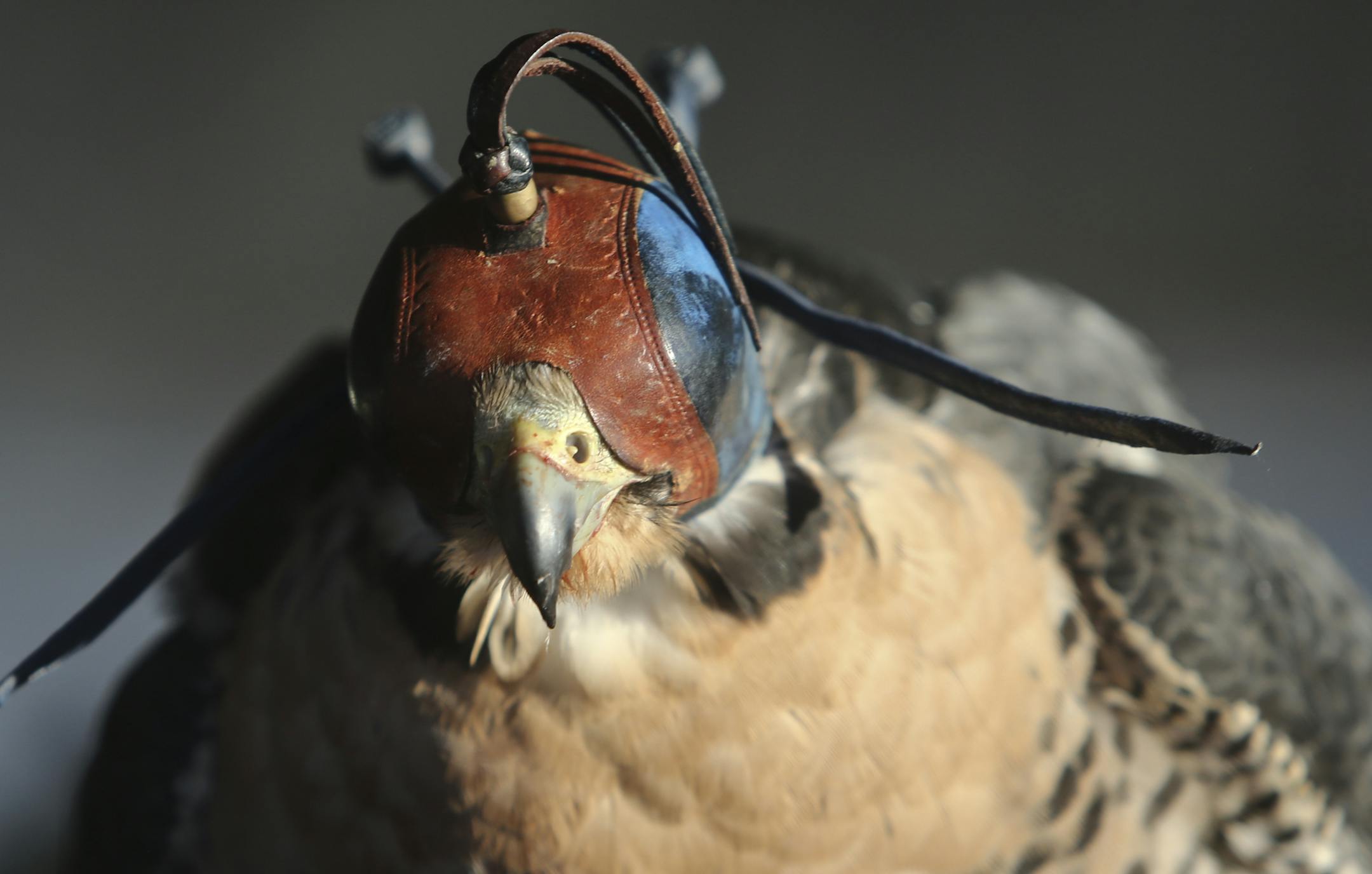
"When we're hunting pheasants, I'll bring my dogs to find the birds in heavy cattail sloughs and get them into the air,'' said Weaver, 52, a biology teacher at Stillwater High School who also hunts with a peregrine falcon. "But on days like this, when we're hunting rabbits, I'm the one responsible for finding and moving the game.''
Once the province exclusively of kings and emperors, falconry today is practiced by people smitten not by class or title — Weaver's soiled Carhartt jacket and bibs indicated as much — but by all things bird-related.
This includes the care and feeding of these big aerial predators, and also their training and conditioning.
But perhaps most seductive to the sport's practitioners is the mystery of flight itself, particularly the type of crash-defying dive that Weaver's redtail was about to undertake.
Ho! Ho! Ho!
Weaver had kicked up a rabbit, a cottontail, and the circle of life — including, perhaps, death — was about to be played out in this suburban woodlot, just as it is every minute of every day throughout Minnesota, sometimes in plain sight, other times, as now, amid the cloistered bramble and understory of thick woods.