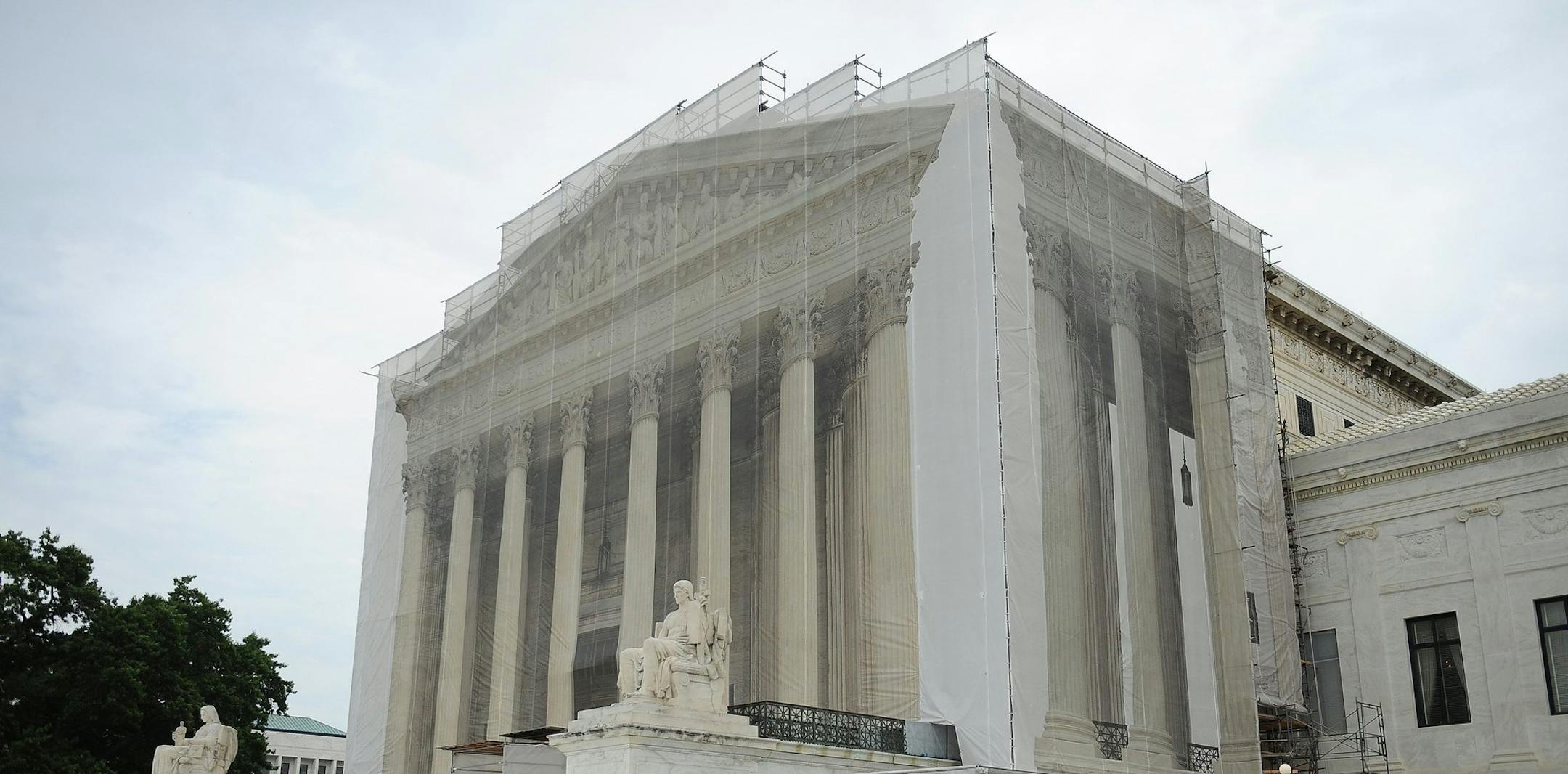
supreme court
new case on religion in public
The chairman of the local Baha'i congregation concluded his prayer with "Allah-u-Abha," which loosely translates to "God the All-Glorious." A Jew offered a prayer speaking of "the songs of David, your servant." And a Wiccan priestess, mindful of her venue in the town of Greece, N.Y., thought that Athena and Apollo were apt deities to call upon.
But they were the exceptions. Almost every other "chaplain of the month" during a decade of town board meetings in this Rochester suburb of Greece, N.Y., was a Christian, and more often than not called on Jesus Christ or the Holy Spirit to guide the council's deliberations.
Susan Galloway, uncomfortable with the sectarian prayers, and Linda Stephens, an atheist, had objected to sitting through the invocations after the board changed from its old practice of beginning the meetings with a moment of silence.
A federal appeals court said last year that such a "steady drumbeat" of Christian invocations violates the Constitution's prohibition against government endorsement of religion. Now, the issue is to come before the Supreme Court on Wednesday.
Few phrases in the Constitution have divided Supreme Court justices quite like the First Amendment's Establishment Clause, which says simply: "Congress shall make no law respecting an establishment of religion." What has proven complicated is defining the boundaries of religion's inclusion in public life. Issues such as prayer in public schools, accommodation of certain religious practices, and the display of crosses, crèches and other religious symbols have produced a series of constitutional tests for the court and case-by-case rules that please few.
Washington post
Detroit
mayoral race one piece of puzzle
If people along the streets of Detroit seem less than consumed by the prospect of choosing a new Mayor Tuesday, perhaps it is the barrage of distractions: the governor who has been testifying about Detroit's descent into bankruptcy; the appointed emergency manager who has brought in his own team to run City Hall; the long list of questions about the fate of this city's artwork, its streetlights, its tens of thousands of empty buildings.
Yet Detroit's mayoral election is one more piece of a puzzle unfolding here as a city that has long wrestled with dysfunction and debt seems to be throwing everything up in the air and searching for a way to start over. Some in Detroit say the choice is stark: traditional Detroit politics vs. some new, more technocratic way forward.