

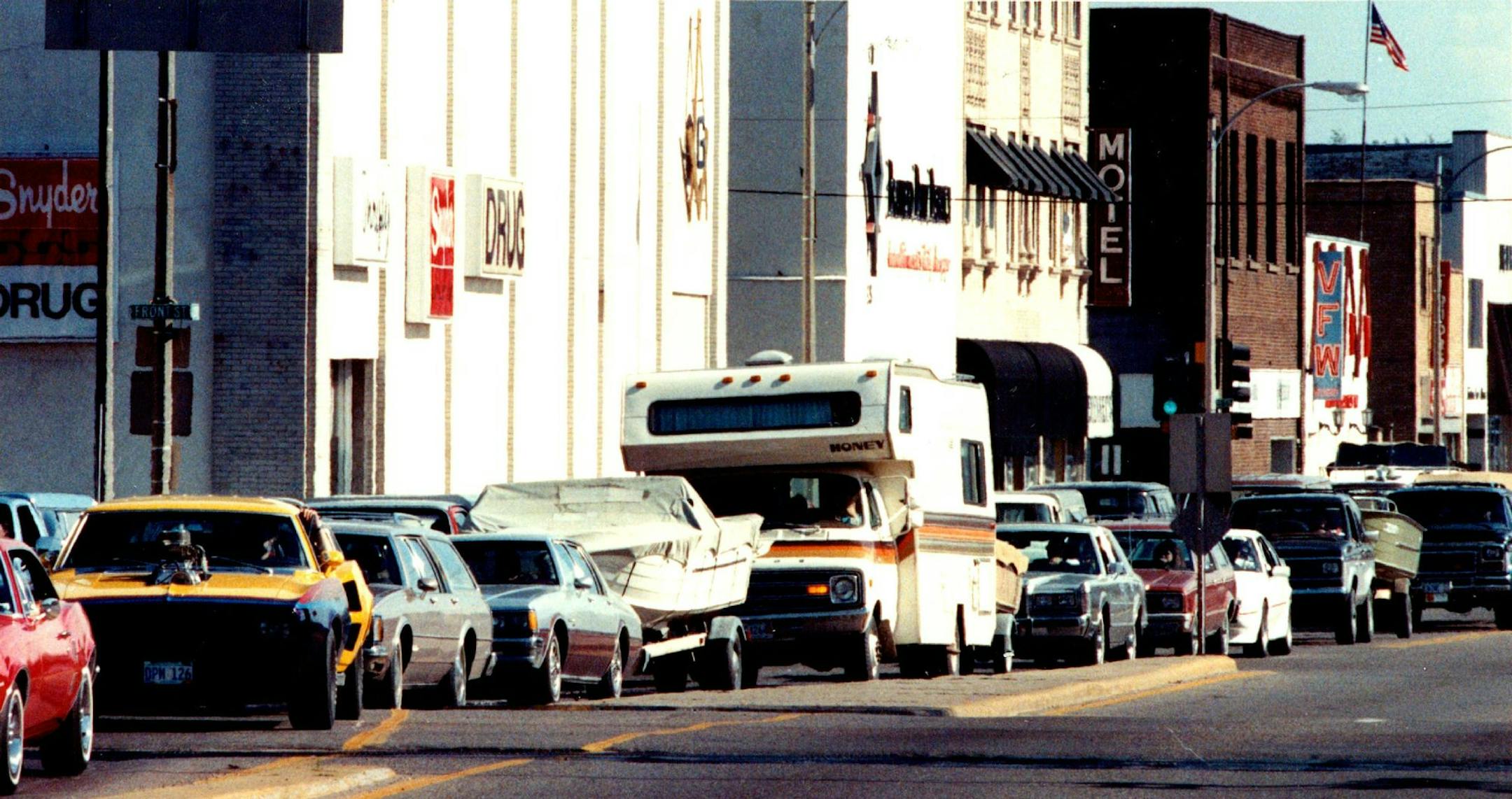
Boat. Boat. Boat. Car. Pickup. Minivan. Boat.
The stream of northbound traffic would start on Thursdays, earlier when there was a holiday. It was a trickle at first, building into Friday, when it became an all-day, one-way parade.
Boat. Camper. Car. Camper. Boat. Boat.
As a young boy I would watch the traffic from a hill overlooking Hwy. 169. My family lived in that nebulously defined geographic territory that weekend warriors from the Twin Cities refer to as "Up North." It's a region that, depending on your starting point, stretched anywhere north of I-694 to the Arctic Circle.
Every metropolitan area in America has its recreational outlets — the beaches, mountains, rivers and forests where big-city denizens go to forget they're the rats in the rat race. Lakes are the escape of choice for Twin Citians. And in this Land of 10,000 Lakes, only a handful are large enough to show up on most maps.
One of those was my lake. I grew up along the northwest shore of Lake Mille Lacs, a few miles from the small village of Garrison. Mille Lacs covers more than 200 square miles of surface, a fact that I always felt — not knowing how such things are defined — should qualify it as a sea instead of a lake.
Garrison, by contrast, was as small as they come. For most of my childhood, the green signs seen upon entering town read "Population 198" in small letters below the city name. (They couldn't find two more people to make it a round number?) But on those hot summer weekends, the influx from the Twin Cities would boost that total into the thousands. In fact, in the early '90s, Garrison became the smallest town in the world (by whose measurement I may never know) to have a McDonald's, made possible by that sea of urban outdoors enthusiasts who invaded every weekend.
And it really felt like an invasion.


