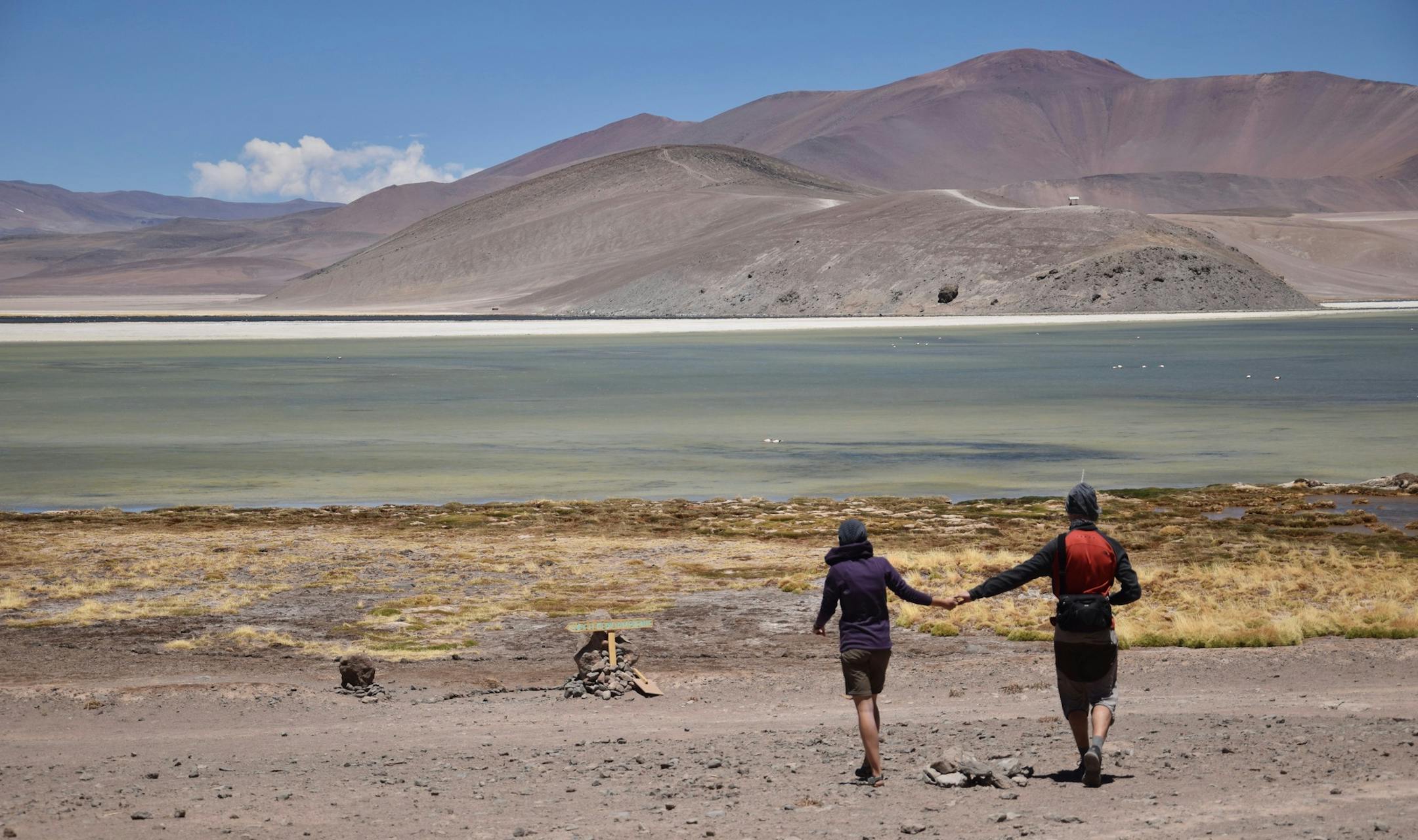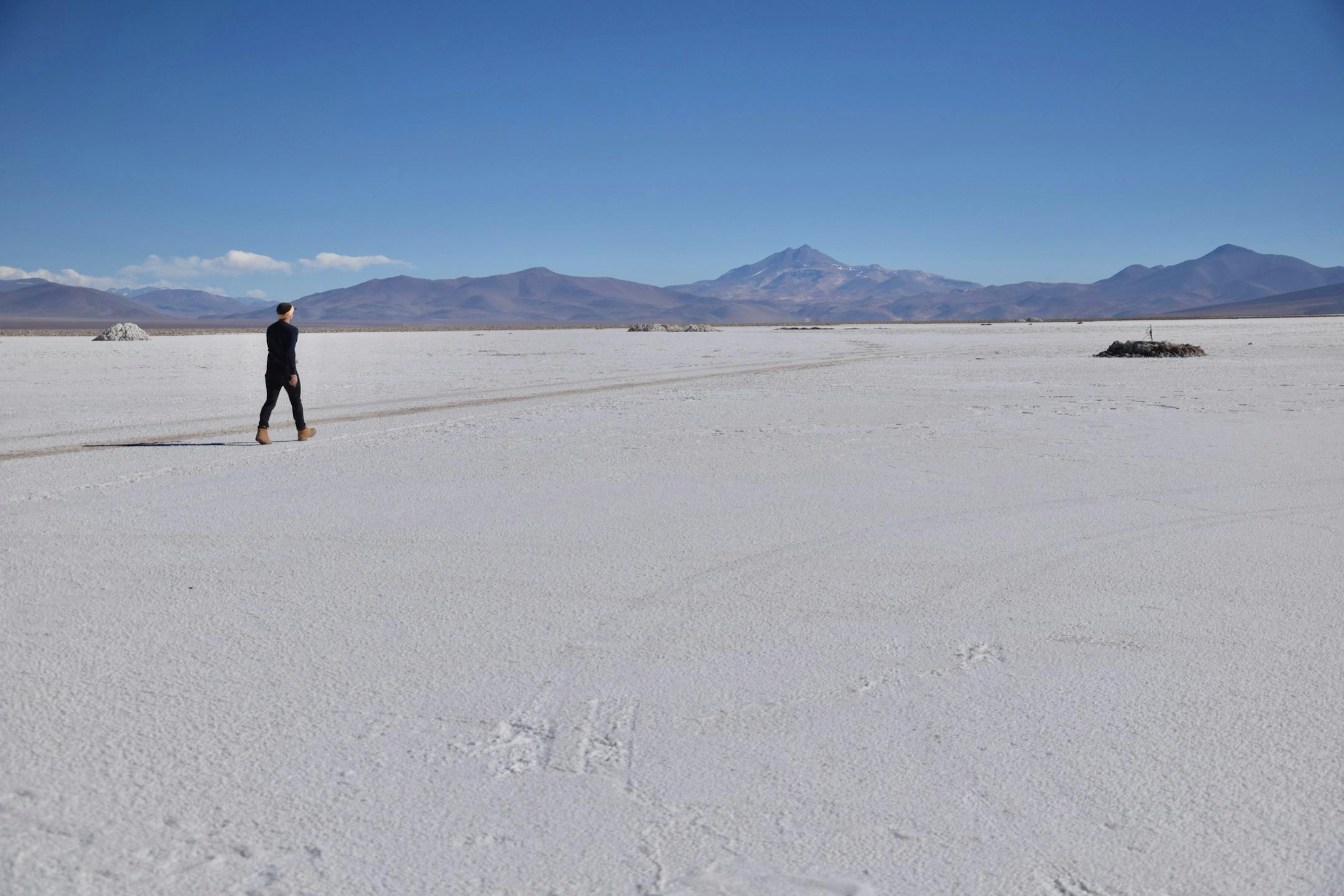
When my plane touches down at the Desierto de Atacama Airport in northern Chile, it feels as if I've been launched out of orbit to some Martian landscape. Aside from the small terminal, there isn't another building in sight amid a panorama of parched earth.
About 15 miles away from the airport, I'm zapped back to reality at the small beach town of Bahía Inglesa, a toothpaste-blue colored bay with pearly white sands, where I enlist the help of local guide Carlos Pizarro, of Chillitrip, to explore the remote southern half of the Atacama Desert.
As we head down roads made of bischofite (a sea salt concentrate), we spot nomadic fishermen harvesting seaweed along wild desert beaches. There are also small port towns such as Caldera and Chanaral, where leather-faced men at waterfront markets sell freshly picked piure (a tomato-red sea creature) and tangy ceviches.
Pizarro takes me for a lunch of shrimp empanadas in the small fishing village of La Caleta on a rugged beach within Pan de Azúcar National Park. Just offshore, on the park's namesake island that looks like a sugarloaf, is a small colony of about 40 Humboldt penguins.
The sea here may be bountiful, but the land is barren and thirsty. This is, after all, the driest nonpolar place on Earth. It hasn't rained in the park in over a year. There are some weather stations in the Atacama that have never recorded a single drop. Pizarro says the area we're visiting is just sleeping for the moment. "It's waiting for the rain," he explains, "but when it comes, you'll see how alive the desert really is."
Sporadic rains every few years cause a desert bloom, when a blanket of pink, white and yellow flowers covers the mountain valleys near the only real city in these parts, Copiapó.
Copiapó sprouted from the desert in the 18th century as a gold boom town. It remains a prosperous copper-mining town to this day. If you've heard of it, it's no doubt because of the 33 miners who were trapped more than 2,300 feet underground at the nearby San José Mine. Their dramatic rescue after 69 days was memorialized in a 2015 movie staring Antonio Banderas.
Despite all the attention, this southern patch of the Atacama Desert has never really caught on with tourists. I've flown into Copiapó's airport to find out why, and to try to discover what everyone else is missing.