

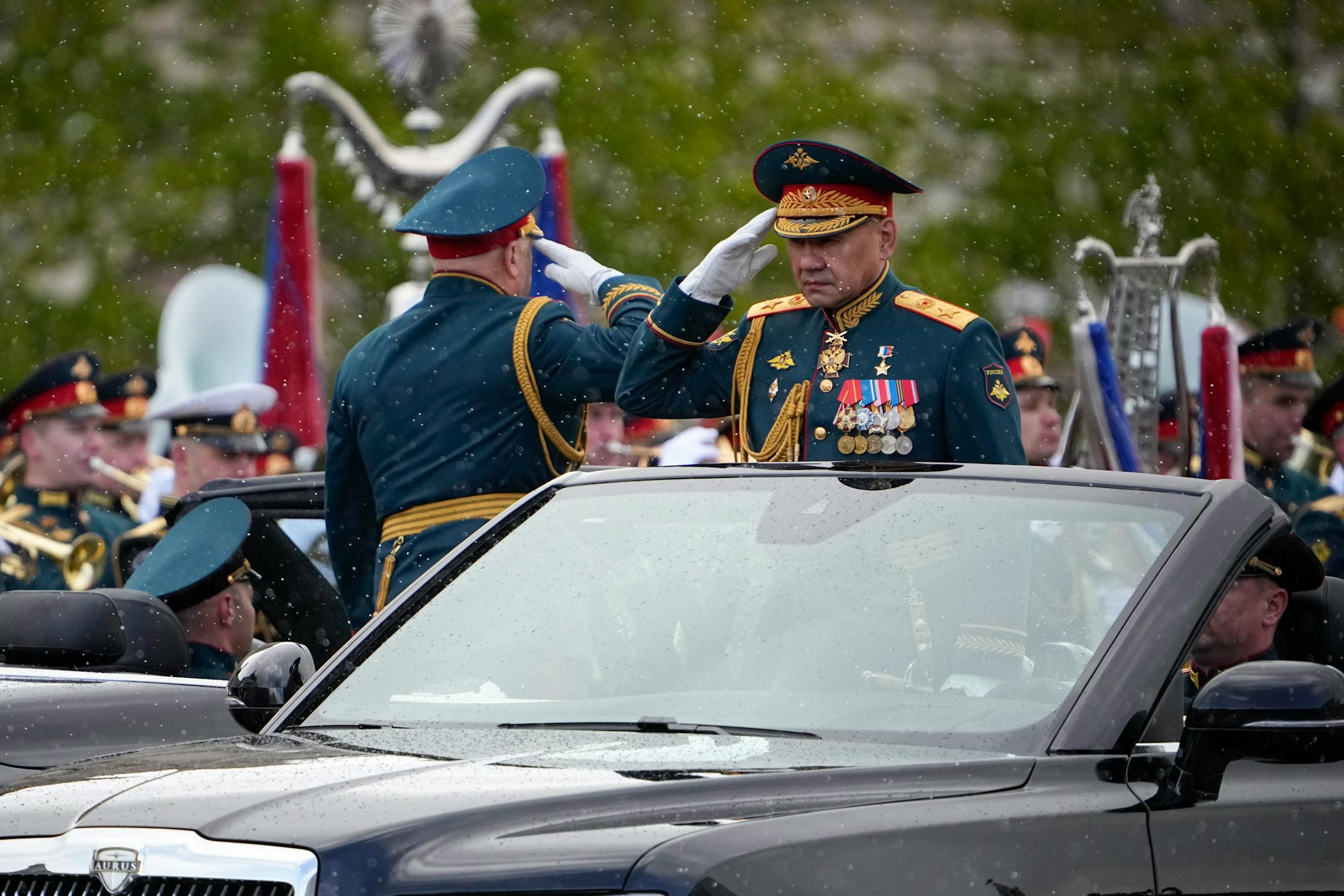
Standing in his dress uniform in the back of his Aurus convertible, Defense Minister Sergei Shoigu was driven around Red Square to review the troops during last week's Victory Day parade. It was to be his last inspection in that role.
Over the weekend, President Vladimir Putin replaced Shoigu — the 68-year-old was the longest serving member of his Cabinet — in a rare Kremlin shake-up that took place even as a Russian offensive in northeastern Ukraine was making gains.
Just as stunning was the choice to replace Shoigu — Andrei Belousov, a 65-year-old economics expert who has never dealt with the military or other law enforcement agencies.
Putting Belousov in charge of the Defense Ministry was seen as a way to tighten control over military spending and put the burgeoning defense sector in sync with the rest of the economy, hit hard by Western sanctions.
The reshuffle caught more than a few pundits by surprise, and some mysteries are yet to unfold.
SHOIGU'S WOES
Shoigu's job seemed to be in jeopardy early in the 2022 invasion as Russia suffered battlefield setbacks that drew the ire of Russia's hawks. He and the chief of the military's General Staff, Gen. Valery Gerasimov, were widely blamed for the failure to capture Kyiv as well as a hasty retreat by Russian troops from northeastern and southern Ukraine amid a stiff counteroffensive.
Last year, Russian mercenary chief Yevgeny Prigozhin unleashed a blistering and profane verbal attack on Shoigu and Gerasimov, accusing them of incompetence and corruption. In June, Prigozhin launched a mutiny to demand their ouster, seizing the military headquarters in the southern city of Rostov-on-Don and sending his soldiers-for-hire on a march on Moscow that he called off hours later.

