

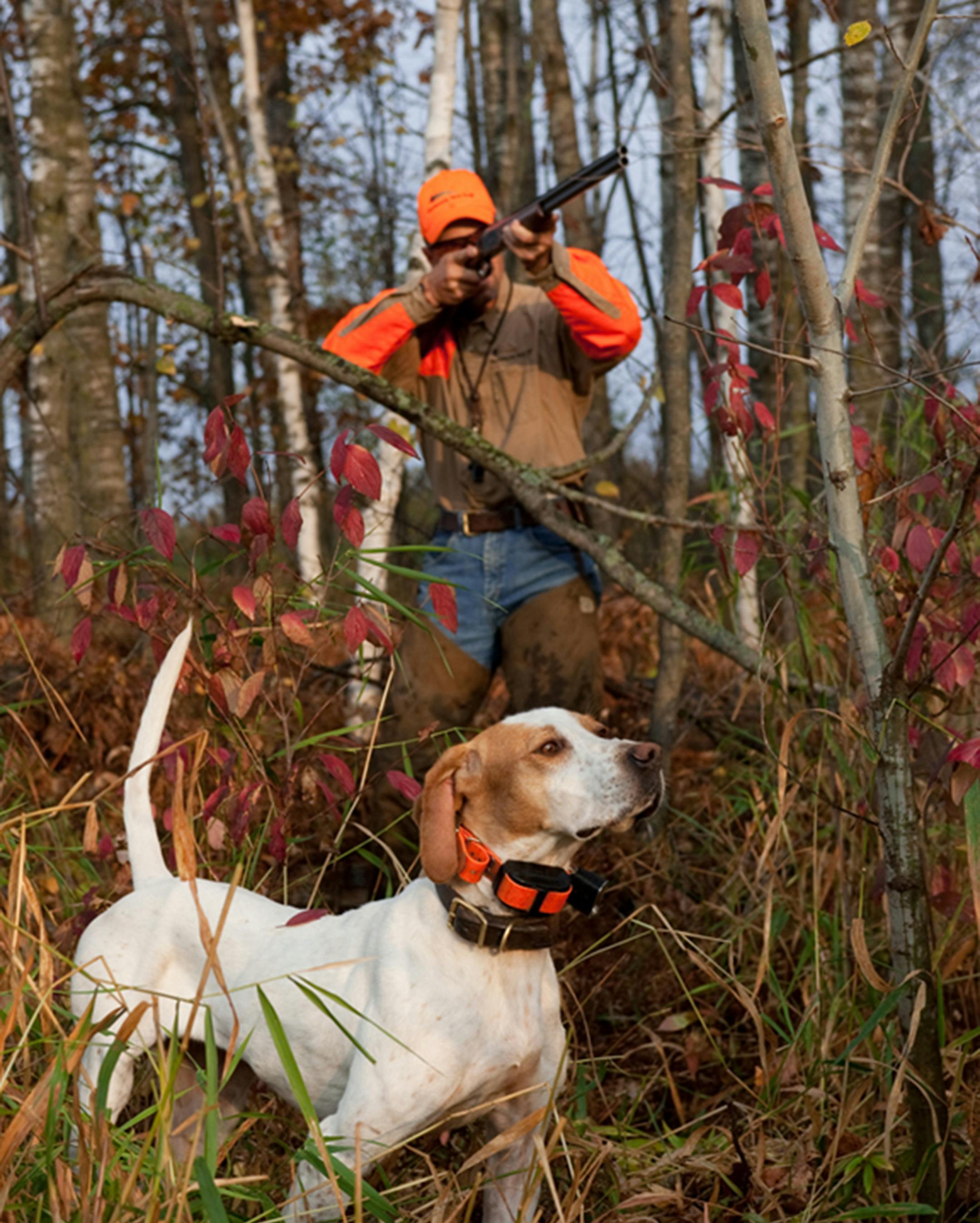
The golden leaves of October lie crisp on the forest floor. The dog's bell rings merrily as the hunt moves from one likely piece of grouse cover to another. Suddenly, the bell stops. With high anticipation, the hunter searches and, near an alder edge, sees the dog — body rigid and eyes intensely focused. As the hunter approaches, a ruffed grouse noisily flushes and the report of a shotgun swiftly follows.
To achieve that classic ruffed grouse hunting experience with your dog will require hours in the woods and years of effort, for there is no game bird more difficult for a pointing dog to properly handle than a ruffed grouse. It is wily, wary and often called "King of the Woods."
The process of developing a puppy into an experienced grouse dog begins with the all-important first season. The dog is at an impressionable age and lessons learned will set the foundation for future success.
Here are important considerations to make the most of this time.
Be prepared
Before taking your young dog into the grouse woods for its first hunt, make sure you're prepared.
The foremost consideration is proper introduction to birds and gunfire. A basic obedience command, HERE or COME, and an attention-getting command, such as calling its name, need to be understood. In addition, the means to enforce those commands, such as a check cord or e-collar, is necessary.
Your young dog also should be accustomed to the sound of a bell or a beeper and to riding in a vehicle. It should be at a suitable weight and in good health, too.
Exposure to grouse
Most of what a dog needs to know about finding and pointing grouse is learned from the birds themselves. Exposure to grouse — and plenty of them — is crucial.


