

The sex scandal engulfing two of our top military and intelligence officers could not be coming at a worse time: The Middle East has never been more unstable and closer to multiple, interconnected explosions.
Virtually every American president since Dwight Eisenhower has had a Middle Eastern country that brought him grief. For Ike, it was Lebanon's civil war and Israel's Sinai invasion. For Lyndon Johnson, it was the 1967 Six-Day War. For Nixon, it was the 1973 war. For Carter, it was the Iranian Revolution. For Ronald Reagan, it was Lebanon. For George H.W. Bush, it was Iraq. For Bill Clinton, it was Al-Qaida and Afghanistan. For George W. Bush, it was Iraq and Afghanistan. For President Obama's first term, it was Iran and Afghanistan, again.
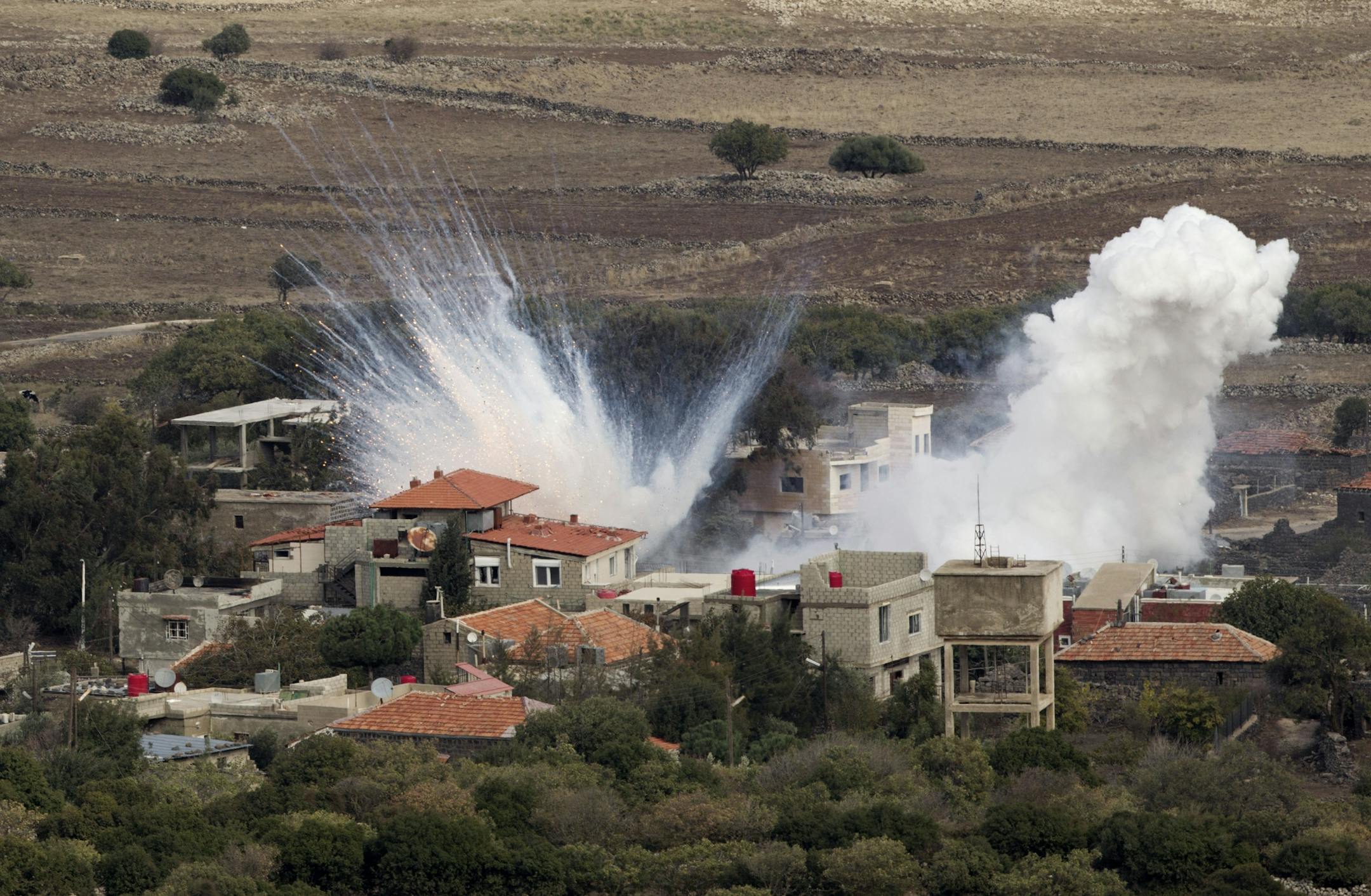
And for Obama's second term, I fear that it could be the full nightmare -- all of them at once. The whole Middle East erupts in one giant sound and light show of civil wars, states collapsing and refugee dislocations, as the keystone of the entire region -- Syria -- gets pulled asunder and the disorder spills across the neighborhood.
And you were worried about the "fiscal cliff."
Ever since the start of the Syrian uprising/civil war, I've cautioned that while Libya, Egypt, Yemen, Bahrain and Tunisia implode, Syria would explode if a political resolution was not found quickly. That is exactly what's happening.
The reason Syria explodes is because its borders are particularly artificial, and all its internal communities -- Sunnis, Shiites, Alawites, Kurds, Druze and Christians -- are linked to brethren in nearby countries and are trying to draw them in for help. Also, Sunni-led Saudi Arabia is fighting a proxy war against Shiite-led Iran in Syria and in Bahrain, which is the base of the U.S. Navy's Fifth Fleet. Bahrain witnessed a host of bombings last week as the Sunni-led Bahraini regime stripped 31 Bahraini Shiite political activists of their citizenship. Meanwhile, someone in Syria has decided to start lobbing mortars at Israel. And, Tuesday night, violent antigovernment protests broke out across Jordan over gas price increases.
What to do? I continue to believe that the best way to understand the real options -- and they are grim -- is by studying Iraq, which, like Syria, is made up largely of Sunnis, Shiites, Christians and Kurds. Why didn't Iraq explode outward like Syria after Saddam was removed? The answer: America.
For better and for worse, the United States in Iraq performed the geopolitical equivalent of falling on a grenade -- that we triggered ourselves. That is, we pulled the pin; we pulled out Saddam; we set off a huge explosion in the form of a Shiite-Sunni contest for power. Thousands of Iraqis were killed along with more than 4,700 American troops, but the presence of those U.S. troops in and along Iraq's borders prevented the violence from spreading. Our invasion both triggered the civil war in Iraq and contained it at the same time. After that Sunni-Shiite civil war burned itself out, we brokered a fragile, imperfect power-sharing deal between Iraqi Shiites, Sunnis and Kurds. Then we got out. It is not at all clear that their deal will survive our departure.


