

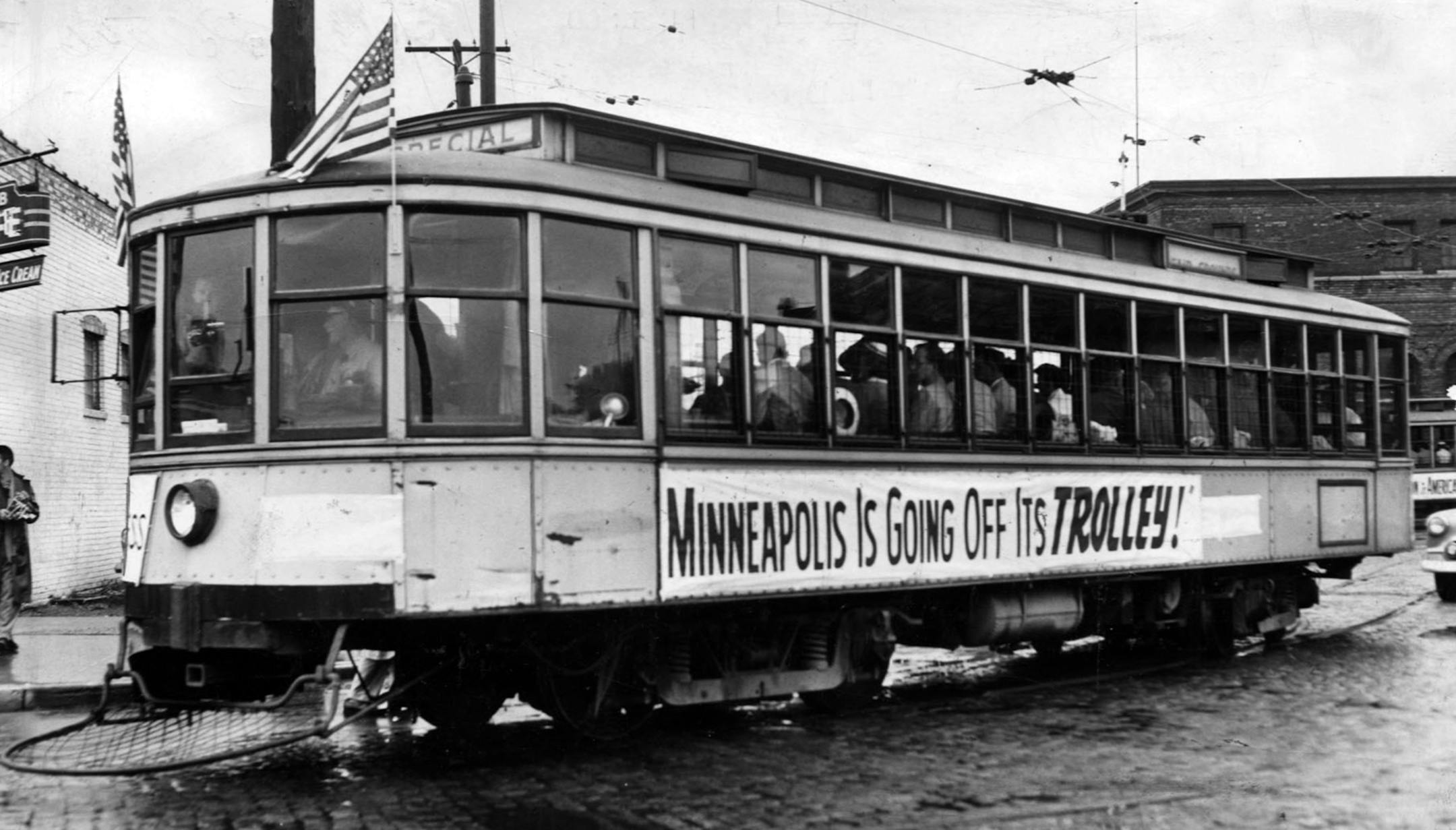
• Electric trolleys ran in the Twin Cities from 1889 to 1954.
• At its peak, the trolley system had more than 520 miles of track.
• Ridership peaked in 1920. The trolleys carried more than 238 million passengers that year, or 652,000 a day. At the time, the combined population of Minneapolis and St. Paul was 615,000.
• The fare was a nickel in 1900, rising to a dime in 1929. It was 20 cents at the end of service in 1954.
• During World War II, the streetcar company hired women operators for the first time, calling them "motorettes."
• The Southeast Steam Plant opened in 1904 on the Mississippi River in downtown Minneapolis to provide electricity for the streetcars. It's now owned by the University of Minnesota and provides steam heat to nearly 100 university buildings, as well as 20 percent of the electricity for the campus.
• The streetcar company built and repaired its own trolley cars at a massive maintenance facility at University and Snelling avenues in St. Paul — the same site where the proposed Minnesota United soccer stadium would be built.
JOHN REINAN


