

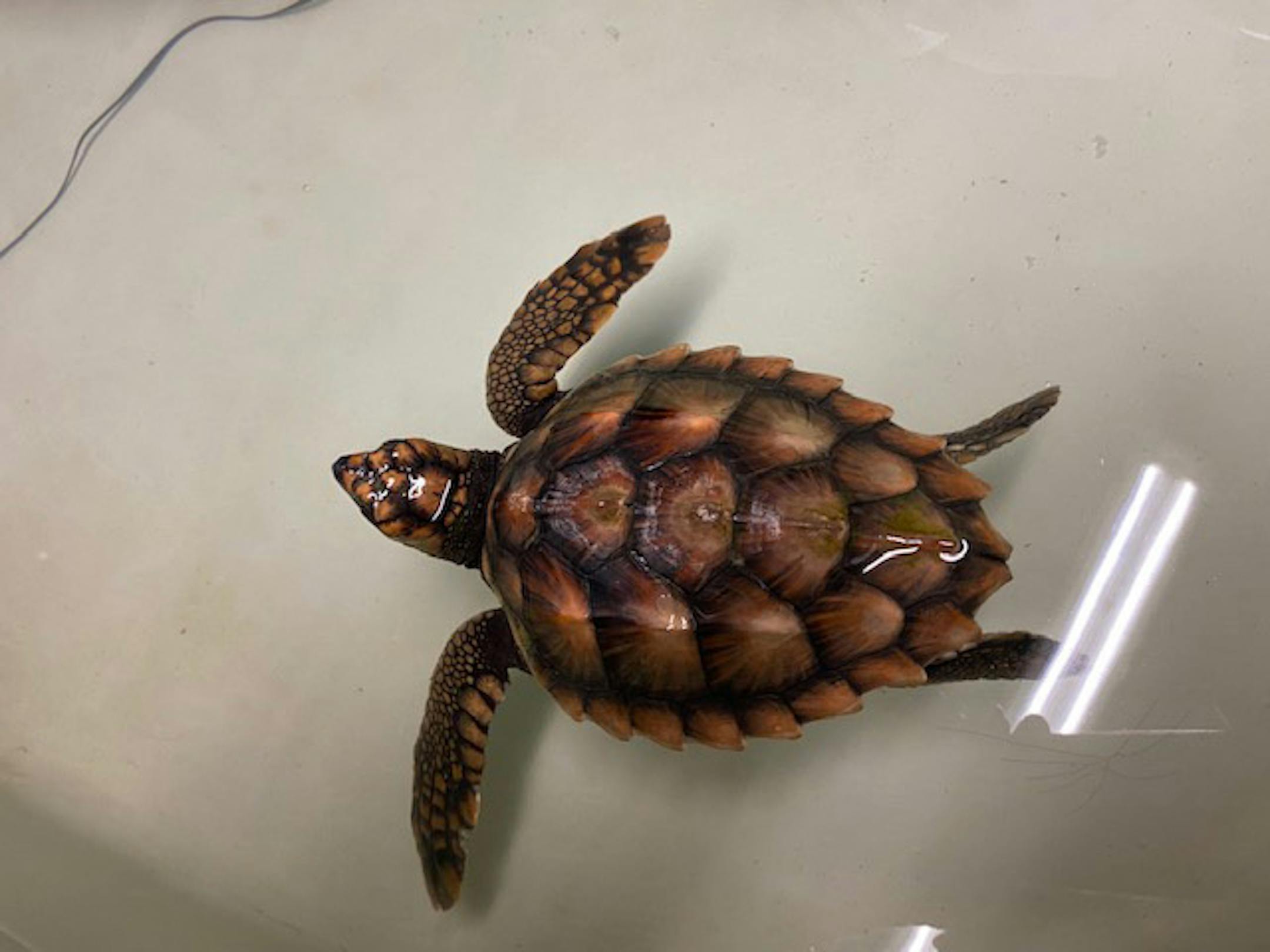
A family strolling on a beach in Ireland earlier this month spotted a seafarer that had washed up on the rocks. Her body was battered. She was dehydrated, suffering from hypothermia and in danger of having her eyes pecked out by shorebirds.
The family worked quickly to try to save the young loggerhead turtle, which had already defied nearly impossible odds. Less than a year old, the female loggerhead survived a monthslong journey across the Atlantic Ocean, teeming with dangers including predators and plastic. Although she was still alive, the turtle was dehydrated, massively underweight and suffering from hypothermia that had left her nearly paralyzed.
The family named their charged Cróga, Irish for "brave," and she was a long way from home. Loggerhead turtles nest in the southeastern United States, mostly from the Carolinas to Florida, said Caitlin Bovery, rehabilitation manager at the National Aquarium in Baltimore. Because of her age and size, Bovery estimated that Cróga is not yet 1 and said she probably hatched on the beaches of Florida last summer.
After hatching on beaches during the night, loggerheads scramble to the ocean. They then swim to the Gulf Stream's warm waters, taking up residence in floating sargassum, large expanses of brown seaweed that serve as habitat to small fish, shrimp and crabs. The turtles spend a few months to a few years in the shelter of the sargassum, a kindergarten of sorts, said Kevin Flannery, director of the Dingle Oceanworld Aquarium in Ireland.
When they get older and stronger, they drift over to the Canary Islands off the coast of Africa, he added.
Every year, tropical storms blow hundreds, if not thousands, of the small juveniles off course. Nearly all of them are beaten back to the coastline of the southeastern United States, Flannery said. Rehabilitation facilities treating those turtles find them malnourished, dehydrated, injured by predators or filled with plastic they've mistaken for food.
But the storms push a few north and farther into the ocean. And those turtles find an additional danger — cold water. Since they're reptiles, prolonged exposure to cold water can lower their body temperature, inducing "cold shock" or "cold stunning," which makes them weak and lethargic. Eventually, they can't swim and are helpless against the vagaries and vicissitudes of the wind and water current.
Flannery said loggerheads have been floating onto Ireland's shores for years.


