

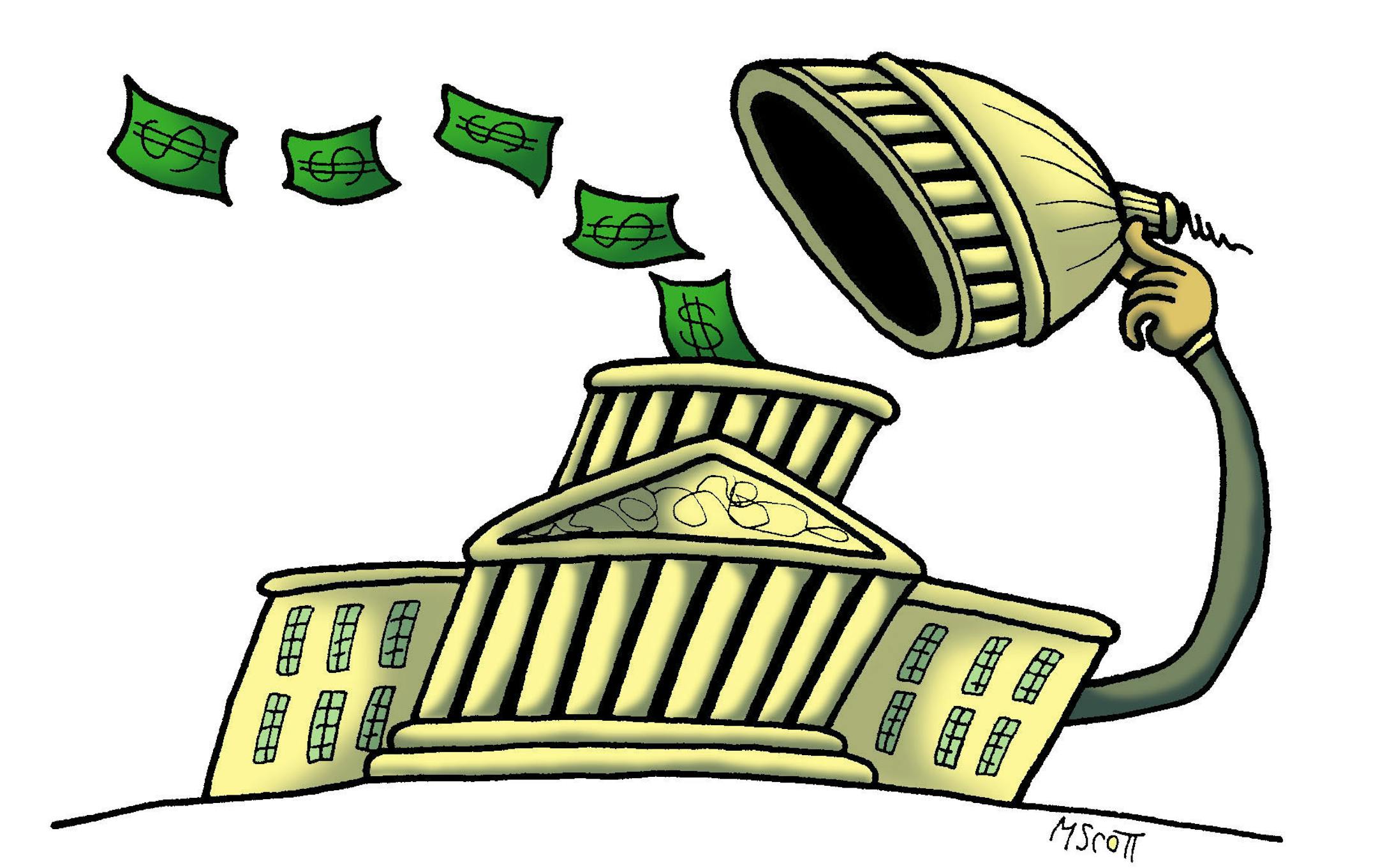
Much is in flux in Washington this week. But two important realities have remained constant, whether certain elements in the GOP accept them or not: We must not default on the federal debt, and we shouldn't wait until we're on the brink of default to raise the debt ceiling. Here's why.
As measured by economists Scott R. Baker, Nicholas Bloom and Steven J. Davis, policy uncertainty was more severe during the previous debt ceiling fight in the summer of 2011 than at any time since the terrorist attacks of Sept. 11, 2001. If the possibility of default produces such turmoil, imagine what actually defaulting would do.
As Republicans have so often pointed out in the fight over Obamacare, the ability of firms to make plans is severely hindered when government policies that affect them are in a state of extreme uncertainty. Raising the debt limit before the 11th hour will help firms plan their activities, hire new workers and keep the (too weak) economic recovery going.
Consumer confidence plunged during 2011's debt ceiling fight to a low not seen since the dark days of the recession, and it took a long time for confidence to recover. In a report released last week, Gallup found that economic confidence is already much worse now than it was in May and June, and attributes it to the current budget and debt ceiling battles.
Many economists believe that consumer confidence measures serve as an indicator of how households will spend money in the future. If households are rattled by Washington shenanigans, they are likely to rein in spending, which would negatively affect the country's already fragile economy.
And even the threat of a default would likely raise the interest rate on Treasuries by increasing their riskiness. This would bring higher borrowing costs for businesses and tighter credit for consumers.
As we know from the last debt ceiling fight, the squabbling also costs taxpayers money. The Bipartisan Policy Center estimates that the cost to taxpayers of the delayed debt limit increase in 2011 will total almost $20 billion over 10 years.
The United States actually defaulted on its debt once, in spring 1979. Then, as now, the debt ceiling was a source of partisan bickering, and an agreement was reached only at the last moment. The late passage, along with computer problems, meant the Treasury Department was late in making payments on maturing securities to individual investors and in redeeming T-bills.


