

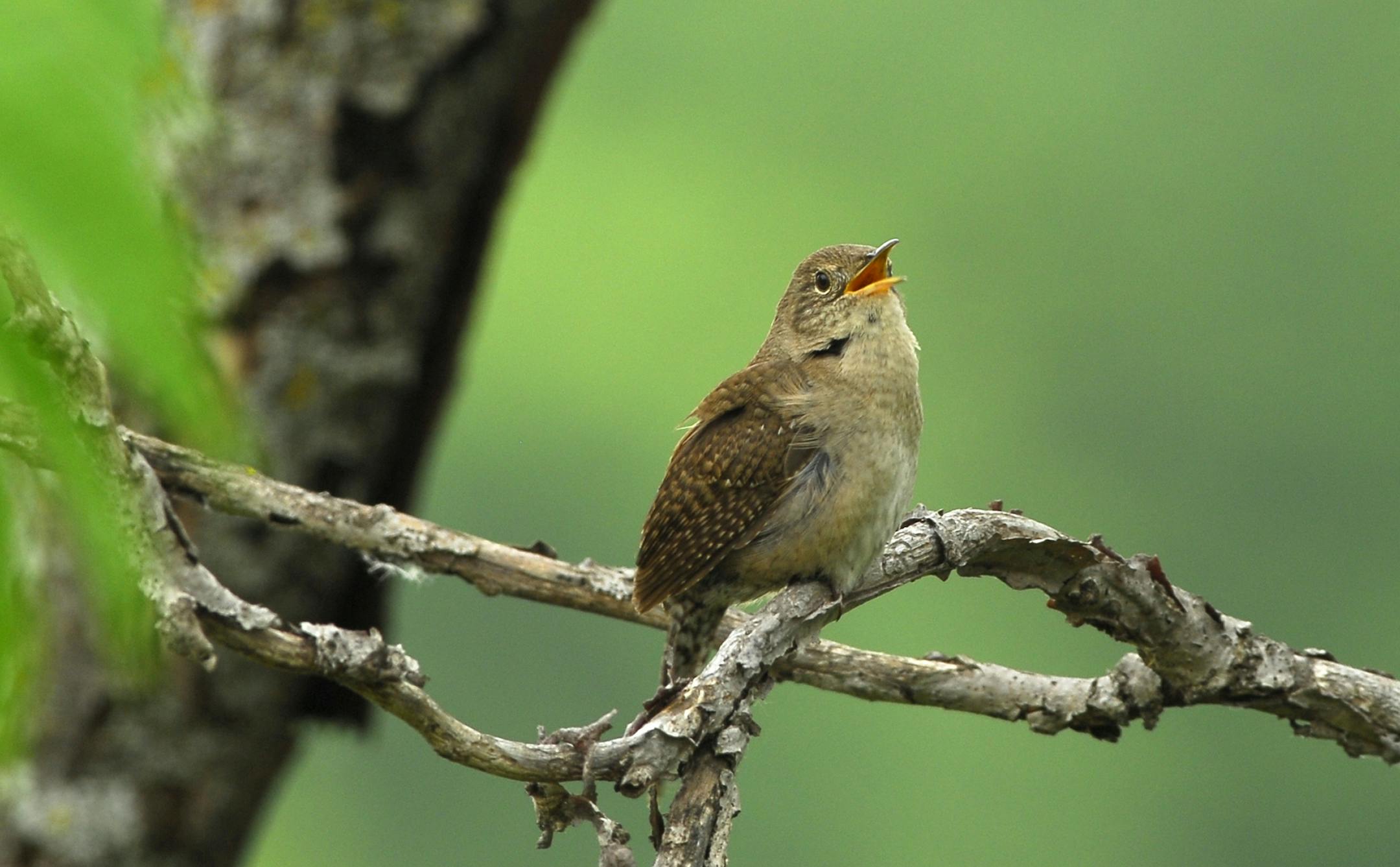
The house wren awakens me at 6:30 Friday morning, singing loudly from a tree just outside the bedroom window. I count: four seconds between songs — or actually a song, since he repeats himself endlessly.
He hasn't used this perch before, thank goodness, with his claimed territory in the brush on the shady east side of the yard. We have two nest boxes over there, back in thickety honeysuckle. The wren has filled one with sticks. He has built a dummy nest, meant to impress his mate if he can ever find one.
The bird has been singing courtship for about three weeks. We began to feel sorry for him, poor lonely wren.
Sitting on our deck a few minutes later, I discover that perhaps he was singing in celebration. His perch is unusually high, the better to serenade his mate. He has succeeded.
So we will add house wrens to the list of resident nesters. A set of Canada goose eggs recently hatched, timed to join the hooded merganser and her four young that were swimming in our pond later that day. Two days later, one of two nesting wood duck hens swam with 15 ducklings.
A robin is building a nest beneath our deck on its support structure. There is a chickadee at work on a nest in a box at pond's edge.
All of this pleases me. Yellow warblers and common yellowthroats are nesting in the swampy wilderness behind the pond. Red-winged blackbirds and Northern catbirds are there, too. I wanted to buy this house because of this yard, the pond and the swamp. I count on the Metropolitan Mosquito Control District to make watching tolerable.
Nest watch
Keeping track of my singing wren, I watch it go into the chickadee box. Check that: No chickadee nest is there, all nesting material seen last week now history. Wrens do that. They take over, by force if necessary. The male needs a place for a real nest now that he has a mate.


