

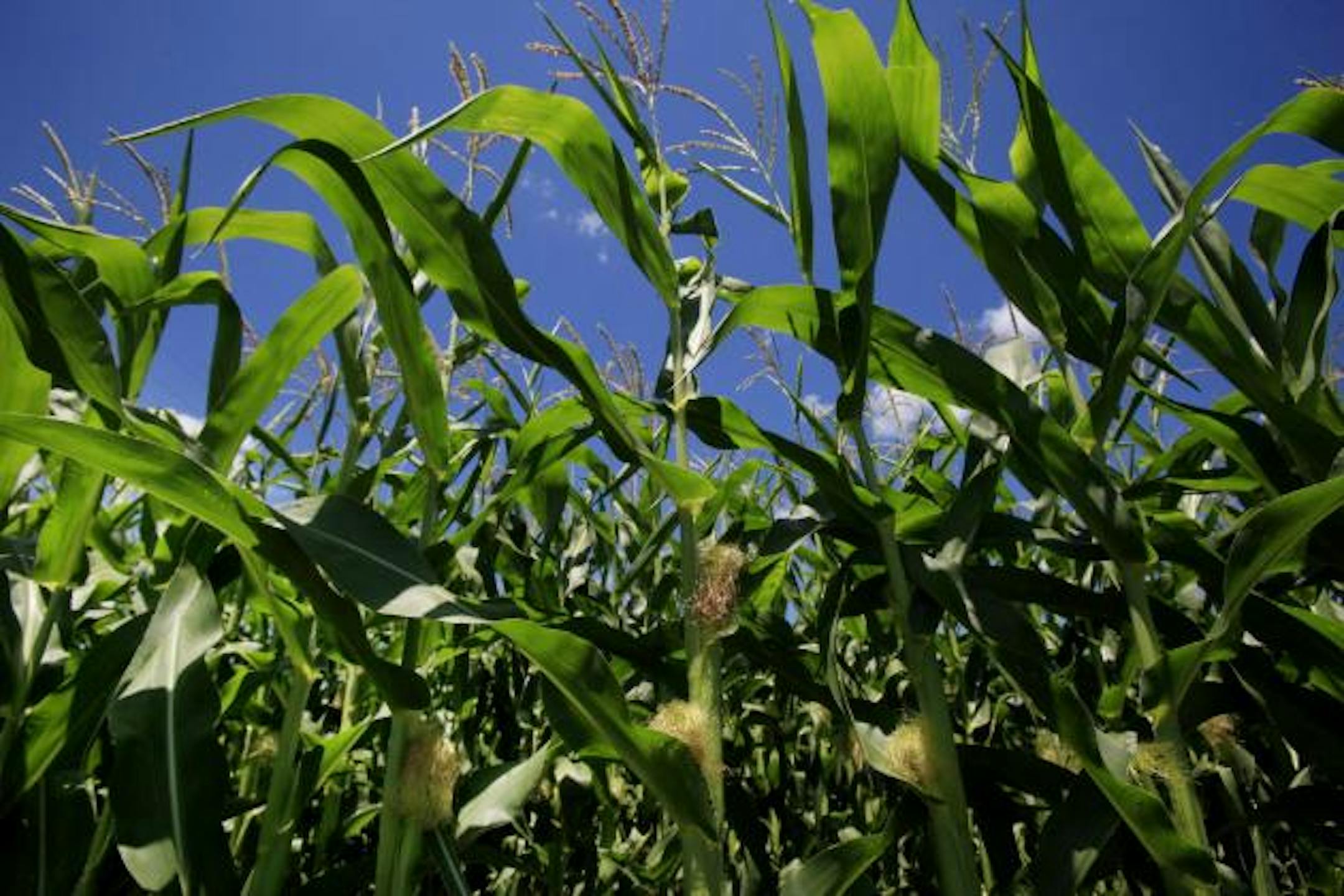
Autumn. The air cools, the leaves turn color and Midwest farmers deliver another corn crop to waiting bins.
Just one problem: Not enough corn.
Not enough standing in fields to be harvested. Not enough stashed in bins from previous harvests. Not nearly enough.
The U.S. Department of Agriculture reported Friday that America's grain stockpiles stand at the lowest level in eight years. The shortage comes as farmers plant fence row to fence row in the interest of maximizing their crops.
This summer's terrible drought will cut deeply into future supplies - but that's not why the bins stand as empty as they do today. The 2012 harvest, though ahead of schedule, is just getting under way in the northern tier of the Corn Belt.
The bins are depleted because demand for corn from previous harvests has run stronger than anticipated. High prices have not greatly deterred the world's appetite for American grain. The amount of corn on hand in the U.S. has dwindled from more than 6 billion bushels as of March 1 to less than 1 billion as of Sept. 1.
The consequences of this shortage are starting to show up in the marketplace. Wealthier countries such as the United States will experience rising prices for meat and dairy products as a result of higher animal-feed costs. In poorer nations, food will become scarce and increasingly unaffordable for the most vulnerable parts of the population. Hunger will be on the rise. Civil unrest could follow, as it has during food shortages in the past.
The only good part of this scenario is that it should provoke U.S. lawmakers to get serious and reform federal farm policies. Gridlock and inaction on Capitol Hill unwittingly provide the opportunity for a wholesale rethinking of business as usual on the farm.


