

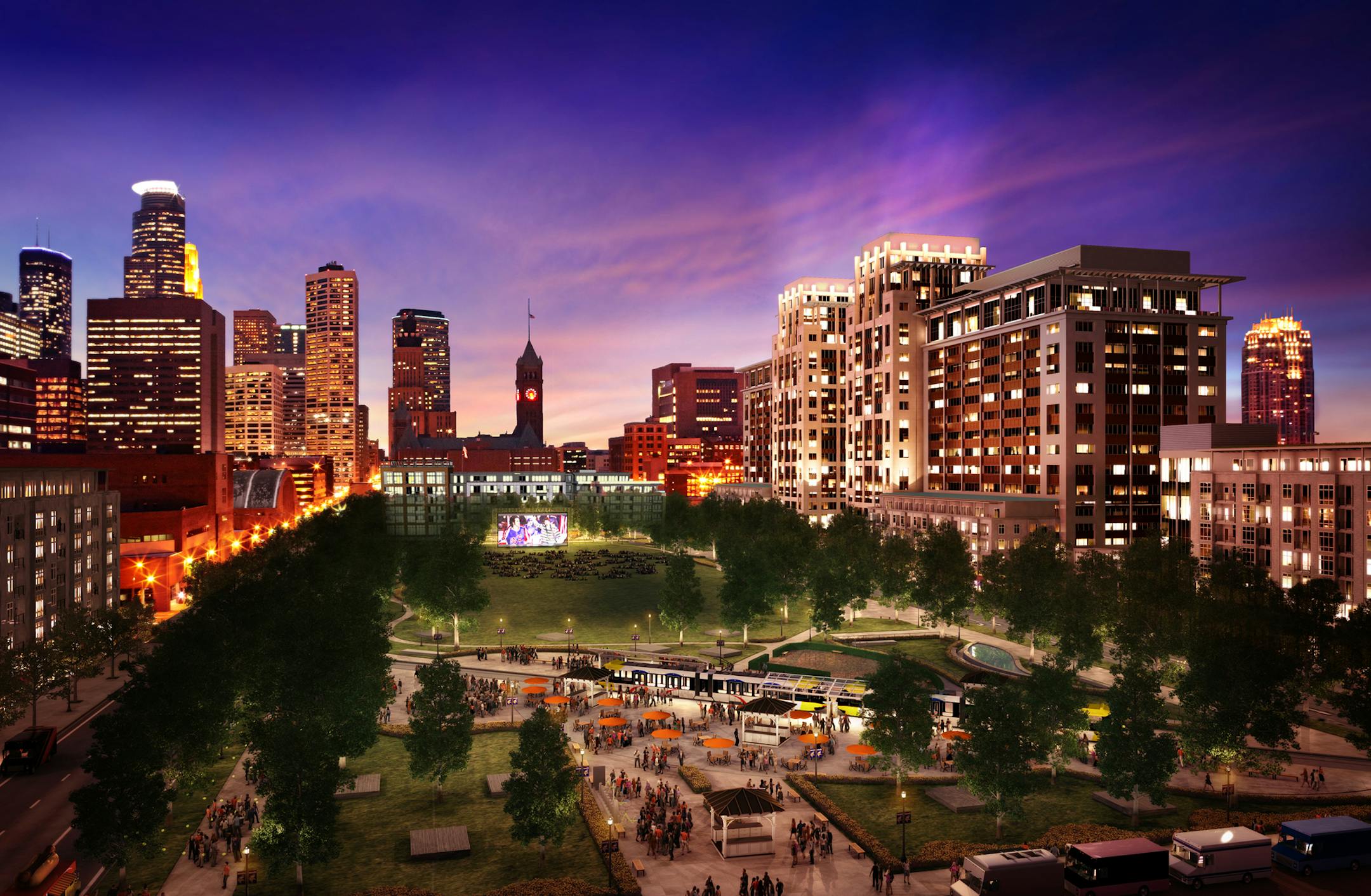
Almost every day we see compelling images of the new Downtown East: Wells Fargo's office towers, the Vikings' stadium, the historic Armory converted into an event space, a landmark hotel-office tower across the street from the light-rail stop.
At the center of it all is "The Yard," a new urban park that will be common ground for an exciting new part of Minneapolis that, until now, has been dominated by parking lots. The scale and quality of the transformation that's coming makes Downtown East a project whose success is important to every Minnesotan. Just last week the New York Times marveled at its ambition and saluted it as our "blueprint for a bustling downtown."
One problem: While everything around it is moving ahead quickly, the Yard is stalled. If something doesn't change soon, the park won't be open when the stadium is ready and it will not be the vibrant people-place everyone expected when all this investment was being planned. We can't have a goose laying a golden egg if we don't feed the goose.
The good news is that it should not be hard to get this grand vision moving. All the elements of greatness are in place. It will, however, require immediate action, coordination, and many players giving a little ground for the common good.
• Design: It's hard to figure out how to pay for and manage a space if you don't know what it looks like or what's in it. Step one is to hire designers and give them the direction to create a place that is flexible on Vikings game days but hosts the active uses envisioned from the start: youth soccer and lacrosse, outdoor concerts and movies, and winter uses like ice skating.
This cannot be done well with two traditional city blocks separated by the two traditional avenues of Park and Portland. Both the county and the city public works departments say they need to move traffic through this area, but each should be open to ideas that dramatically scale down these streets, or have just one crossing, possibly even having traffic cross only during rush hour.
• Operations: An unintended consequence of a failed lawsuit to stop the stadium is that there have been five months of uncertainty about whether the city or Park Board is running the park. This needs to be resolved immediately. It makes sense for the Park Board to own it but not operate it. Programming downtown parks, like the new Nicollet Mall and Gateway Park, can't rob resources and focus from neighborhood parks.
That's why the best option seems to be a joint management group with dedicated funding, like the Downtown Parks Conservancy concept that grew out of the Downtown 2020 plan. Yard management could coordinate with similar efforts on Nicollet, Gateway and Peavey Plaza to create an economy of scale and a coordinated program for downtown open space.


