

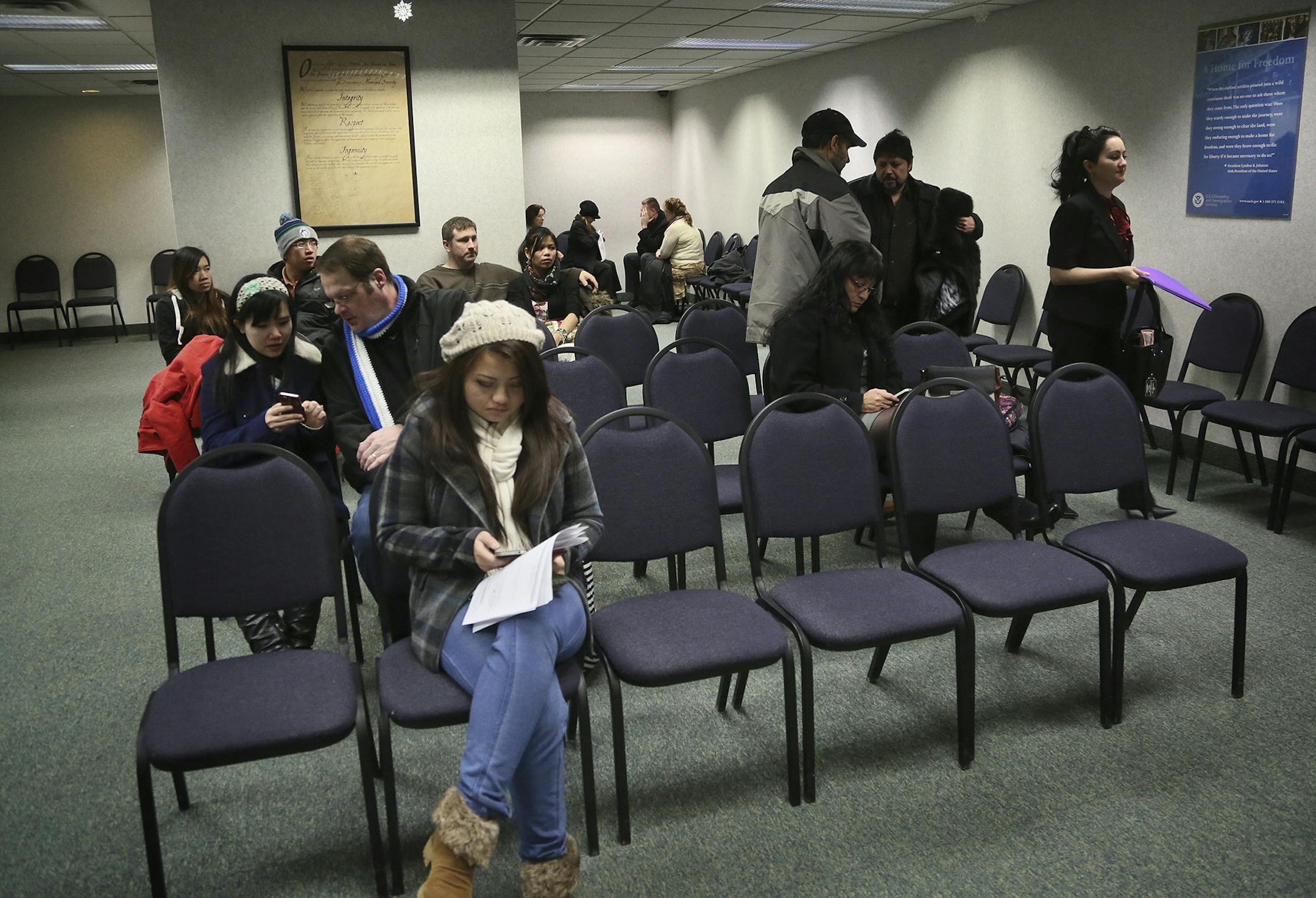
At first glance, the bungled move of a regional immigration and citizenship office to a difficult-to-find location in west Bloomington looks like the work of a distant, spendthrift bureaucrat with little knowledge of Minnesota and little regard for the thousands of people served by this office each year.
It's hard to come up with another explanation for why the General Services Administration (GSA), the federal agency that manages the government's property portfolio, is violating its own policies by moving the U.S. Citizenship and Immigration Services office from a location easily accessed by public transit to one that's three miles away from the nearest bus stop. Instead of helping people who are following the rules to become legal citizens, the GSA has made it harder, since many of them are low-income and rely on public transportation.
The new location is the former Minnesota School of Business on Ensign Avenue. "Even Siri had trouble finding it,'' said Star Tribune reporter Mark Brunswick, referring to his iPhone's typically reliable personal assistant.
That the agency is spending more than $14.3 million on a 10-year-lease for the building, which was bought by private investors last September for $1.9 million, additionally flies in the face of common sense. There's also little explanation for why it's moving at all.
After the owners of the transit-friendly building housing the current regional office near the Mall of America lost the contract, they asked why and were told little other than that regulations now require 9-foot ceilings, according to Brunswick's Feb. 10 Star Tribune story.
Deeper scrutiny, however, suggests this isn't the work of one bureaucrat or department within the sprawling GSA. Instead, it's business as usual.
High-profile questions about the GSA's management decisions have dogged the agency for several years. A 2010 Las Vegas conference costing $822,000 — which included luxury suites, pricey sushi and a $75,000 "team-building exercise" — made the agency a still-cited example of government waste.
Less well-known but just as troubling is a 2011 Government Accountability Office report about the federal government's "overreliance" on costly, long-term leases for buildings it would have been cheaper to build or purchase. The report concluded that federal property management is a governmentwide "high-risk issue.''


