

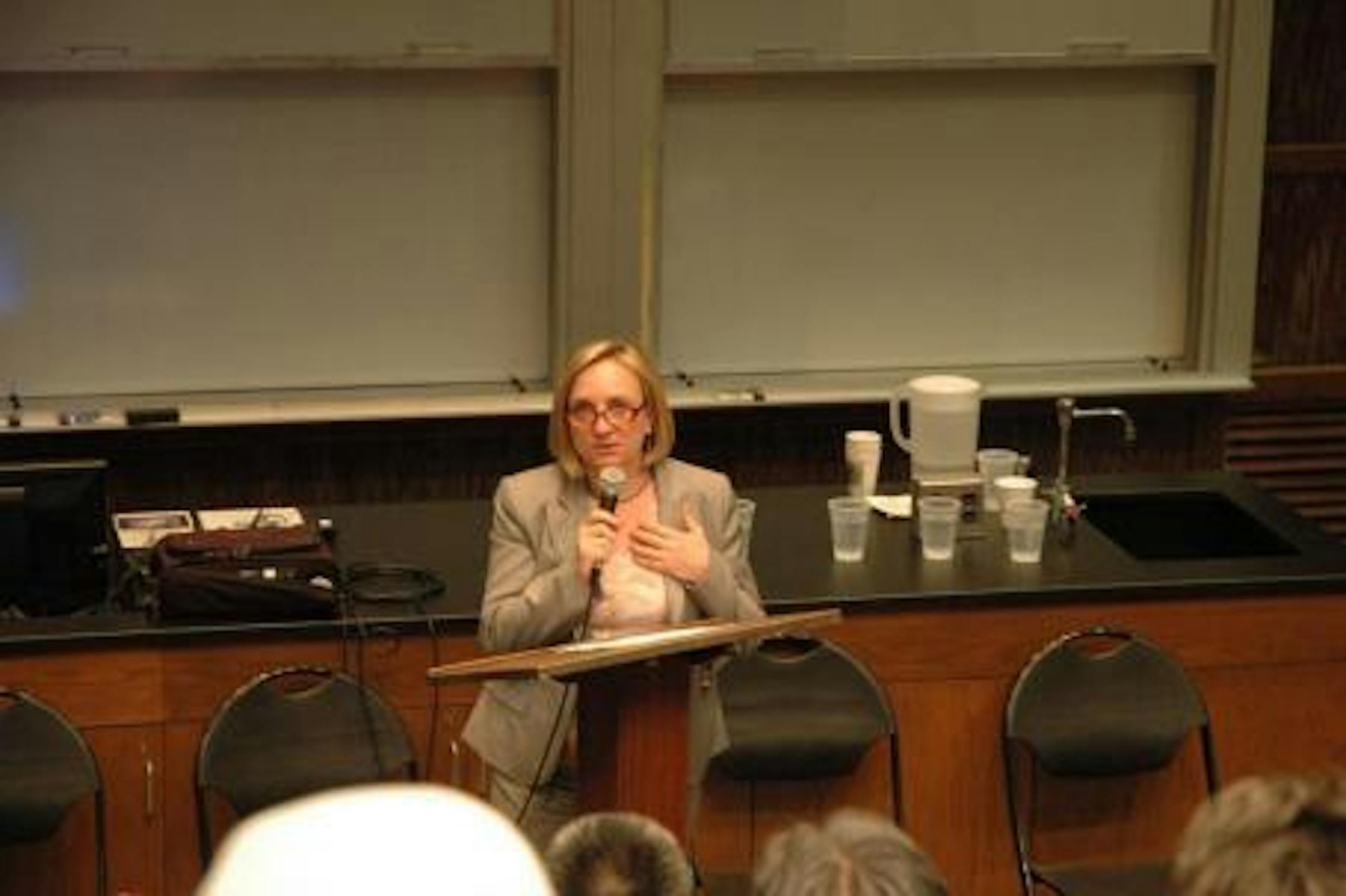
Last week, I took part in a panel discussion on "A Common Word: Love in Christianity and Islam." It was a unique program that focused on the topic of love from Islamic and Christian perspectives. More than one hundred people attended the program and they left with a better understanding of these important teachings, which have the potential to bind our communities together. The panelists, Dr. Jamal Badawi, Dr. Terence Nichols, and Gail Anderson did an amazing job of explaining how their respective faith traditions explain love. In the first of the three part series, I would like to feature Gail Anderson's insights into the topic. I plan to feature Dr. Nichols and Dr. Badawi's talks in the next two parts.
Here is a text of Gail Anderson's talk.
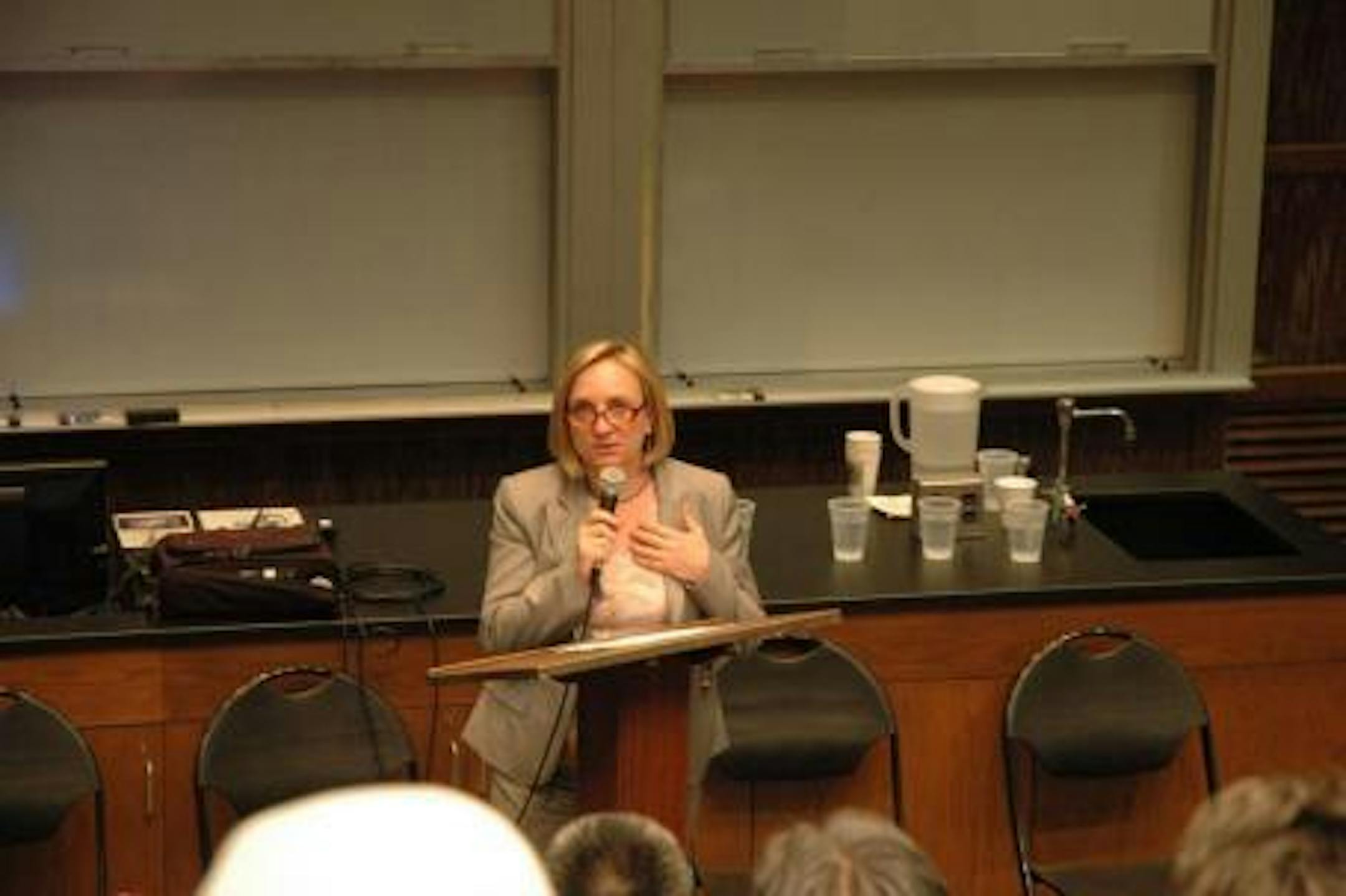
Gail Anderson What does the common word look like when it is put into action? The document talks about the great commandments – love God and love your neighbor. I think that it is through showing love to our neighbor that we show love to God, other wise it is only abstract. What does it mean to love neighbor? There is a story in the Gospel of Luke which gives us an idea. In the story a man, either a lawyer, or a man knowledgeable in the law depending on the translation, poses a question to Jesus. He says, Rabbi, What must I do to inherit eternal life?" And Jesus replies, "What is written in the law?" And the man says "You shall love the Lord your God with all your heart, and with all your soul, and with all your strength, and with all your mind; and your neighbor as yourself. So Jesus says, you've got it, do that and you will live. But the man presses Jesus, who is my neighbor? (Which is why I think the guy is a lawyer, looking for the precise meaning of the law) So Jesus tells the parable which has come to be knows as the Good Samaritan, although those exact words don't appear in the Bible. It is the story of a man, who we assume is a Jewish man, who is traveling along a road from Jerusalem to Jericho. And he is attacked by bandits, beaten, stripped of his possessions and clothes and left for dead. Two travelers pass by, both of them Jewish, but they do not stop. A third man, a Samaritan, passes, stops, bandages his wounds, puts the beaten man on his own animal and takes him to an inn and pays the innkeeper to take care of him. Jesus asks, who was a neighbor to the man who fell into the hands of the robbers, and the Lawyer said, "The one who showed him mercy," and Jesus says go and do likewise. The interesting thing that can be lost over time is that Jews were not fond of Samaritans and vice versa. They despised each other. It is interesting that the Lawyer doesn't answer "the Samaritan", but rather "the one who showed mercy." So in this parable Jesus doesn't define our neighbor as the ones who look like us, or worship like us, or believe like us. Our neighbor is anyone who is in need of mercy. The Lawyer doesn't ask "What does love mean?" but I will. What does love mean in this parable? It means doing something, helping out, alleviating the suffering, no matter who it is that is in need. One way that we attempt to live out the common word at the Minnesota Council of Churches is through a new program called Taking Root. Taking Root grew out of another program that we have done for the last four years called Taking Heart. In Taking Heart we bring Muslims and non-Muslims together for food and conversation so that people can get to know each other as people, not as representatives of a particular faith group. It is low key, we talk, we eat, relationships are built and hearts are changed. It is simple, but profound. Taking Root combines the relationship building of Taking Heart and our direct service program which is refugee resettlement. We have been doing refugee resettlement for more than two decades and interfaith relationship work for about the same amount of time. In Taking Root we are recruiting and creating 20 interfaith sponsorship teams to help us resettle free-case refugees who will be arriving in Minnesota in the next year. Unlike a family reunification case, a free-case is a refugee who arrives with no connection to the community. They need an immense amount of support when they first arrive if they are going to make a successful transition into life in Minnesota. We can't do an adequate job with staff resources; we need volunteers to help us do it. Typically we rely on church congregations to lend that volunteer support, but with Taking Root we are trying something different. Why interfaith sponsorship teams? For a number of reasons: One, we have a pluralistic community and interfaith teams reflect who we are. Two: Many Refugees come from a part of the world where there is only one faith tradition, or if they have encountered another faith tradition it may have been in a conflict situation, if not outright persecution. Our interfaith sponsorship teams introduce refugee families to the American ideal of interfaith and intercultural cooperation. Three: We live in an increasingly polarized society, and there are factions who are profiting from that polarization. They are getting television ratings, and book royalties, and speaking engagement fees. Our society is being torn apart by people who are making a buck doing it. For the good of our community building interfaith relationships will create a community which exhibits enough cohesiveness to enact policies which reflect the common good. We have just started Taking Root. We have two organizers who are working in the community who are finding the individuals who want to be part of those sponsorship teams. Our first family arrives a week from Tuesday – and Eritrean Christian family of three, mom, dad and a five-year-old daughter and we have a team of Muslims and Christians who are working to get everything ready for them. Which ones are the neighbors to the Eritrean family of three? The ones who show them mercy. Love your neighbor as yourself.

