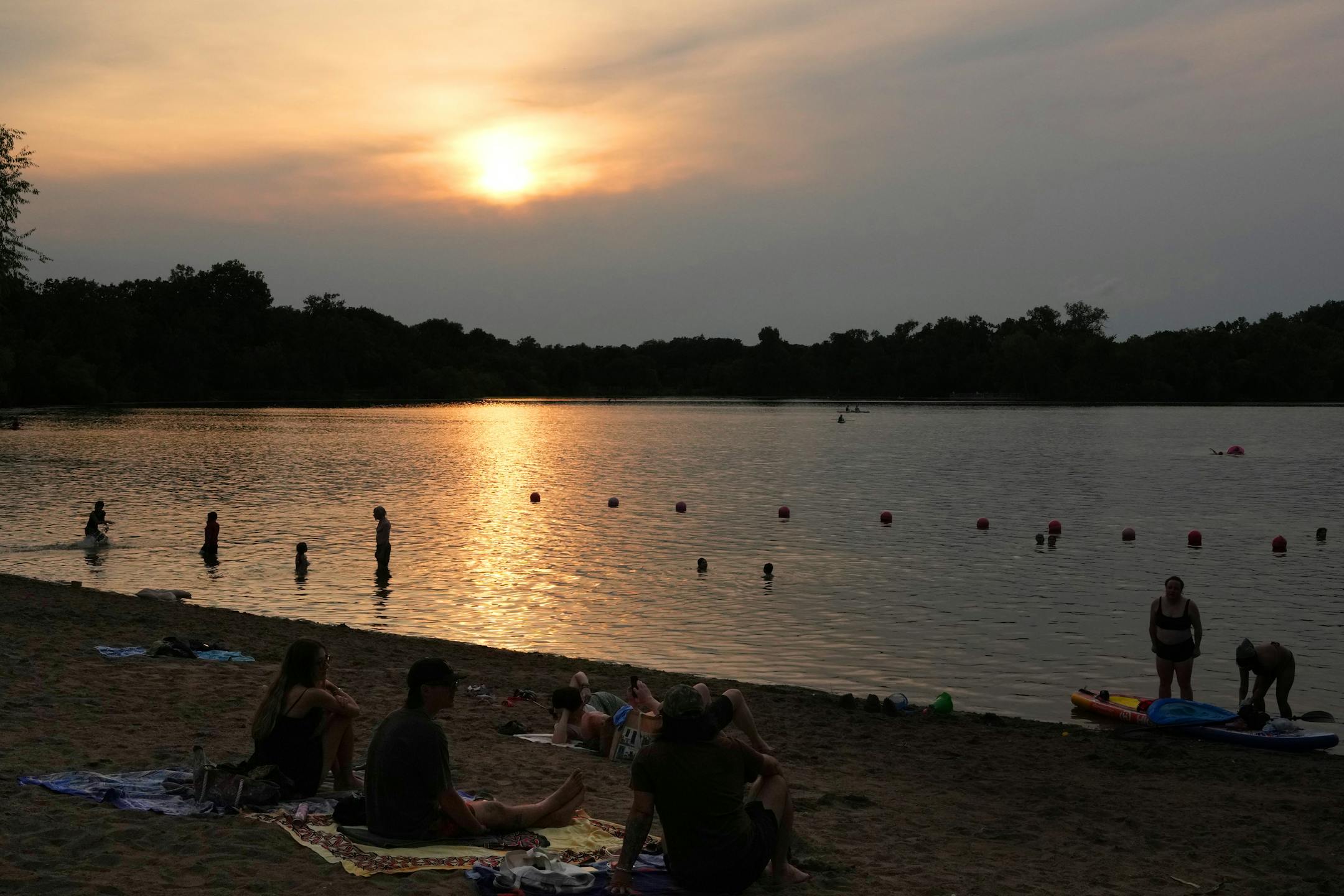
The summer clouds over Cedar Lake in Minneapolis looked like they could go either way. A pair of kayakers getting ready to launch smiled at the mist in the air and decided to chance the rain. Nearby, a fisherman leaned against a tree and cast. Behind him, an old yellow Lab pulled its owner down a walking path that circled the lake. A steady stream of joggers followed, and cyclists, who shouted “on your left,” with the backdrop of the Minneapolis skyline.
The most visited slice of nature in Minnesota isn’t in a state or national park. It’s not an old-growth forest or patch of surviving prairie. It’s the chain of four lakes that starts with Cedar and ends with Lake Harriet in the heart of Minneapolis.
Until about 30 years ago, the Chain of Lakes seemed like it would be lost, to be slowly strangled by all the pollution and runoff of the metropolis that grew up around it. A forward-thinking project that started then — the largest of its kind at the time in U.S. history — reversed decades of environmental degradation. The benefits of that work continue today.
“Those investments occurred at a great time to make sure these lakes didn’t reach a tipping point,” said Michael Hayman, the director of project planning for the Minnehaha Creek Watershed District. “And they’ve been very stable ever since.”


Making the grade
The Minnesota Department of Natural Resources started issuing grades and scores to about 3,000 lakes in 2023. The grades, for the first time, give residents and local governments an easy to way to look up the condition of their lake and compare it to others without needing to scour through reams of pollution data. A searchable database of every lake with a grade was built by the DNR’s Watershed Health Assessment Framework program.
The letter grade, from A+ to F — based on a 0 to 100 score — denotes the health of a lake and how far it has fallen from what a lake of its size, depth and region should be. A lake’s score is based on how polluted it is, whether fish and native plants survive, and the development on its shoreline and watershed.
There are 11,842 lakes in Minnesota, many of which are too remote or small to have been consistently studied. Biologists scored every lake that has enough data, which tended to be the biggest and most popular. Lake Superior, Lake of the Woods and other border lakes were omitted.
The handful of Minnesota lakes that received the best grades, and overall scores in the high 90s, are still almost natural, with very little pollution or marks of human intrusion.