

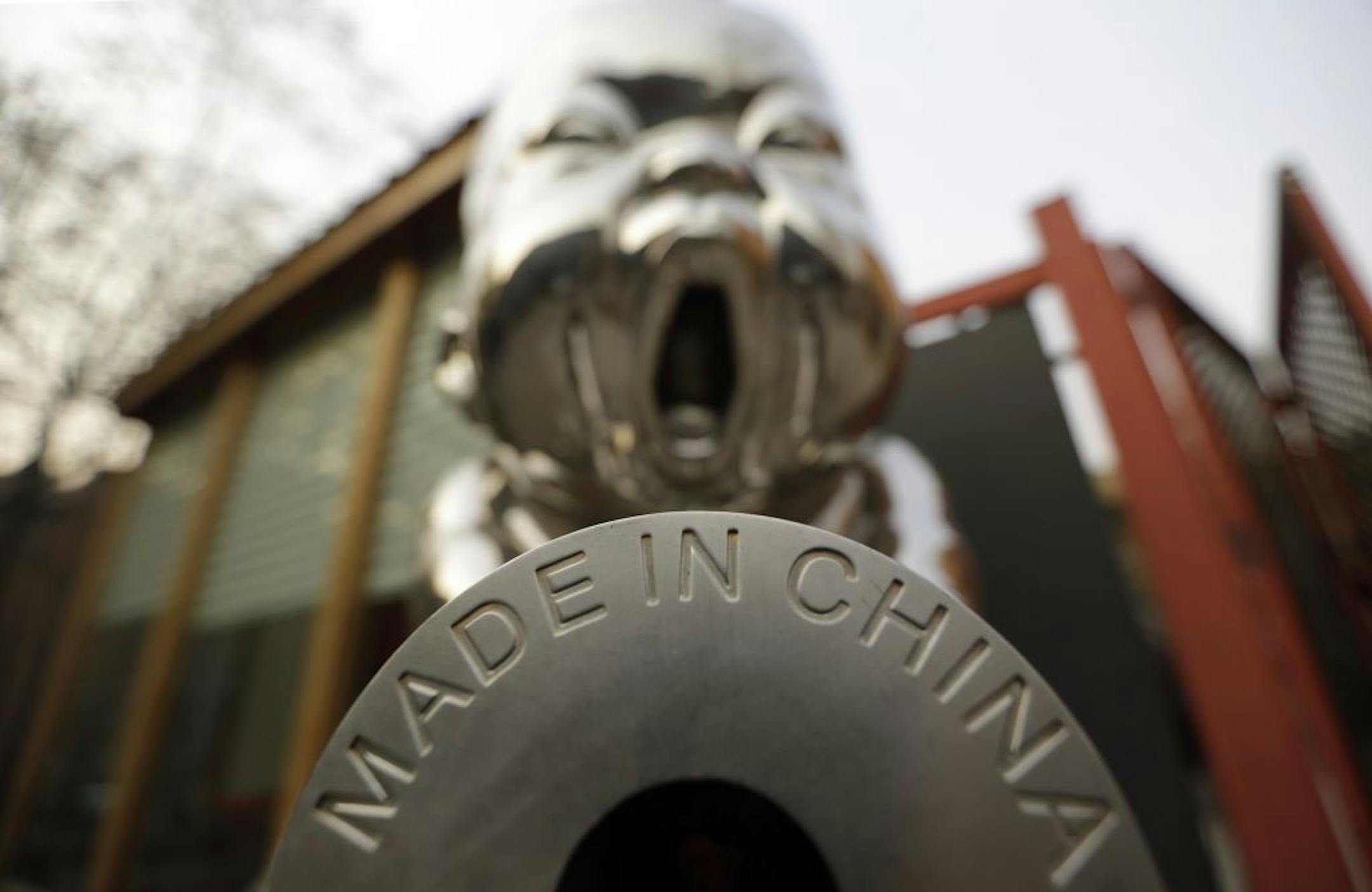
What does it mean when the label on your mobile device says "Made in China"? Possibly a lot less than you thought.
Trade experts have known for years that the complete story of the global economy can't be gleaned from data on the flow of finished goods and services among countries. Trade figures register the value and volume of stuff leaving one country and entering another, yet the numbers are misleading.
Consider your mobile phone. Trade data ignore that various parts of it are made in the United States and shipped to China. As the final assembler, China gets credit for phone exports from its shores, while the U.S. shows up as an importer, making the trade deficit between the two countries appear worse than it really is.
The Organization for Economic Cooperation and Development and the World Trade Organization set out to fix this by deconstructing the global supply chain to show how much of an exported phone, truck or dress really originates in a given country. The result is a new data set that could change the entire trade debate.
The "trade in value-added" database shows, for example, that the U.S. deficit with China in 2009 (the latest year's trade statistics examined in the report) was almost 26 percent smaller - $130 billion instead of $175 billion - because Chinese electronics include numerous components from the U.S. and other places.
The figures also show that a third of the value of a German-made car can be traced back to goods and services from other countries. And despite what existing trade figures say, the United States, not Germany, is France's largest trading partner.
The policy implications are profound. If China is getting more credit than it deserves for its exports, then U.S. imports of Chinese products aren't wiping out as many American jobs as the data suggest. China's export machine may even be creating American, European and other Asian jobs by sourcing components from those countries.
The study suggests that a country's capacity to import parts and materials is as important for success in the global economy as the ability to manufacture a product. This means countries with efficient port facilities and streamlined border controls, allowing goods to enter and exit quickly, will have a leg up in global trade.


