MADISON, Wis. - Lake Mendota continues to reveal its secrets.
And this one is the oldest of them all.
Archaeologists with the Wisconsin Historical Society announced Thursday they have identified up to nine more dugout canoes on the lake’s bottom near Shorewood Hills.
The newest batch isn’t as intact as the previous two canoes found in 2021 and 2022. But one fragment has been estimated through radiocarbon dating to be 4,500 years old. That would make it the oldest dugout canoe recorded in the Great Lakes region, dating back to around 2500 BC.
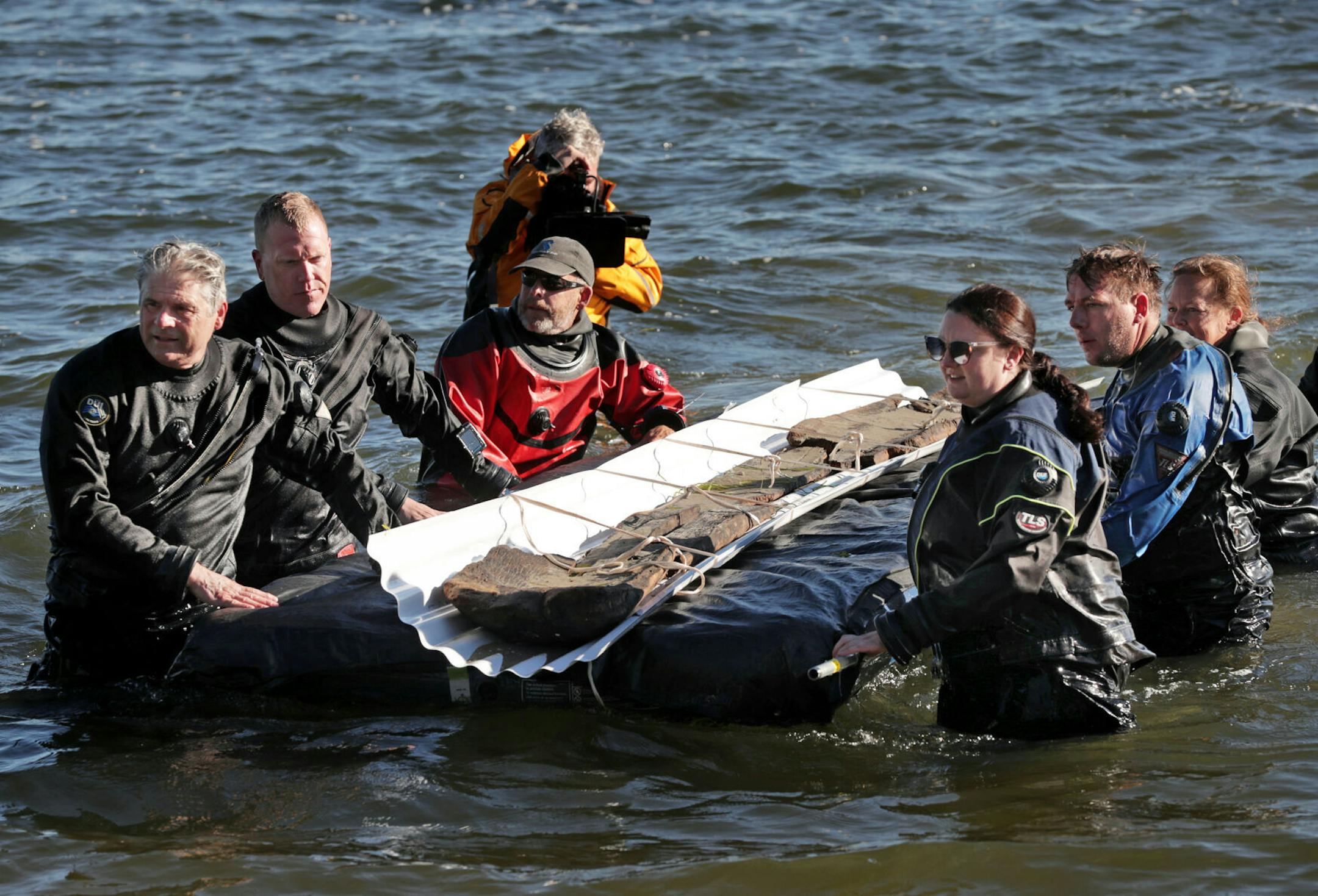
The canoes that were found earlier were estimated to have been 1,200 and 3,000 years old respectively and built by ancestors of the Ho-Chunk Nation. The newest cache of canoes remain on the lake bottom in pieces and aren’t planned for removal, but their discovery marks another historic event for the 9,781-acre lake and is more evidence that the site, now submerged by rising lake levels, was home for millennia to an encampment by Native people.
Meanwhile, analysis conducted by the USDA Forest Products Laboratory in Madison reveals that trees used to build the canoes — elm, ash, white oak, cottonwood and red oak — changed over the centuries, signaling “environmental shifts that impacted forest composition,” the Historical Society said in its announcement.
“It is an honor for our team to work alongside the Native Nations to document, research and share these incredible stories from history,” said Amy Rosebrough, state archaeologist for the Historical Society. “What we thought at first was an isolated discovery in Lake Mendota has evolved into a significant archaeological site with much to tell us about the people who lived and thrived in this area.”
Some of the fragments were discovered when the 3,000-year-old canoe was pulled from the lake in 2022, while others were found on subsequent dives up to last fall, said Tamara Thomsen, a maritime archaeologist with the Historical Society and who is credited with finding the first two canoes. While follow-up diving expeditions suggested the presence of additional dugout canoes, archaeologists needed time to consult with tribal partners, analyze findings and document the potentially vulnerable site before publicly releasing details, the Historical Society said.