

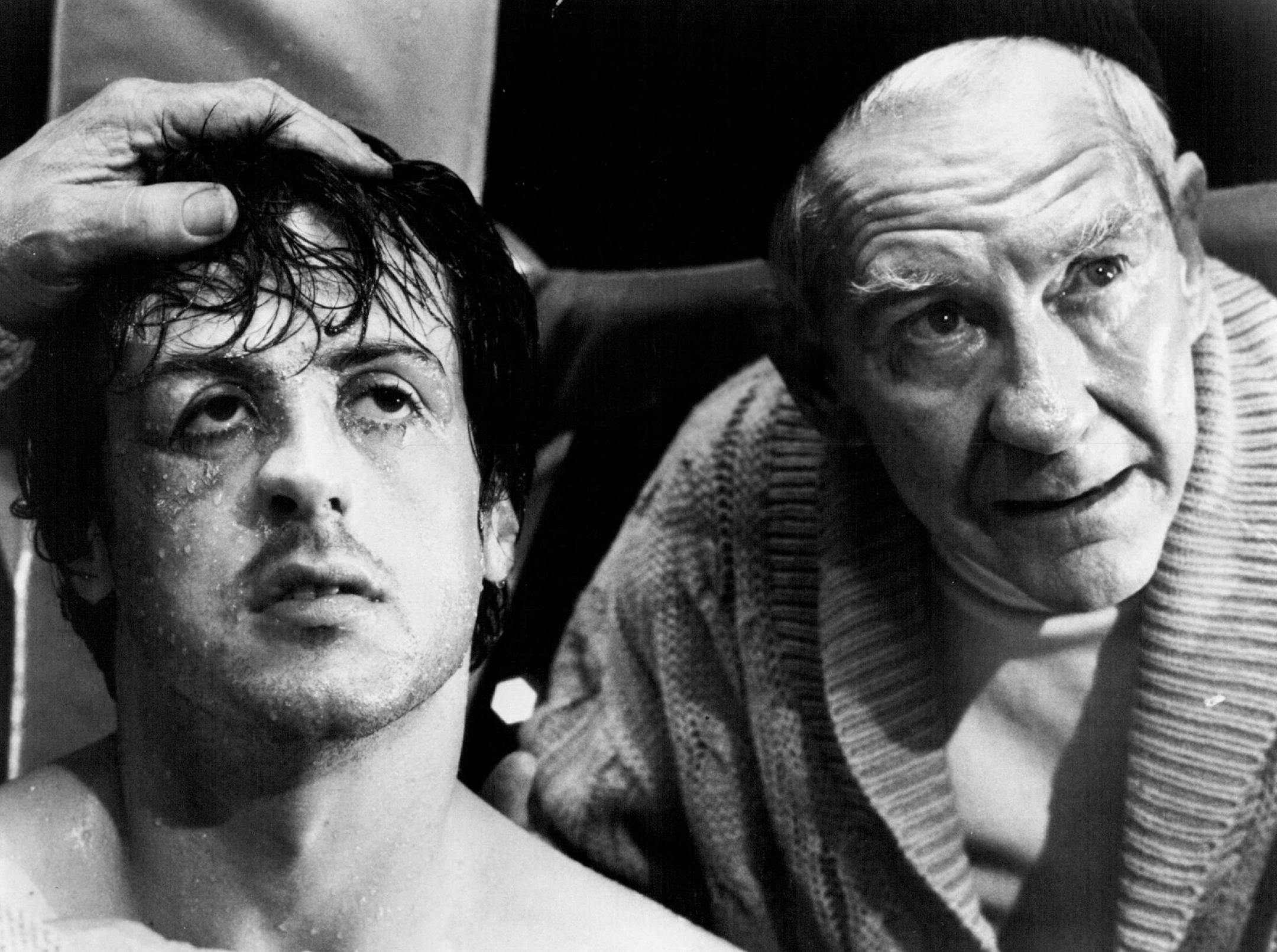
How different would a movie be if we only listened to it?
An experiment I've never tried, because I'd fall asleep, is to "watch" with my eyes closed. My guess is it would be a fantastic way to understand the art of movie scores (not the songs in movies, but the "background" music).
I own dozens of movie soundtracks and I listen often, both to recall movies I love and simply to appreciate the music. The latter is especially true of Philip Glass, whose beauties such as "String Quartet No. 3" from "Mishima" don't always connect to specific images.
The Glass piece fits my favorite kind of movie music, which I understood only after I read an interview with composer Alexandre Desplat, whose work includes "The Shape of Water" and "Argo." He said he tries to convey what is going on inside the heads of the characters rather than emphasizing the action of a scene or telling us what to think about it. In fact, Desplat's music often runs counter to the action.
That's a modern approach and I like it. More traditional scores like Maurice Jarre's "Lawrence of Arabia" and John Barry's "Out of Africa" are lovely (and in my collection). And who doesn't love a jazzy scene-setter like Elmer Bernstein's "The Sweet Smell of Success"? But my favorites dig into the psychology of the characters. Because music hits subliminally, before we can think about what it's doing, composers like Desplat are as important as a screenwriter or director in conveying meaning. Think about the opening of "Fargo," when Carter Burwell's epic music is our first clue that the Joel and Ethan Coen movie is more than the dopey kidnapping comedy it appears to be.
There are so many astonishing scores that compiling a list of the best is tough. How to leave off Hans Zimmer, whose "Man of Steel" all but kicks a listener in the teeth? Or Bernard Herrmann, whose "Psycho" and "North by Northwest" are early experiments in atonal unease? Patrick Doyle's stirring "Henry V?" Miles Davis' jazzy, jittery "Elevator to the Gallows?" Or Rachel Portman, whose "Never Let Me Go" is even more powerful than the "Emma" score for which she became the first woman to win a composing Oscar?
All could be on this list, but it's even harder to pick favorite scores than movies, since they're so tied to the films where they originated and often live beyond them. Since everyone knows what music they like, we're all experts on film scores (including movie executives who frequently fire big-name composers after they complete their work). So think of this list as a conversation starter.
At the end of a call with a customer-service rep, she said the CD I was listening to was the most beautiful music she'd ever heard; it was "The Snowy Death" from Michael Nyman's score for Michael Winterbottom's "The Claim." I think Nyman's work for Winterbottom's "Wonderland" is even better because it's so crucial. For a drama about a splintered family whose stories all seem separate until the end, Nyman gave each character distinct themes that unite in the electrifying finale. (Also check out his "The End of the Affair" and "The Piano.")


