

The deepest spot on Earth is a surprisingly noisy place, scientists discovered when they lowered a hydrophone almost seven miles below the ocean surface into the Challenger Deep.
Over several months, the device recorded the booming cries of whales, the rumble of ships passing overhead and crescendos from earthquakes deep in the planet's crust.
"This should be one of the quietest places in the world, but it was a lot noisier than we expected," said Oregon-based oceanographer Robert Dziak, who led the project for the National Oceanic and Atmospheric Administration. "There really is almost constant sound from natural and man-made sources."
Only a handful of vessels have ever penetrated the Challenger Deep, the deepest canyon in the fabled Mariana Trench near Micronesia. If Mount Everest were tucked into the nearly 36,000-foot chasm, it would still be covered by more than a mile of water.
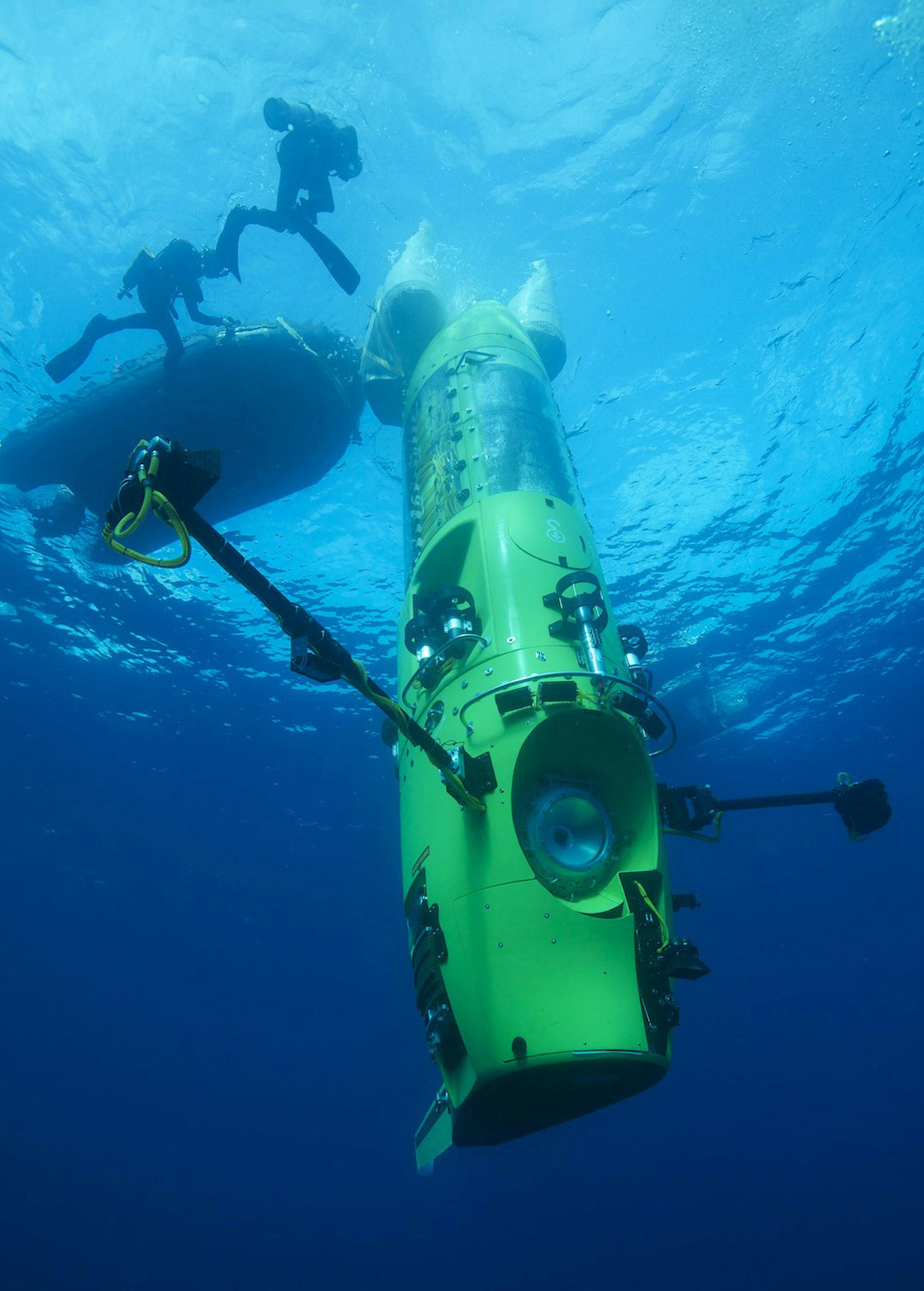
The most recent human visitor was filmmaker James Cameron, who descended to the bottom alone in 2012.
Dziak said the recent recordings might be the first ever captured at such great depths. "It's not an easy thing to do to get an instrument package to the seafloor, recover it from that depth and have it survive," he said.
The 20-inch-long hydrophone was designed by Oregon State University engineer Haru Matsumoto and Chris Meinig, of NOAA's Pacific Marine Environmental Laboratory in Seattle. It was crafted from titanium nearly an inch thick to withstand pressures of 16,000 pounds per square inch — a force that could crush a car like paper crumpled in a fist. "We had never put a hydrophone deeper than a mile or so below the surface," Matsumoto said.
The research is part of an effort to monitor increasing levels of man-made noise in oceans — and their effect on marine life.


