The ad, published in the Minneapolis Star-Journal, succinctly captured the pent-up demand among ration-weary consumers in the months following the end of World War II.
"This May Please You, But We're Scared," intoned the Dayton Co. on Feb. 5, 1946.
Rightly so. The city's leading department store was heralding its miraculous inventory of 60,000 pairs of nylon stockings, quietly amassed over a three-month period and going on sale the following morning.
Nylons, a relatively new, mass-produced version of the silk stocking, had been absent for most of the war's duration, and they were sorely missed. To avoid a mob scene, the store planned to stretch the sale over a three-day period, selling only 20,000 pairs each day. Cost: $1.15 to $1.65 ($13 to $19 in 2011 dollars).
"All kinds of special preparations were made for what was obviously going to be an unprecedented event," wrote James Grey in "You Can Get it at Dayton's," the florid but fascinating account of the store's history, published in 1962. "Before the stockings were put on sale, packages containing two pairs each -- the limit to a customer -- were made up and put in the sub-basement fur vaults for safekeeping.
It was planned that customers would be admitted by the Eighth Street door, carried by elevator to the third floor and then into a queue that made its way by escalator down to the second floor.
"There the line would wind through the toy department, the boys' and men's wear departments and the yard goods, coming at last to the cashiers' windows where their money was to be received in advance. With a receipt in hand, the customer would continue her journey to the counters where she would find what she was looking for -- the stockings, stacked by sizes and by price. Having received her merchandise, it was hoped that she would go home to gloat quietly over her achievement."
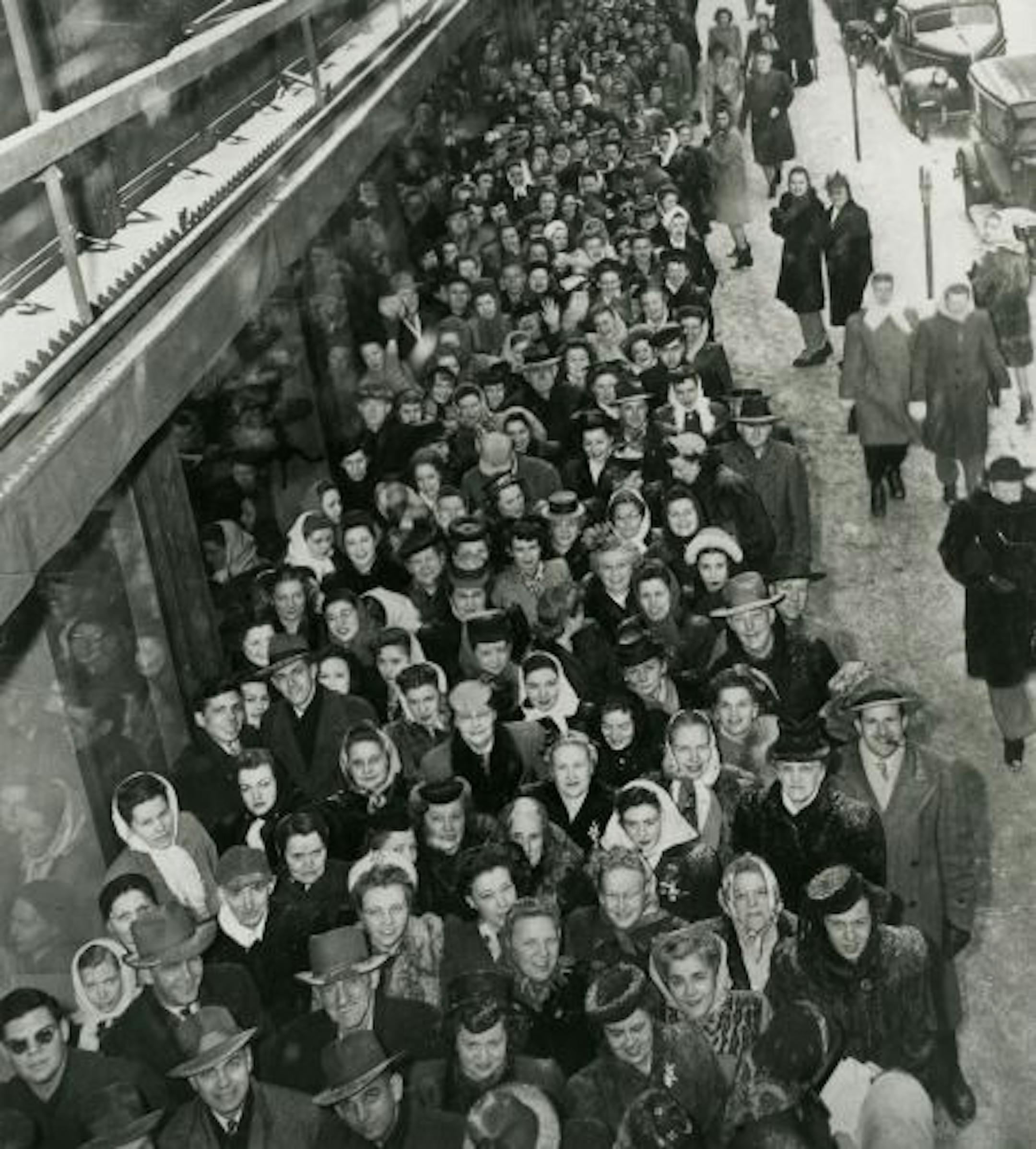
On the first morning of the sale, downtown was digging out from a punishing blizzard, and temperatures were hovering around zero. Yet by the time the doors opened at 9:30 a.m., several thousand shoppers, up to nine people deep, had politely surrounded the building. Women outnumbered men, five to two. Fifteen policemen and a dozen firemen were on hand, "and an extra squad car was summoned around 9:30 a.m.," reported the Star-Journal.