

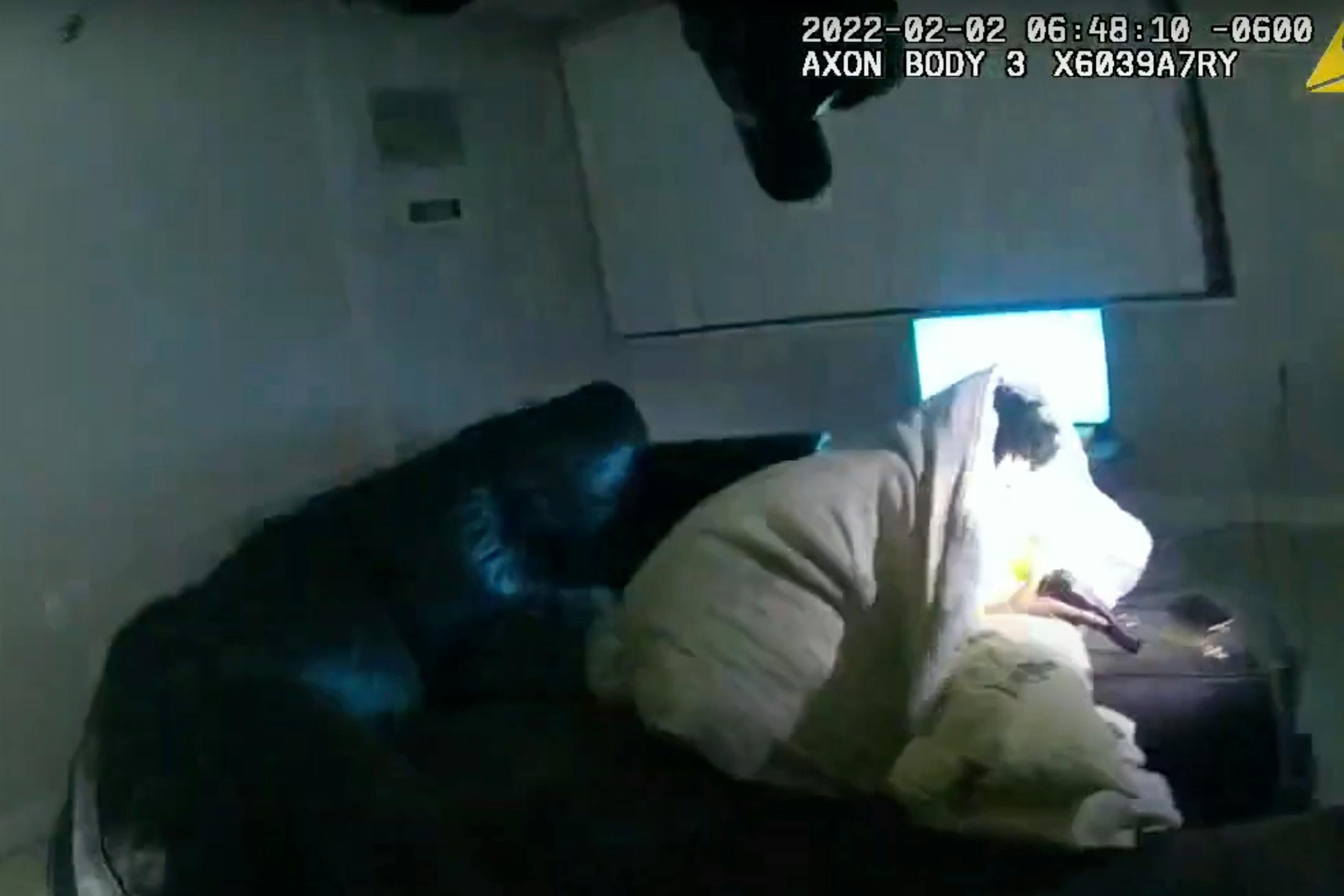
Was Amir Locke surrendering and fully complying with police officers' commands at the time he was fatally shot Feb. 2?
The painful and unvarnished truth lies in the numbers"6:48:10." It was at 6:48 a.m. and 10 seconds when Locke "showed his hands" as commanded by the officers. At 6:48:10 the untrained eye may only see Locke showing his hands holding a handgun. However, someone who has taken even a basic gun safety class will see a young man showing his hands holding a gun, while simultaneously following the "golden rule" of gun safety:
Always, always, always "... keep your finger straight and off the trigger until you are ready to shoot."
At 6:48:10, when showing his hands, Locke was following the golden rule for gun safety when he had his "trigger finger" pointed horizontally straight along the gun barrel as is taught in every 101-basic gun-training class across the country. Placing your trigger finger straight along the barrel is an intentional and conscious act that you are taught to always do when holding a handgun — until and unless you have made the decision to pull the trigger.
With that said, at 6:48:10, was it likely that the officer who fired the fatal shot visually saw and internalized this act by Locke — in a darkened room — in less than two seconds? Not likely. And even if the officer did, officers know very well that it takes less than a second to move one's trigger finger from the safety prone position to the trigger.
I do not know whether the officer, in that moment at 6:48:11, actually feared for his life (reasonably or unreasonably) when he ended Locke's life — just as I do not know whether the police officer who shot Philando Castile in 2016 actually feared for his life, even after Castile had very courteously informed the officer that he was carrying and was not "reaching for a gun."
What I do seriously question is how many young men (disproportionately Black) must continue to lose their lives in these types of senseless situations. With a younger brother and an older sister who are recently retired first-generation police officers in the inner city of Chicago, I strongly believe that "blue lives matter" greatly. Period! But don't "Black lives matter" greatly, too?
It is past time to take a much harder look at the so-called "blindness" of our criminal justice system, the so-called no-knock warrant and its reasonable use in certain situations and communities.


