

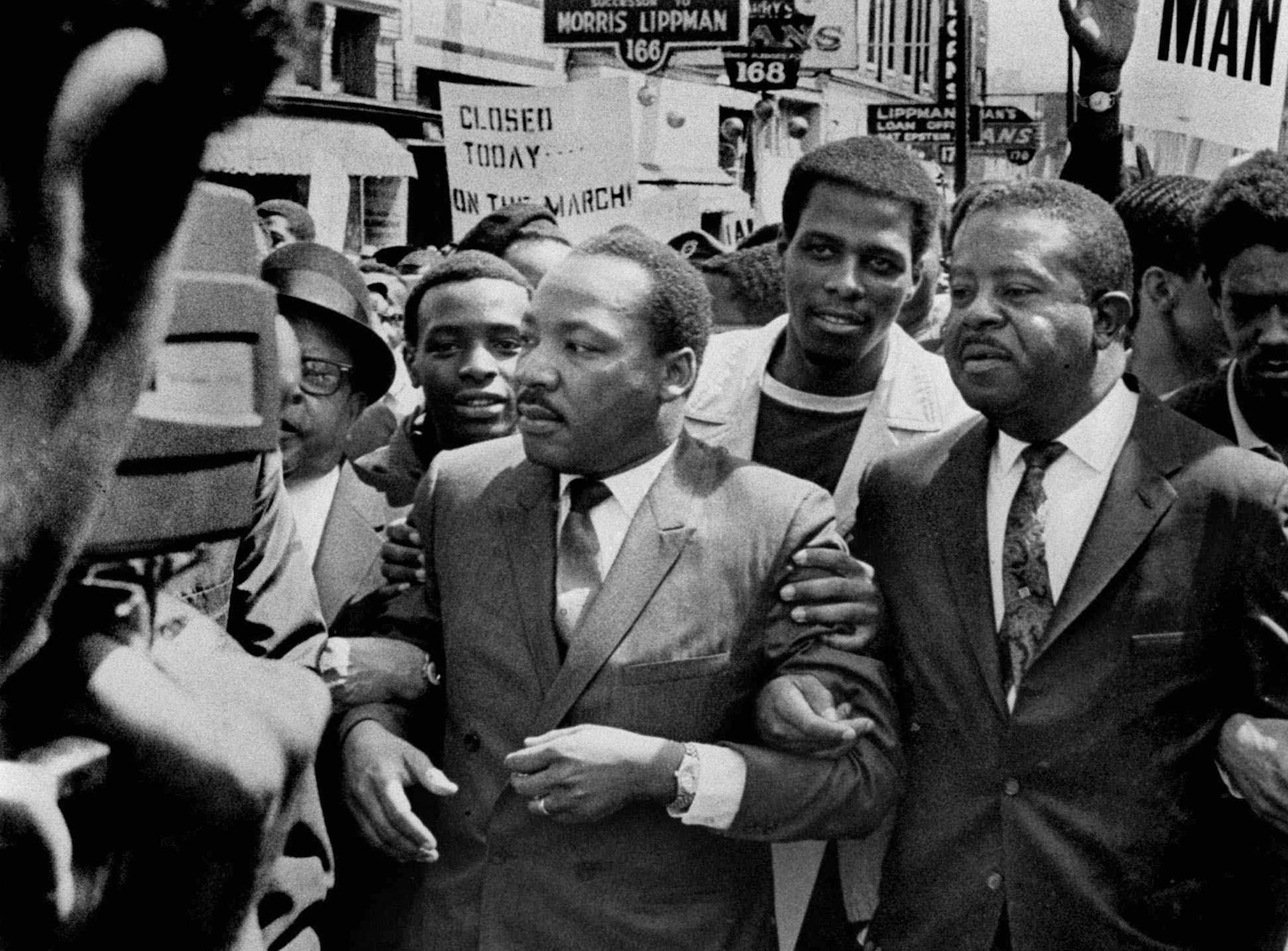
Through the months preceding his assassination on April 4, 1968, the Rev. Martin Luther King Jr. was haunted by a sense of impending death. He shared that premonition with his aide Andrew Young, who was with King when a fatal bullet struck, 50 years ago.
"He talked about death all the time," Young told Tavis Smiley, author of "Death of A King."
For his 2014 book, Smiley asked those who had marched alongside King what they recalled of his mood in 1968. The comedian and activist Dick Gregory reported that King, with tears in his eyes, said he was certain to be killed.
King had faced death threats since the 1950s, when he emerged as the acknowledged leader of the civil-rights movement. But in 1968, the threats reached a crescendo.
The Chicago Tribune saw it the other way around: King was the danger. The paper was verbally at war with King because of his open-housing campaign in Chicago two years earlier.
Five days before his murder, the Tribune observed in an editorial: "We think the time has arrived when the country must ask itself how much more it is going to put up with from this incendiarist."
The FBI took the threats seriously, though its director, J. Edgar Hoover, and King had traded insults. When King attended a meeting of black pastors in Miami in February 1968, the FBI received a bomb threat, so armed guards were stationed outside King's room. Miami police insisted King stay out of sight during the five-day conference.
In March, the announcement that King would address the Human Relations Council of Grosse Pointe, Mich., an affluent Detroit suburb, produced a rash of threats. To protect King, the police chief sat on his lap in the car carrying King to the high school where he spoke.


