

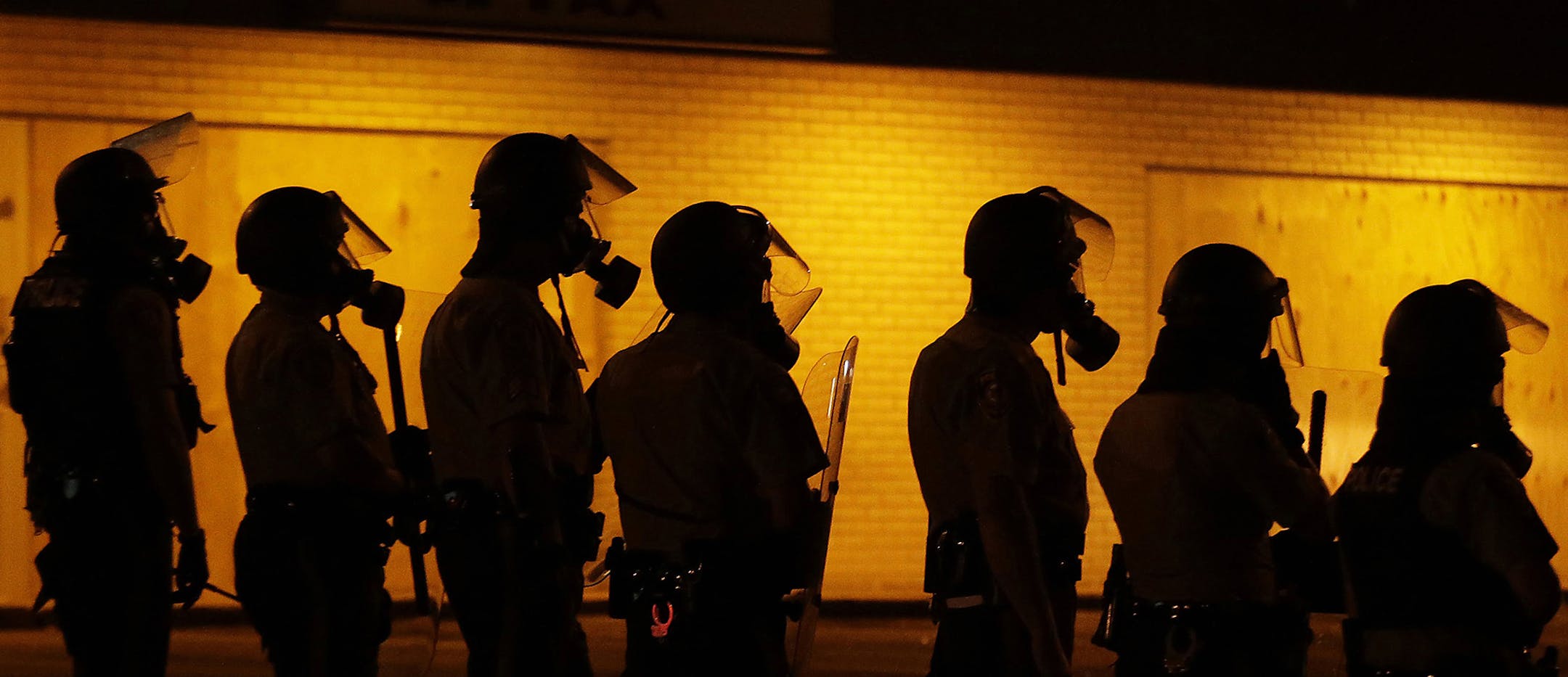
America's police forces are in the spotlight. After the police shooting deaths of Michael Brown in Ferguson, Mo., and 12-year-old Tamir Rice in Cleveland, as well as the decision by a grand jury not to indict the officer caught on video choking New York resident Eric Garner, who later died, Americans from the White House to the streets are debating or protesting police militarization, body cameras, lethal force — and whether enough is done to hold bad cops accountable.
It's essential that we base these discussions on good data and sound presumptions. Police officers are human and fallible, just like the rest of us. How they behave and react in the aggregate is a product of the policies, procedures and guidelines set by police leadership, elected officials and, ultimately, the public.
Here are five common misconceptions about policing today:
1) The job of a police officer is increasingly dangerous.
According to FBI statistics, 27 police officers were feloniously killed in 2013, the lowest raw number in more than 50 years. (The previous low was 41 in 2008.) If we go by officer homicides as a percentage of active-duty police, it was probably the safest year in a century. The number of cops killed on duty has been falling since the mid-1990s, consistent with the overall drop in violent crime in America. Assaults against police officers have been in decline as well.
We will probably see news stories in the coming weeks about a sharp increase in cops killed this year vs. 2013. Approximating from data from the National Law Enforcement Officers Memorial Fund, it is likely that about 50 police officers will be killed this year. That's certainly a sharp increase over the 27 last year, but even if that toll is reached, it would still be one of the lowest since the early 1960s and in line with the general decline since the mid-1990s. The average number of cops feloniously killed per year over the past decade: 51.1.
2) YouTube videos and cellphone footage prove that today's cops are out of control.
Most criminologists believe that today's police departments are more professional than ever before. Cops tend to get more training, and departments are guided by defined rules and procedures more than they were in the past. Most decent-size police agencies have internal affairs departments, and a growing number of cities have installed citizen review boards. That hardly means that there are no problems in policing today, of course, or that these developments suffice to safeguard civil liberties. But it's likely that the ubiquity of cellphone cameras and the diffusive power of social media are simply making us more aware of rule-breaking cops, rather than showing that there are more of them than before.
3) With more criminals wielding heavy-duty weapons, police must militarize to catch up.
Multiple studies, including from the Justice Department, have shown that the guns used in homicides, including the killing of police officers, overwhelmingly tend to be small-caliber handguns. Moreover, gun ownership has increased over the past 20 years — the same period in which both the violent crime rate and the killing of police officers have been in decline.
One version of this argument advanced recently by Vox and the New Republic is that we can't demilitarize the police without gun control. But even if it were true that criminals were arming themselves with bigger guns, it isn't clear that gun control would demilitarize the police. First, gun-control legislation would probably not do much to keep guns out of the hands of violent criminals, particularly in the short term. Second, the argument assumes that the law enforcement community would accept such a bargain. That seems unlikely. Polls consistently show that large majorities of police officers oppose gun control, although big-city chiefs and the heads of some big police organizations support such policies.


