

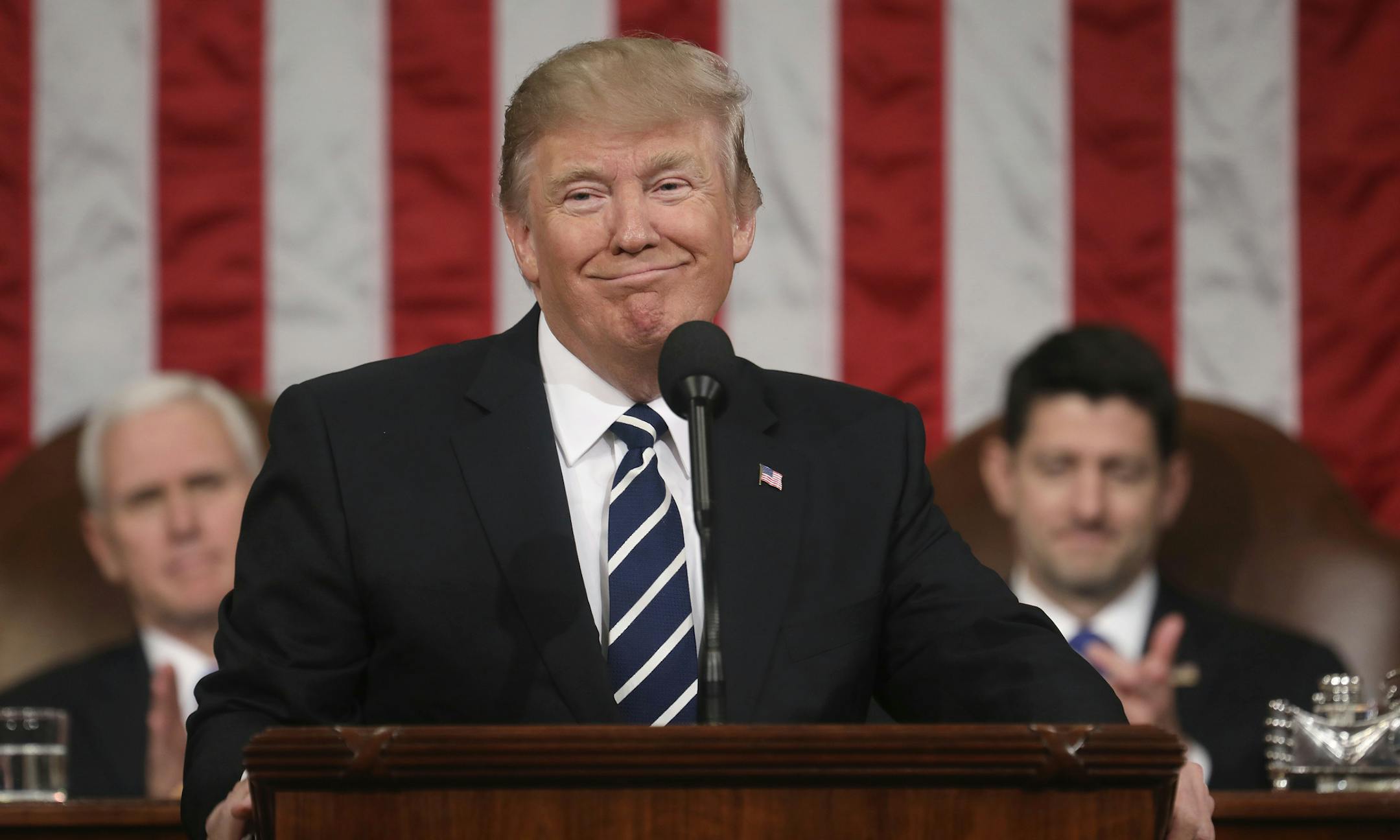
WASHINGTON – In President Donald Trump's world, boring is disruptive.
After five-plus weeks of gleefully setting the Washington establishment ablaze and declaring a new war with virtually every public utterance, Trump took the radical step Tuesday night of delivering a soothing comfort food of an address to a jittery Congress and skeptical public.
For the first time since his swearing-in in January, Trump seemed to accept the fetters of formality and tradition that define and dignify the presidency. And while he touched on all of the hard-edge elements of the economic nationalist agenda that has impelled his executive orders and calls for "revolution," Trump brandished a blunter rhetorical ax and, for once, delivered on his promise to speak the Reagan Republican dialect of optimism and reconciliation.
Why the sudden shift? Numbers. Trump's approval rating is the worst for any new president in recorded history — between 38 and 50 percent at a time when many presidents are in the 60s. Slamming the news media or pro-Obamacare demonstrators energizes his base, but it's hard to move much higher in the polls without making a less partisan pitch.
The other key statistic spurring his sunshine-and-civility adjustment: $54 billion, the amount of federal funding he hopes to siphon from other departments to increase spending at the Pentagon — a budget proposal that is already half-dead on arrival, judging from its lukewarm reception on Capitol Hill this week. Presidents, even those commanding comfortable majorities in both houses, need to get Congress in line, and the only way to do that is to declare peace.
Here are five takeaways from the most presidential speech Trump has ever given — delivered at precisely the moment he needed to project sobriety, seriousness of purpose and self-discipline.
Which Donald Trump is real?
The split-screen between Tuesday's temperate Trump and the everyday Trump was striking, to put it mildly.
"The time for trivial fights is over," said Trump, a man who spent the first 48 hours of his presidency bickering about the size of the inauguration crowd. While that statement was meant as a challenge to his establishment critics, it also seemed as if he were coaching himself.


