When it comes to favorite summer condiments, salsa is giving traditional ketchup and mustard a serious run for the money.
For many Americans, salsa is almost considered a basic food group, and not just as a nutritious dipper for corn tortilla chips. Packed with garden-fresh fruits, herbs and vegetables that are easy to get your hands on, it's as terrific a topping for chicken, beef or seafood as it is a colorful mix-in for pasta, rice and salad. Plus, it requires virtually no cooking, making it the perfect dish to throw together when summer heat and humidity make you feel like melting.
Salsa — the Italian and Spanish word for sauce — has a rich and delicious history. Long before Spanish priest Alonso de Molina dubbed the classic combination of tomatoes and chile peppers "salsa" in 1571, it was a culinary staple for the Mayans, Aztecs and Incas. Thousands of years ago, they mixed chiles with tomatillos, tomatoes and squash seeds and ate it with lobster, fish, turkey and venison. It's been a cornerstone of Mexican kitchens ever since.
Once served solely in Hispanic communities in the U.S., salsa made its way onto other tables in the 1940s, first in the American Southwest and later in larger cities such as New York. It's grown in popularity as Americans have become more adventurous eaters in search of ever-spicier foods. In 1992, salsa famously outsold ketchup as Americans' favorite condiment.
The most popular salsa is salsa rojo, a fresh sauce made with tomatoes, peppers, garlic and onions; substitute tomatillos for the red tomatoes, and add a little lime juice and cilantro, and you've got a classic salsa verde. But there are so many more flavor combinations the home cook can explore.
Its versatility and adaptability is salsa's biggest selling point. Chunky or finely diced, spicy or mild, crafted with fruits or vegetables, and sometimes both, salsa is rife with possibility. The only limit is what happens to be for sale this week at your farmers market or grocer, or ready to pick in your garden, and your imagination.
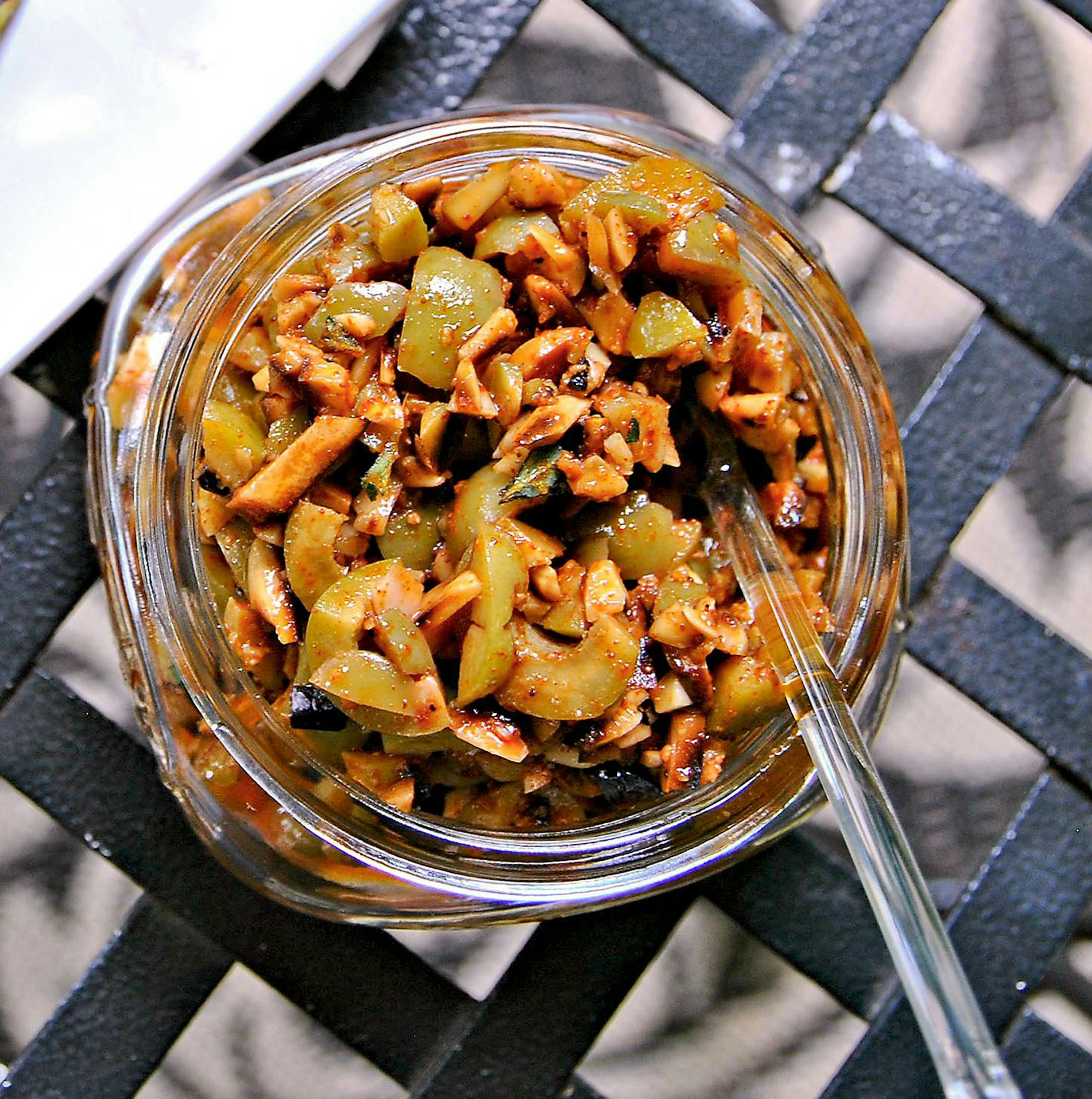
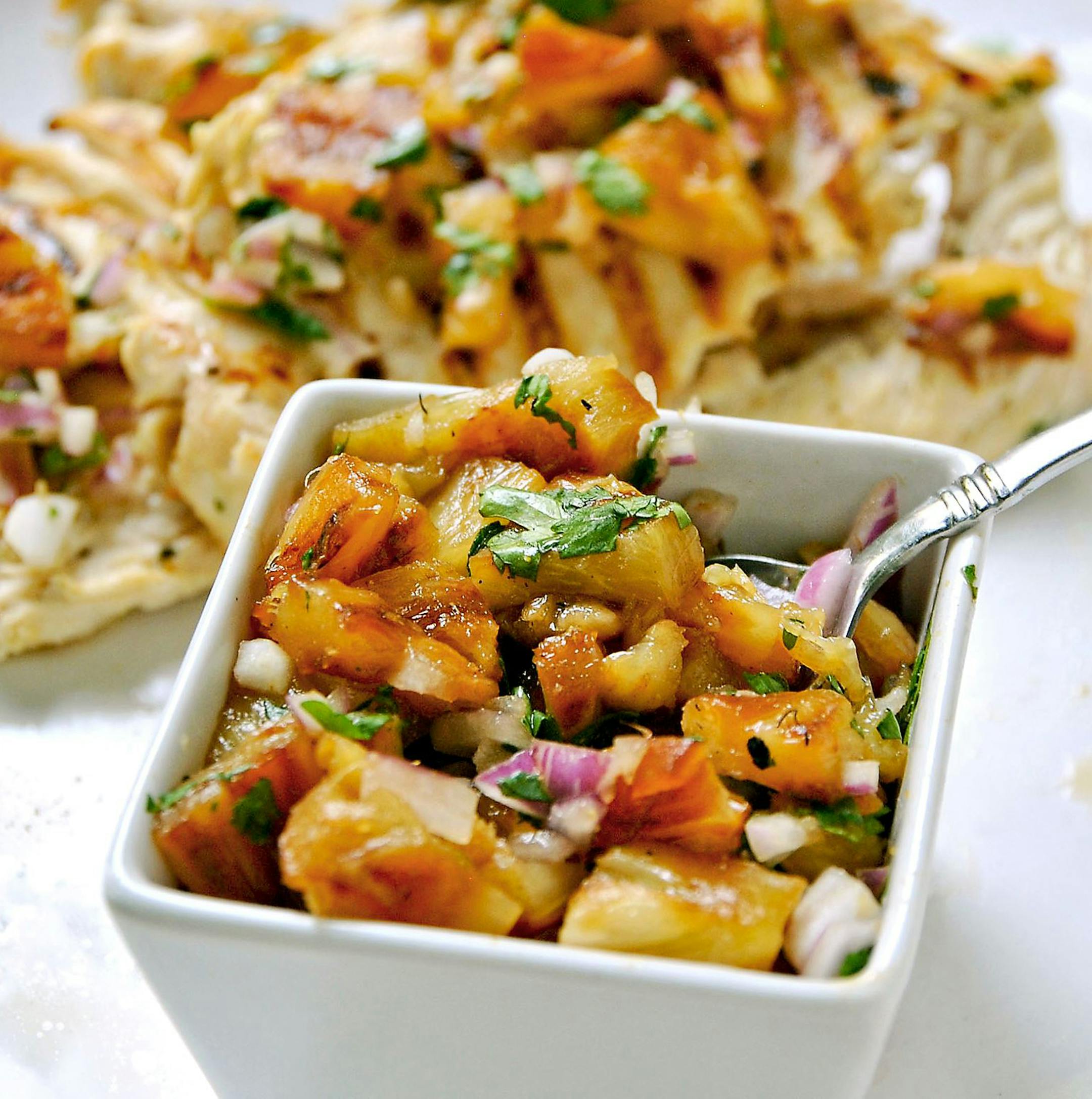
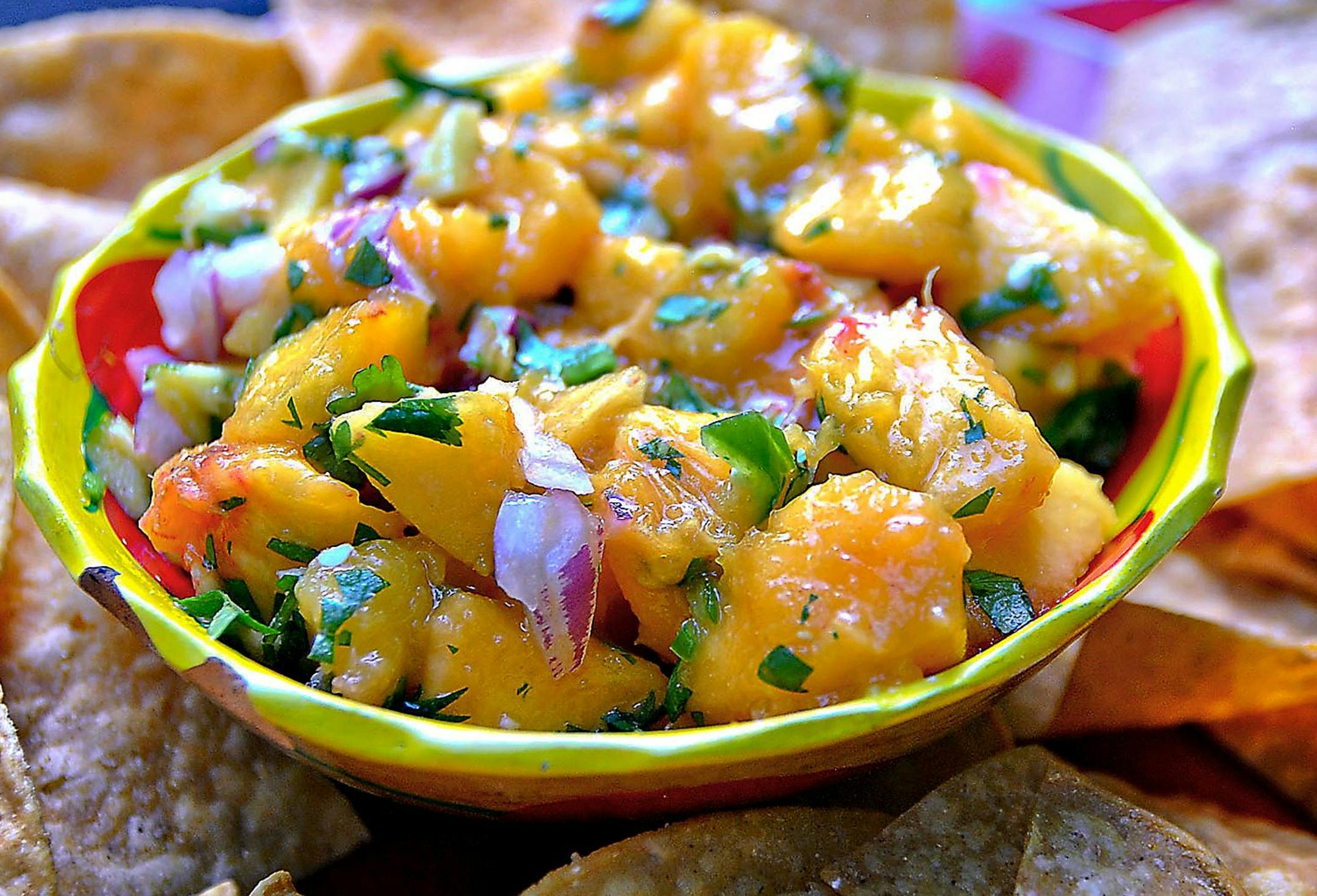
For example: Briny green olives mixed with toasted slivered almonds, lemon juice, orange zest and chipotle pepper makes an unexpected, but oh-so-delicious, topper for watery, light-flavored vegetables such as eggplant and zucchini. Grilled pineapple and sweet, juicy peaches, when mixed with chiles, lime, red onion and spices, brighten not just fish and pork but also give chicken a lively kick.
With new takes on salsa, you can spice up your summer.