

State transportation officials on Tuesday defended their maintenance record on the Interstate 35W bridge before its collapse last August, rebutting a conclusion in a Legislature-mandated report that tight budgets played a role in those decisions.
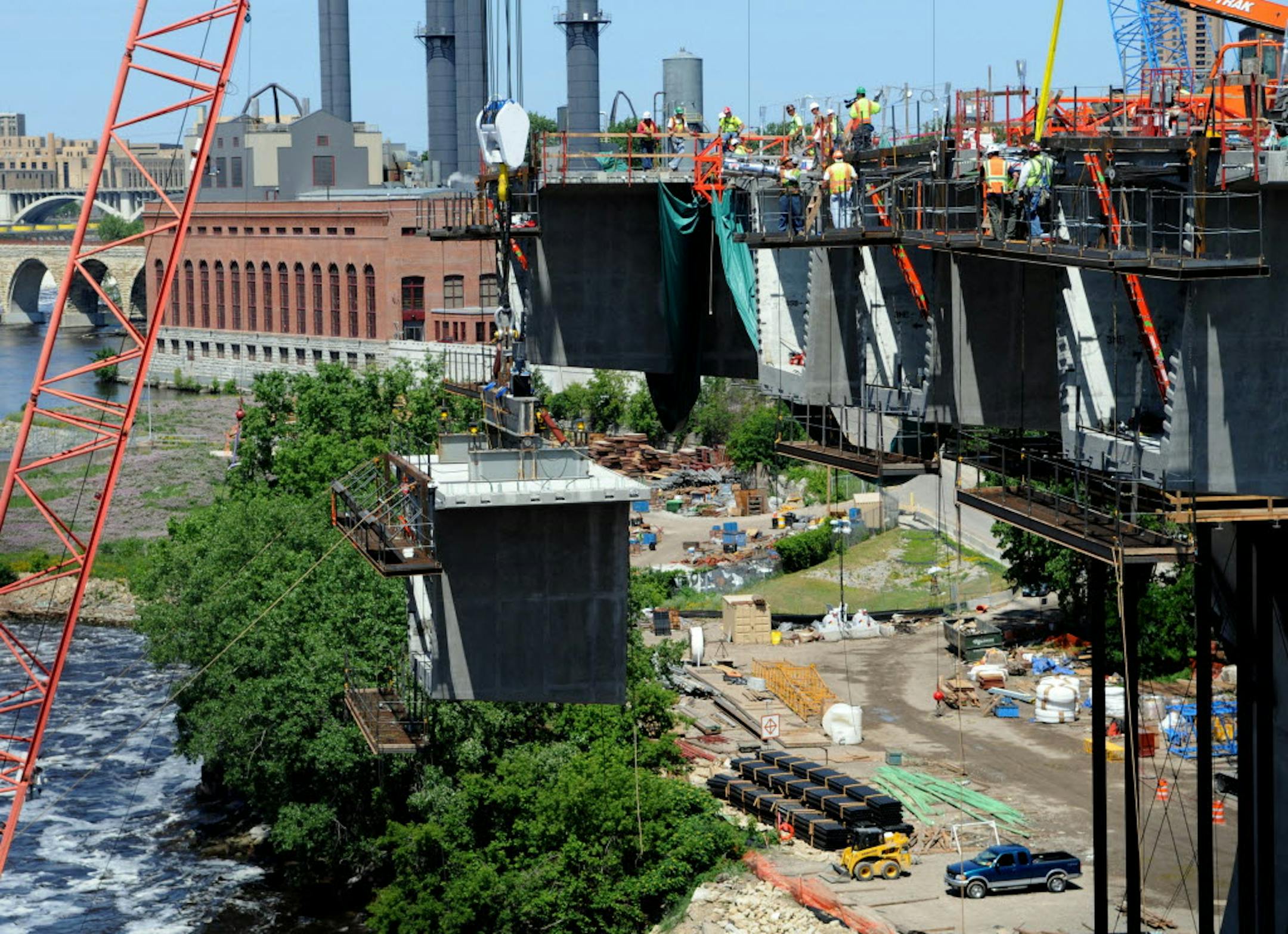
In a day that mixed images of the new bridge with the harsh reminders of last year's tragedy, the Minnesota Department of Transportation hosted key lawmakers on a tour of the $234 million replacement bridge and then jousted with some of the same legislators over whether the agency is making the necessary internal changes to ensure that another bridge collapse does not occur.
The day began when House and Senate transportation leaders stood looking at the new bridge and marveled at the speed of the project, which may be completed by mid-September, three months ahead of schedule. "This is fantastic," said Sen. Steve Murphy, the chair of the Senate Transportation Committee, who snapped pictures of the bridge during a tour.
But the praise for the new bridge was often overshadowed by the politics surrounding the old bridge's collapse. Sen. Jim Carlson, DFL-Eagan, said he could only imagine the pressure being exerted so that "a couple of buses of Republicans" could triumphantly drive across a new bridge during the Republican National Convention in early September.
Pawlenty: Earlier report was off-base
Speaking to reporters earlier in the day, Gov. Tim Pawlenty said a legislative report linking a lack of funding at MnDOT to a lack of maintenance of the collapsed bridge was off-base.
"There may have been concerns relative to maintenance but they are unable yet to make any connection to maintenance decisions and the actual cause of the bridge collapse," Pawlenty said.
The governor reminded the public that the National Transportation Safety Board is conducting the formal investigation into the collapse, and that conclusions should not be drawn until its report is issued later this year. The NTSB has indicated that under-designed gusset plates, a flaw that would date to the bridge's construction in the 1960s, may have played a pivotal role in the collapse.


