

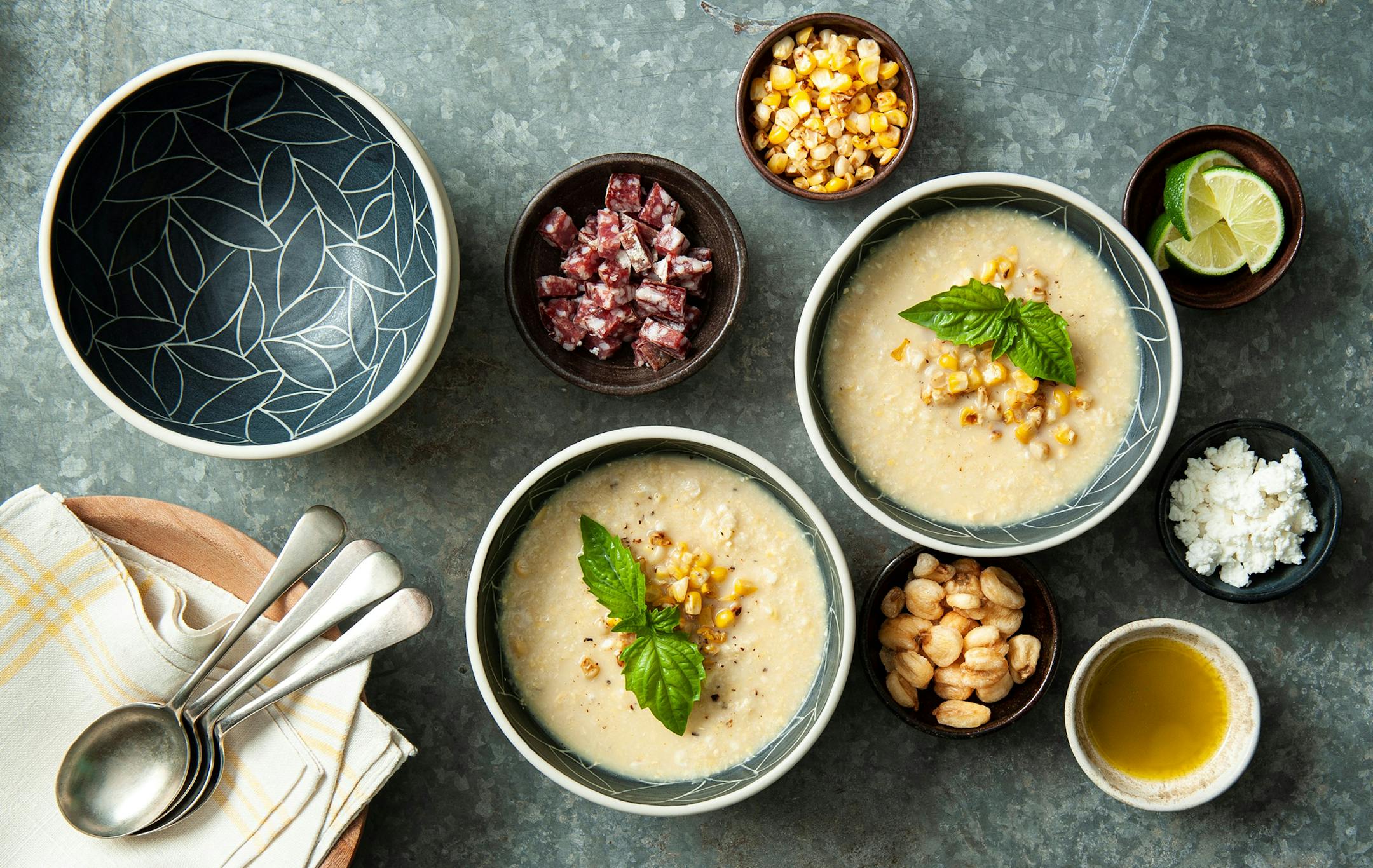
We've all had to wait and wait, scanning farmers markets and cruising by roadside stands, until finally, our winter patience is rewarded. Corn is at its peak right now.
Sweet corn requires very little preparation, allowing us time to relax and chat as we shuck off the husks, sending strands of silk all over the back steps, and wait for the water to come to a boil. No rush!
I tend to approach corn as I do our first crop of asparagus — enjoying it night after night, eating with my hands, dripping with melting butter. Paired with sliced tomatoes and crusty bread, corn makes a fine dinner. Come late August, however, I'm ready for more complicated dishes. That's when I conjure up my grandmother's succotash, creamed corn and corn chowder recipes. We bake corn into a lusty corn pudding, fold kernels into batters for muffins and pancakes, and pile them onto polenta and nachos.
When shopping for corn, it's tempting to peel back the husk to check the interior, but please don't. Exposing a section damages the kernels and it's actually easier and far more reliable to look for bright green husks that are plump and heavy. This means the ear has matured and the kernels are large and juicy. It goes without saying that when you get the corn home, do not delay — enjoy it right away!
I grew up in New Jersey, where white Princess corn is revered. Here, most of our corn is yellow or bicolored. But it's the genetic variety, not the color, that determines corn's flavor and taste. The old-fashioned corn varieties sold in farmers markets tend to be delicate, their flavors corn-forward and their sweetness nuanced. Newer "supersweet" commercial varieties have been bred to ship and store. This is the corn you'll find in grocery stores offseason. It is sugary sweet, the kernels firm and chewy.
Early in the season, the texture of the truly fresh corn kernels tends to be light and milky. When it's left on the stalk for a few weeks, the corn's juices thicken into cream. As soon as corn leaves the field, its sugars begin to convert to starch and turn chalky, which explains why corn at farmers markets, picked the same morning it is sold, is exquisite and hard to describe. With aromas and flavors as elusive as soft rain and warm sun, corn is the taste of summer itself.
Cooking Corn
On the stove: Boil the corn in a big pot of salted water until the color of the kernels becomes more intense, about 4 to 5 minutes. Drain.
On the grill: Peel back the husk (leaving it intact) and remove the silk. Then, replace the husk and set the corn on the grill for about 8 to 10 minutes. (Keeping the corn in the husks prevents it from burning and drying out while it absorbs the grill's deep smoky flavor.)


