

In 2012, the weather was like a verse from "Oh, Susannah": It rained all May, June and July; the weather, it was dry. After an unforeseen mild winter, followed by a March that brought warmth of historic intensity and duration, drought intensified, but many farmers harvested record crops. Despite a warm summer, few damaging tornadoes appeared. October wildfires were doused by a record early snowfall. And meteorological winter brought a sun so hot we froze to death (and snow).
JANUARY
January saw nine daily highs of 40 degrees or better in the Twin Cities. The John Beargrease Sled Dog Marathon along the North Shore was canceled for lack of snow. The Twin Cities didn't drop below zero until Jan. 18, tying the record for the latest first subzero temp in winter, and the first of only three for the season. Just 4.6 inches of snow fell in the metro.
FEBRUARY
Cars and trucks were banned from Hennepin County lakes on Feb. 9. A Leap Day snow/ice/rainstorm brought 2.23 inches of rain to Faribault on Feb. 29, a statewide Leap Day record. Up North, double-digit snow depths, including 12.3 inches at Hinckley, also set Leap Day records and made February the first month with above-normal precipitation since July 2011.
MARCH
A weeks-long heat wave left Minnesotans giddy. From March 10-20, seven state record highs were broken. The Twin Cities hit 80 on March 17, the earliest date ever, during a stretch with eight consecutive daily record highs for dew point. (There were 12 for the year.) The Twin Cities also had nine record-warm nights and the mean temperature March 10-24 was 27 degrees above normal. Minnesota lakes started losing ice March 11, many on their earliest dates ever. A tornado near Elysian March 19 was the second-earliest in state records.
April
Luverne hit 90 April 1, the earliest 90 on the books in the state. Southern Minnesota was nipped by frost April 10-12. A record 1.19 inches of rain fell in the Twin Cities on April 15 and a foot or more of snow Up North eased drought conditions.
MAY
Southern Minnesota saw daily record rainfalls May 1-6, including a May 6 state record 3.62 inches at Pipestone. The southwestern and central parts of the state absorbed 8 inches or more May 4-6. Drought over! The first week of the month brought 4.23 inches of rain to the Twin Cities -- more than a normal month's worth. The Twin Cities received 9.34 inches, making May the second-wettest on record. New Ulm led the state with 12.39. The rain helped farmers avoid the brunt of the next drought, in late summer.
JUNE
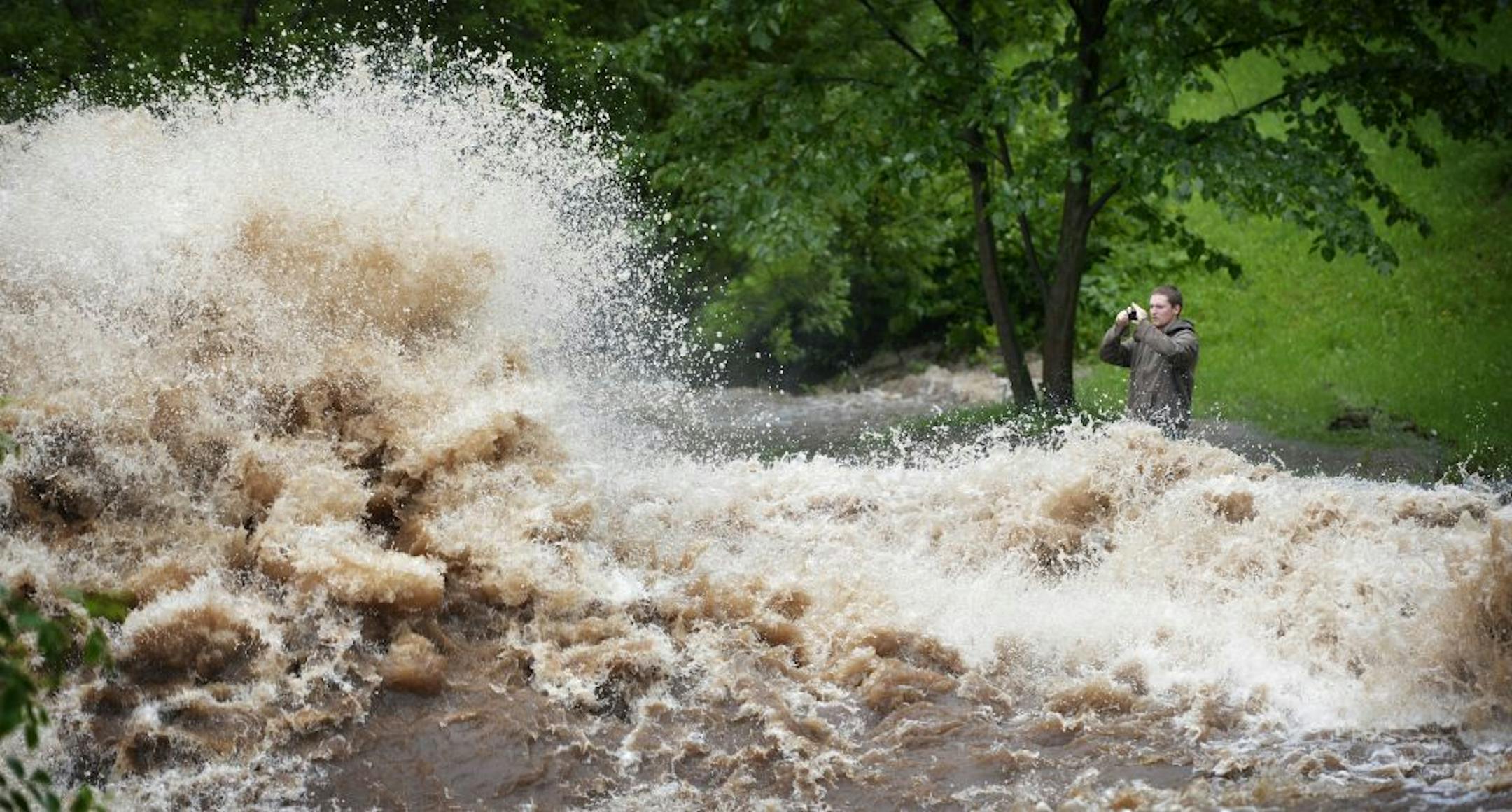
Homes were flooded and roads closed around Cannon Falls after 8.83 inches of rain fell June 14, a Minnesota record for any June day. That was overshadowed a week later by epic rains in the Duluth area, ranging from 7 to 10 inches. Raging creeks and rivers tore up highways, parks and trails, knocking hundreds of people out of their homes from Aitkin to Two Harbors.
JULY
The 4th brought a record high (101) and a record warm low (81) to the Twin Cities, along with a dew point of 77, the highest of the year. July 6 was the year's hottest day (102), and made 2012 the first year with more than one 100-degree day since 1988 (which had four). Some southern Minnesota lake temperatures exceeded 90 degrees at mid-month. Duluth's average July temperature tied the warmest ever; the Twin Cities' was second-warmest, but the dew point average was slightly below the 110-year average. Cities from International Falls to Spring Grove received daily record rains near mid-month; Twin Cities rainfall was slightly above normal.
AUGUST
The shorter days broke the heat. Still, August ended the warmest meteorological summer on record for Duluth and third-warmest for the Twin Cities. The month also was dry, with only one-third of the normal rainfall from Duluth to southern Minnesota.


