

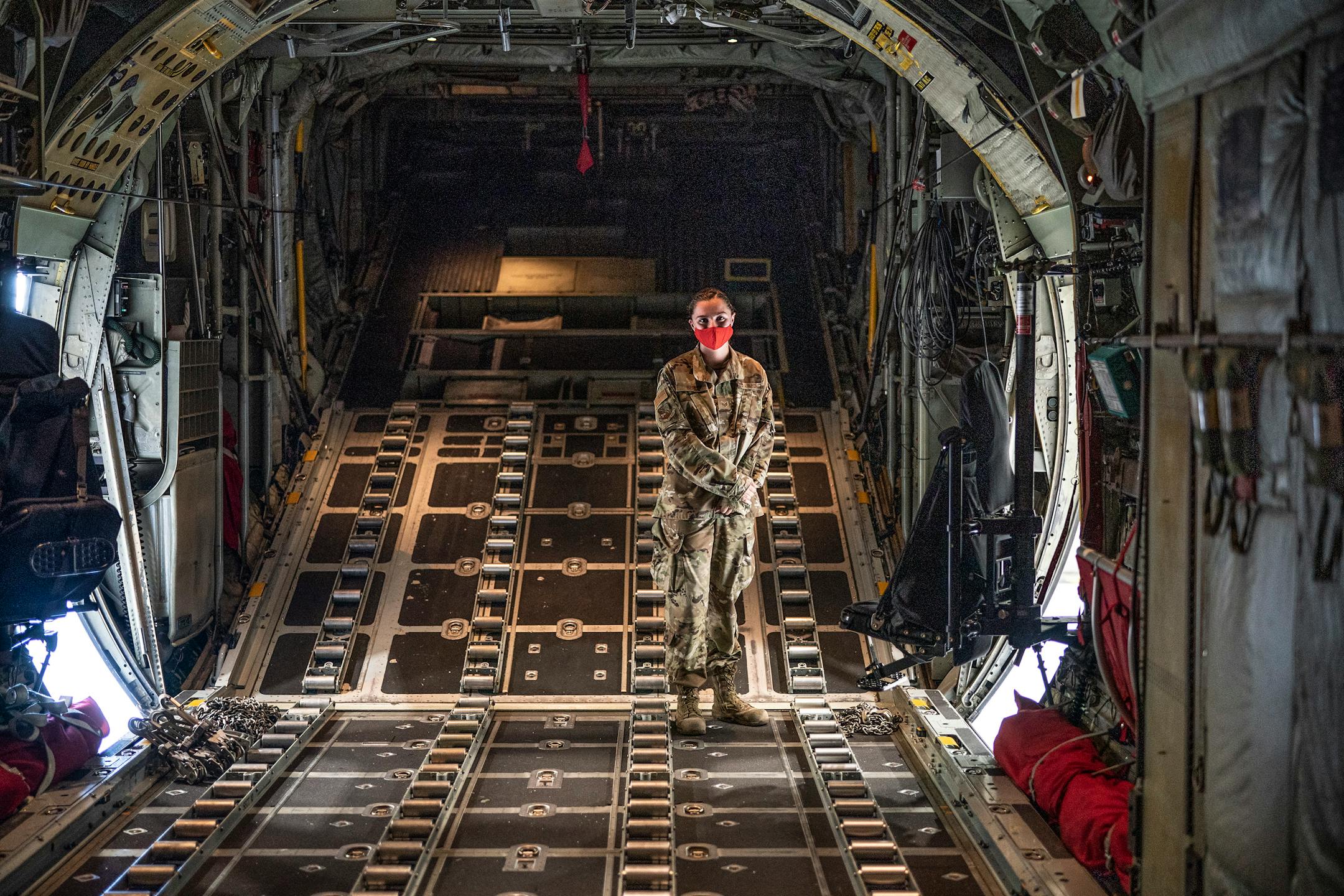
On the September morning 20 years ago when everything changed, Corey Berg's hulking C-130 Hercules had just taken off from Andrews Air Force Base near Washington, D.C., when air traffic control radioed his crew.
Flight control instructed the Minnesota Air National Guard's military transport plane to pursue and identify an unknown aircraft. The group spotted the low-flying Boeing 757 and banked toward it.
That's when Berg, a crew chief from Savage, Minn., with two young children, heard his navigator yell: "It just crashed!"
Berg looked down from the flight deck and saw smoke rising near the nation's capital. His crew radioed back. "This is Gofer zero six," the pilot said. "It looks like that aircraft crashed into the Pentagon, sir."
As the C-130 rumbled back toward Minnesota, the crew tuned to FM radio and learned of the coordinated terrorist attacks: Two passenger jets flew into the World Trade Center in New York, another hit the Pentagon. As Berg's plane flew west over Pennsylvania, another air traffic controller asked about another unidentified aircraft. That's when the crew spotted United Airlines Flight 93 as it arced downward and crashed in a field.
The 20-year anniversary of one of America's darkest days, in the wake of a harrowing, deadly evacuation from Afghanistan, is forcing many Americans to wonder if our response to 9/11 was necessary, foolhardy, or both.
That morning in September 2001 planted the seeds for two wars that have claimed the lives of more than 7,000 American troops and cost trillions of dollars. Iraq and Afghanistan are America's longest wars. Osama bin Laden, the 9/11 mastermind, was hunted down and killed by the American military, and Iraqi dictator Saddam Hussein was captured by U.S. forces and later executed. But the legacy of that day has been magnified through a spike in terrorism worldwide.
The Iraq war has been called one of America's worst foreign policy failures, according to the U.S. Army post-mortem. It destabilized an already unstable region, empowered neighboring Iran and changed the role of reservists and the National Guard. And the long tail of 9/11 continues with the American withdrawal from Afghanistan, which left the Taliban once again in charge and ended with a devastating terror attack in Kabul that killed 12 U.S. troops and dozens more Afghans.


