

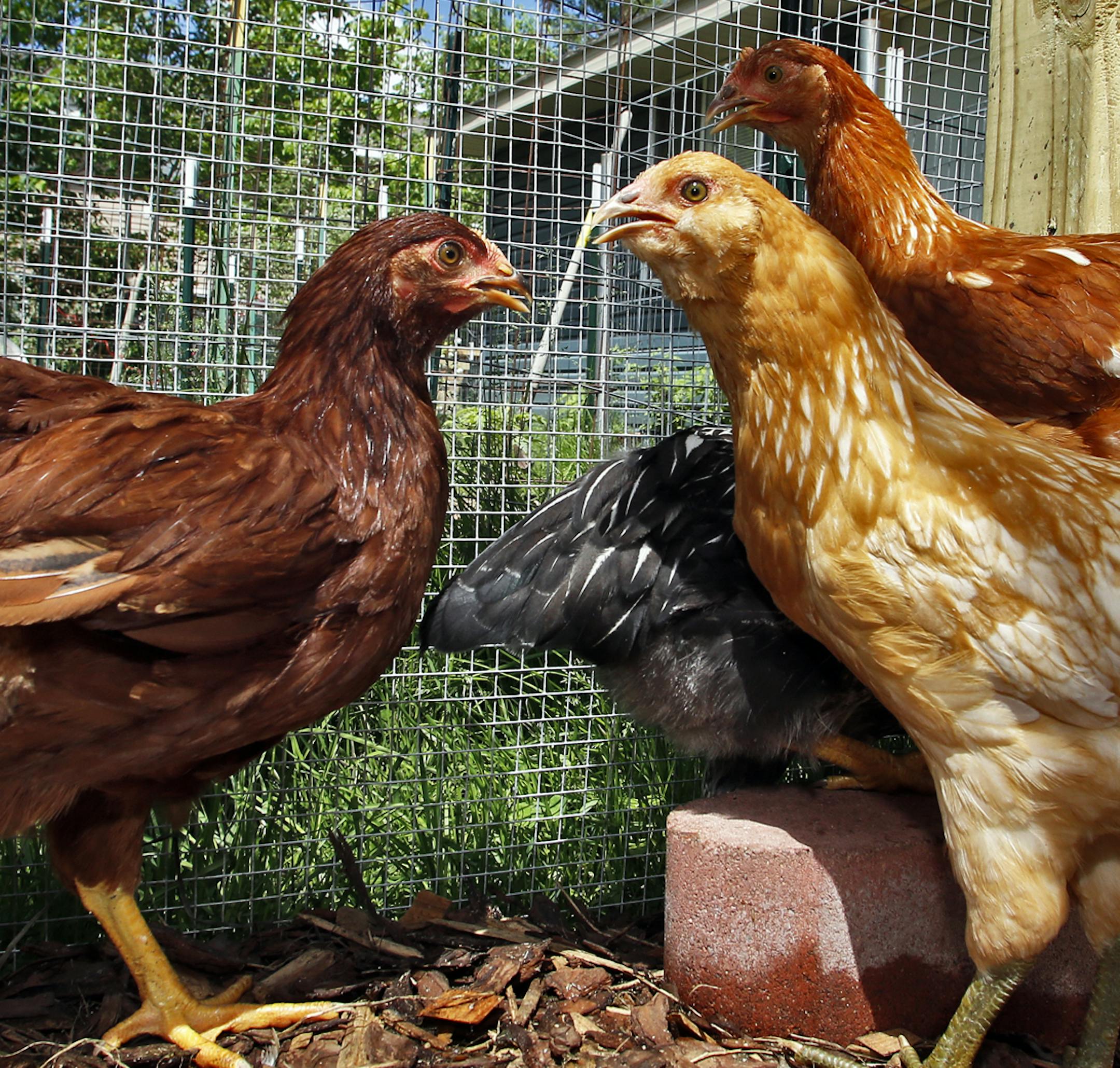
Two small Lake Minnetonka communities are the latest to jump into the hot debate over allowing back-yard chickens — an issue that's increasingly confronted metro suburbs.
But for Deephaven and Woodland, the unconventional animal request poses a new challenge as they are smaller cities with fewer resources to manage it. On Monday, about 50 Deephaven residents are expected to pack City Hall to try to convince divided city leaders that back-yard chickens can work there like they do in more than a dozen metro cities.
"It's just one of those emotional issues where people think the worst will happen," resident Jillian McGary said. "It bothers me as a property owner that I can't use my land to grow my food."
One of the critics she's trying to convince is her back-yard neighbor, Paul Skrede, the city's mayor. He didn't return messages for comment, but he's one of the council members who has voiced concern to the change, saying it could breed complaints that the 3,000-resident city won't have the resources to handle.
"We're not the city of Minneapolis, and we don't have those resources," Council Member Steven Erickson added in an interview. "I just don't see it being advantageous in the city, but if the residents put up enough [of a case for chickens] ... I'm not going to actively block it."
Chickens' 'PR problem'
It's a debate that more metro cities have faced over the past few years as everyone from 4-H students to sustainability enthusiasts push for locally grown food. Minneapolis and St. Paul allow chickens, as do suburbs such as Bloomington, St. Louis Park, Minnetonka, Burnsville and Robbinsdale, usually with restrictions such as prohibiting roosters or containing the flock size.
In Woodland, one resident's recent request has spurred the city to draft an ordinance that could be voted on this fall.
"Given the popularity of this activity, we thought we should at least consider an ordinance," Woodland Mayor Jim Doak said. "It's a reasonable request."


