

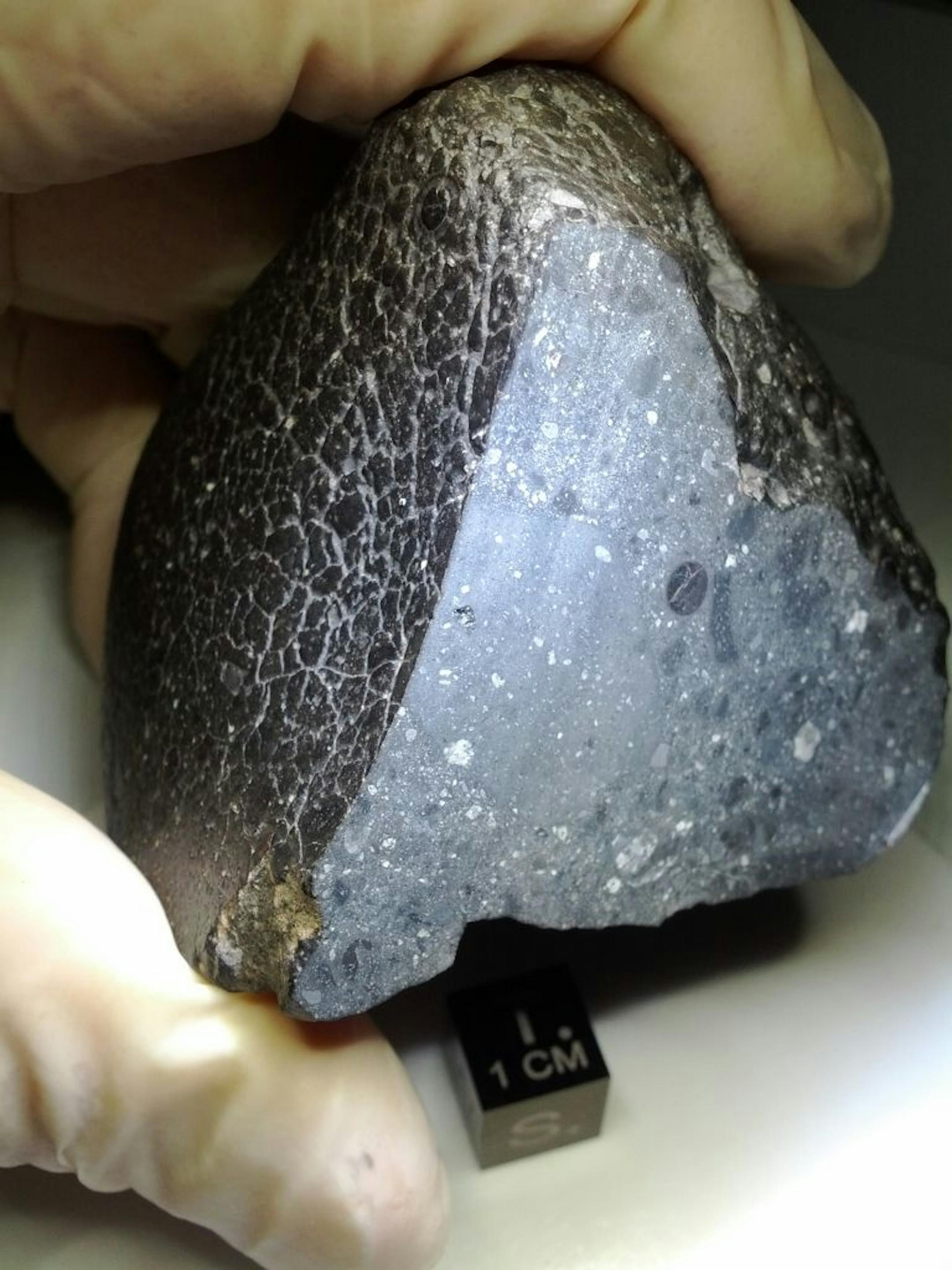
Scientists have identified the first meteorite to originate from the surface of Mars, a 2.1 billion-year-old specimen that contains about 10 times more water than any other space rock from Mars.
Discovered in the Sahara Desert, the rock is unlike any of the 110-odd Martian meteorites found on Earth, said a report published by the journal Science. Experts said it provides an unprecedented close-up of the planet's surface and may help scientists understand what NASA's Curiosity and Opportunity rovers are seeing as they roam Mars.
"This opens a whole new window on Mars," said Munir Humayun, a cosmochemist at Florida State University.
Though scientists have sent several spacecraft to Mars -- most recently Curiosity, which is equipped with an on-board chemical laboratory -- there's no substitute for a sample in hand, said study leader Carl Agee, director of the Institute of Meteoritics at the University of New Mexico in Albuquerque. Scientists on Earth can glean a wealth of information about the rock's history and the environment in which it formed -- tests no rover could do.
The rock came to Agee in 2011 by way of a meteorite collector who bought it from a dealer in Morocco. The rock is about the size of a baseball and twice as heavy.
Even though most space rocks become blackened on the outside during their blazing descent through the atmosphere, they often remain light on the inside. This rock was dark all the way through, earning the nickname "Black Beauty."
"I had never seen anything like it," Agee said.
Perplexed by the strange specimen, he put it on his bookshelf and let it sit there for about a month as he wrestled with the best way to approach his analysis. Once he got started, he examined the meteorite for nearly a year.


