

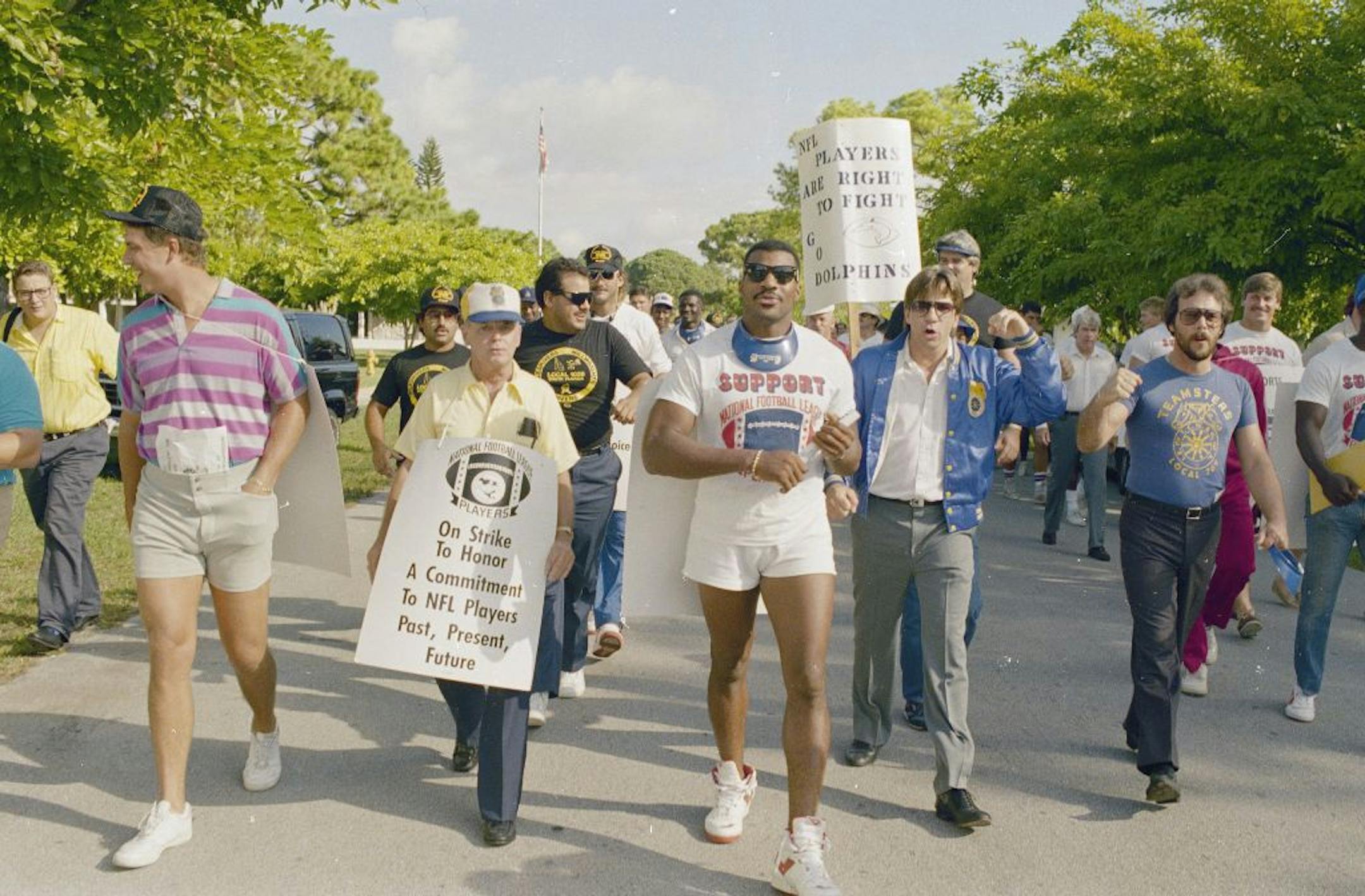
It's the fall of 1987. NFL players are on strike and Houston Oilers coach Jerry Glanville is sitting in a room with officers from the Houston Police Department. They're about to watch a surveillance video of two alleged Oilers leaving the picket line to smash the windows out on a bus that brought Houston's replacement players to their first practice."The police say to me, 'Coach, if you can identify these guys, we'll arrest them and they'll be in jail within two hours,' " Glanville said last month. "I said, 'OK, boys, let's do this.' So we look at the video and I'll be damned. It's my two starting safeties."
Uh-oh.
"The police say, 'Coach, can you identify these two men?' " Glanville said. "I look 'em right in the eye and I say, 'Officer, I've never seen those two boys before in my life.' "
If you're old enough to remember 1987, you probably find the current NFL lockout quite, well, boring. Especially when compared with the chaos, the oddity and the lasting infamy of that 24-day strike, which remains -- at least so far -- the benchmark in the NFL's history of labor pains.
"It was the damndest mess I ever saw in the 40 years I coached," former Vikings coach Jerry Burns said. "Just a nightmarish operation start to finish. I recommend they never try it again."
When players voted to strike on Sept. 22, 1987, the league responded by canceling one week of the schedule. Three weeks of replacement games followed before the regular players admitted defeat and crawled back to work without free agency or a guaranteed percentage of the league's revenue.
Ironically, the situation today is flipped 180 degrees. Not only do the players have free agency, it's their guaranteed percentage of league revenue that caused the owners to create the NFL's first work stoppage since the strike in 1987.
NFL Commissioner Roger Goodell has said the league doesn't plan to use replacement players this time. Perhaps it's still recovering from the embarrassment of doing it the last time.


