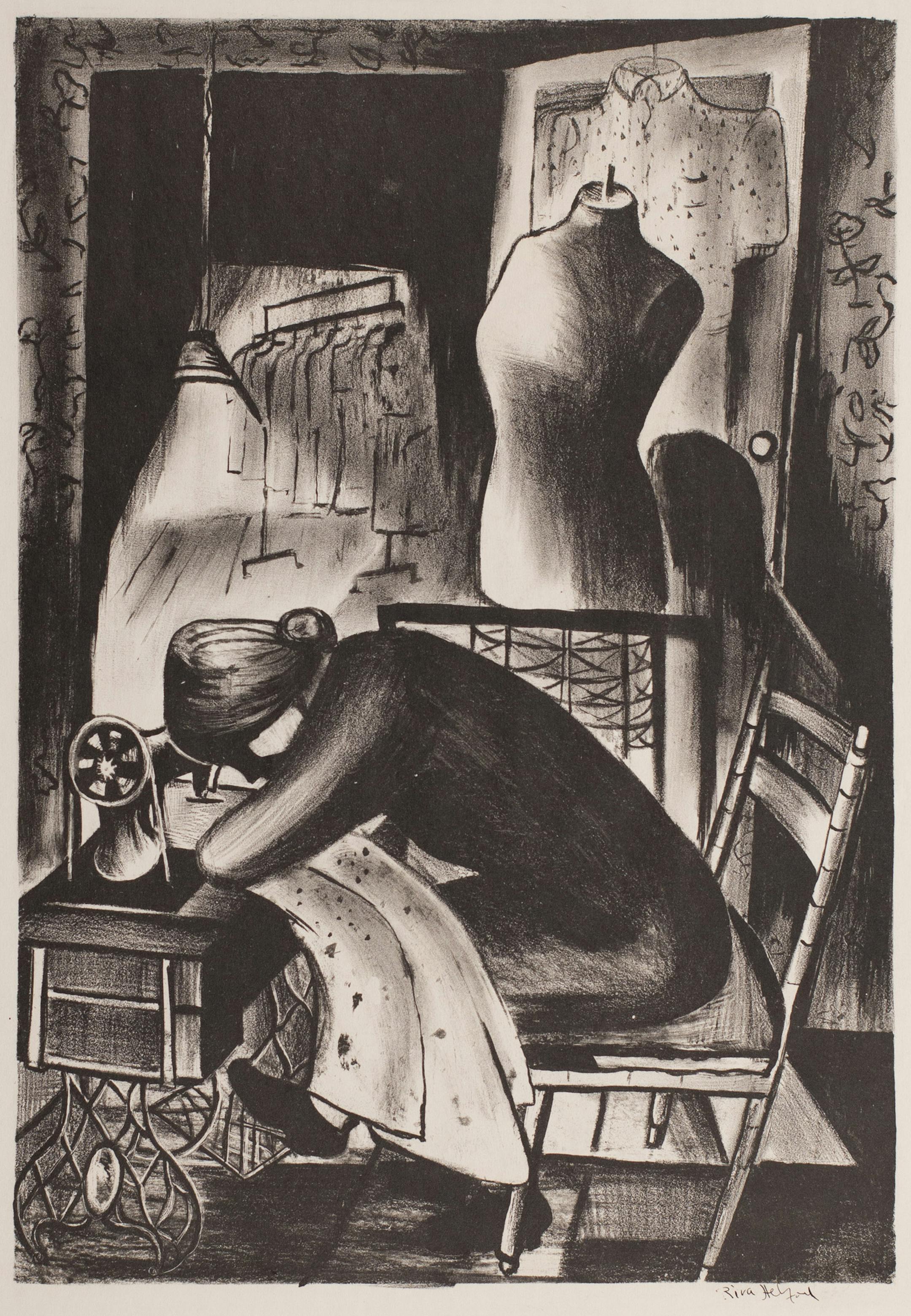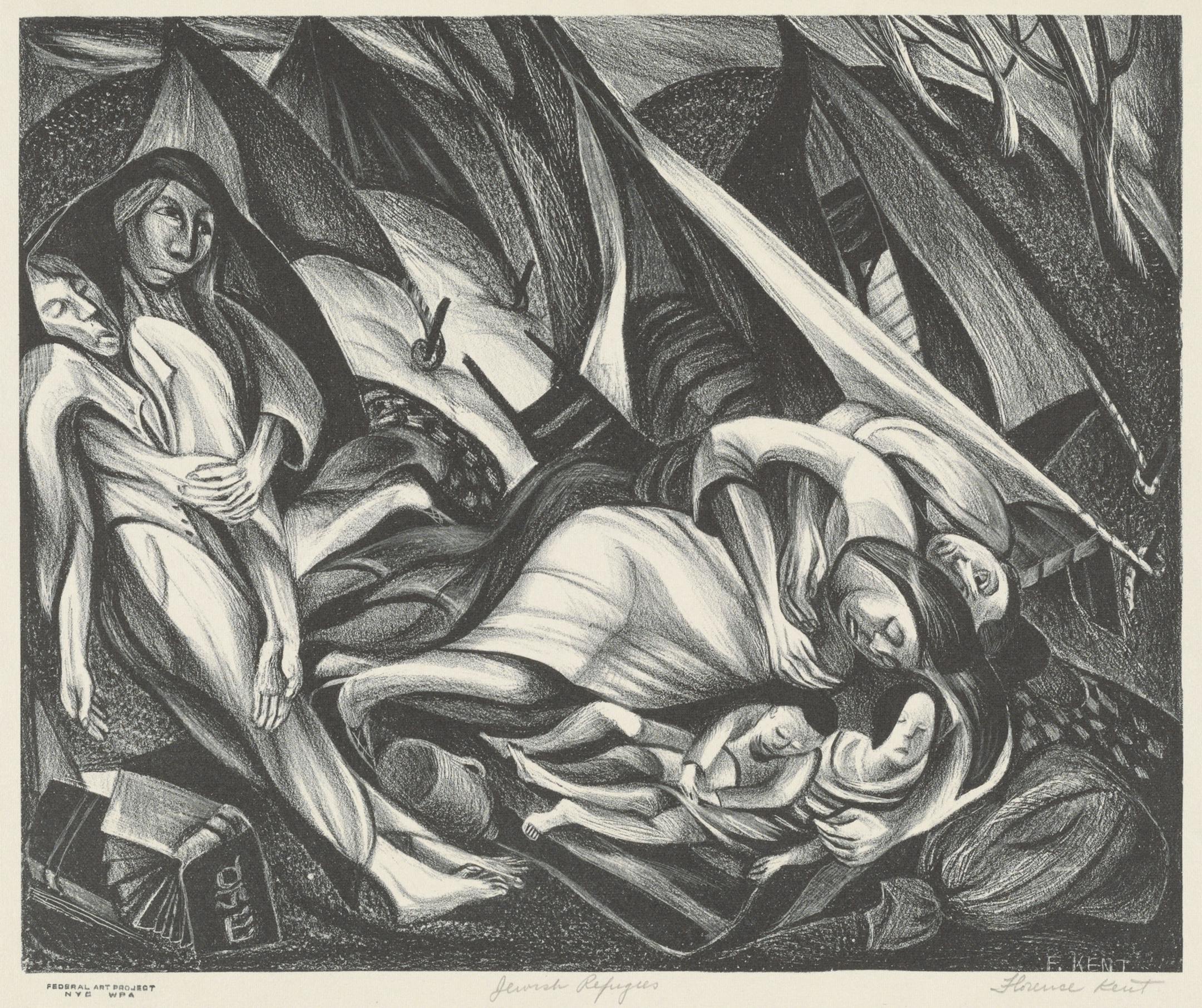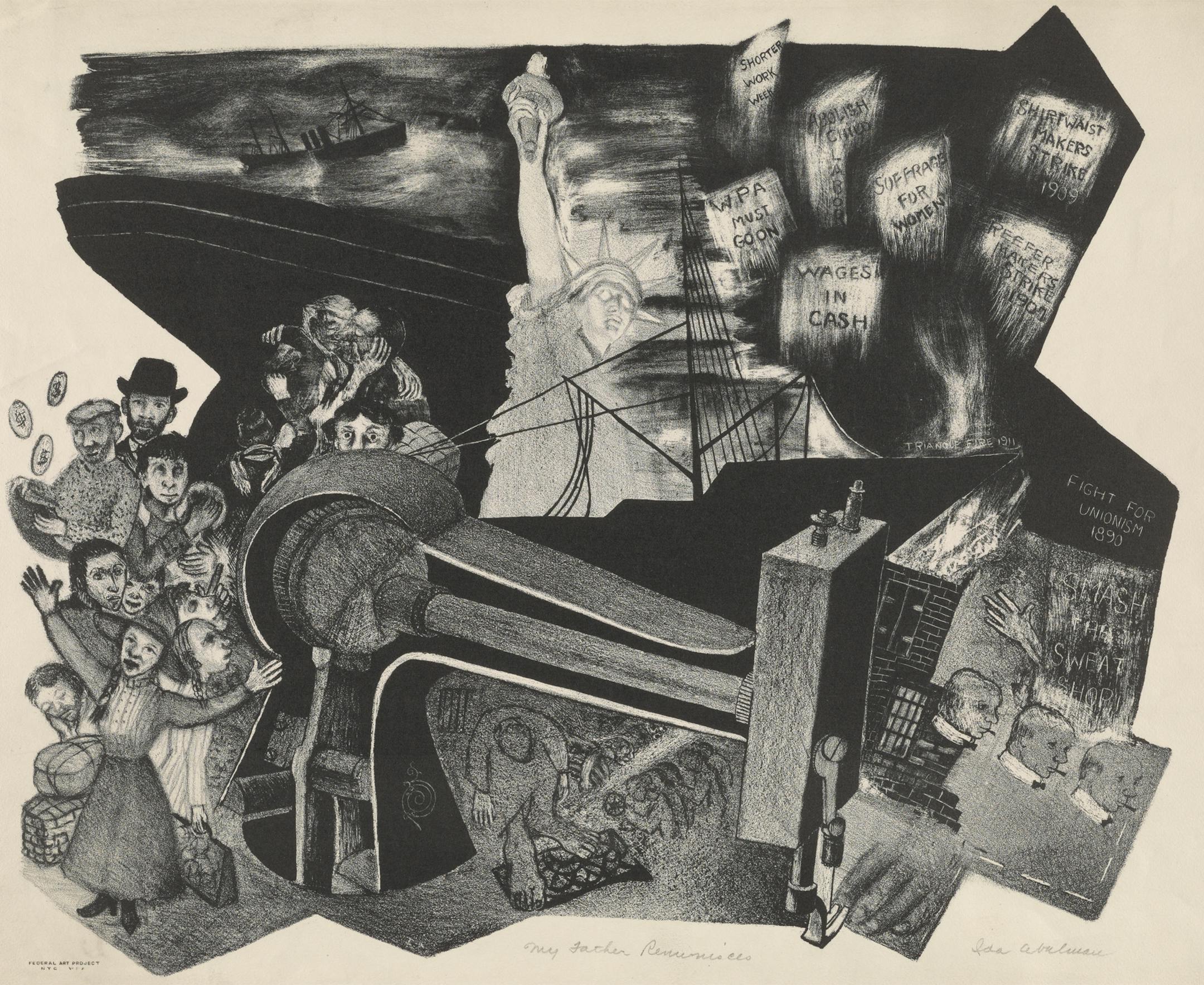
Time appears to be linear, but the approximately 40 prints in the Weisman Art Museum exhibit "Pressing Issues: Printmaking as Social Justice in the 1930s United States" prove that art made nearly a century ago can reflect questions still plaguing America today.
Arranged clockwise in a large, darkened gallery to ensure adequate social distancing, the artwork was commissioned through the New Deal, a program instituted by President Franklin Roosevelt after his inauguration in 1933, to stabilize the economy and "restore prosperity" during the Great Depression.
Making this connection to the past doesn't seem so far off, considering the unemployment picture just a year ago — in April 2020, a month after the pandemic set in, jobless rates in all 50 states even exceeded the peaks reached in the Great Recession of 2007-09.
The exhibit was organized by Kathryn Koca Polite, assistant curator at the University of Illinois' Krannert Art Museum, where it debuted last fall. It's thematically organized around labor issues, gender inequity, economic disparity, racialized violence and reactions to the rise of fascism in Europe in the 1930s.
Leroy Flint's etching "Strikebreakers" shows a group of five men wearing caps and holding bats, angrily walking forward. As U.S. labor organizations tried to organize workers during the Depression, their actions were often denounced as an attempt to destroy democracy, and met with violent resistance by hired thugs.
Michael J. Gallagher's lithograph "Mine Accident," circa 1935, portraying three beefy men carrying out an injured worker, has an almost Tom of Finland vibe to it, filled with beefy male sex appeal. In Jacob Kainen's "Tenement Fire," a burning building gets sprayed with water from the street, reminiscent of photographs of the Triangle Shirtwaist Factory fire of 1911.
Nan Lurie's lithograph "Technological Improvements" shows a line of African American men outside a building, seemingly unaware of a sign around the corner that reads "No Help Wanted." The title of the piece pokes fun at how technology could be used to eliminate jobs.
As the show continues and the dates change to the early 1940s, the growing fear of fascism and World War II drifts into the frame. In Joseph Leboit's "Refugees," two women and a child wander, hunched over, through fragmented lands filled with brambly branches and barely standing facades of houses.