

The Minnesota Fringe Festival is arguably the Twin Cities' largest theater company.
In its 23rd year, it has no resident theater space, an extremely short season and no artistic director and relies heavily on new work and democratic principles, yet it will stuff 850 performances into 11 days beginning Thursday.
By contrast, the Guthrie counted 671 performances in its last fiscal year, while Chanhassen Dinner Theatres offers about 500. And judged by tickets — more than 50,000 last year — the Fringe fills more seats than many Twin Cities midsize companies do all year.
The Fringe is a perfect metaphor for a 21st century that has moved away from big mainframe models and toward individualized satisfaction in many realms. It is like a theatrical Airbnb or Uber service — a low-infrastructure operation that allows others (in this case performers and writers) a chance to be creative, and for audiences to pick and choose from a smorgasbord of shows.
Nationally, there has been an explosion of theatrical fringe fests, reflecting a patron affinity for the county-fair experience and informal performances. Tickets can be had fairly cheaply, and the attire is more shorts and T-shirts than suits and cocktail dresses.
"We're trying to get away from all the trappings of capital 'C' culture," said Jeff Larson, Minnesota Fringe's executive director. "Art wasn't always this serious. If we're making art accessible and fun again, I'm all over that."
The festival format allows for maximum effort directed at performance and away from fixed costs. The Minnesota Fringe is the nation's third largest after New York and Orlando. (More on that later.)
The Fringe reflects another trend in the culture world — the informal performance. You see this with the St. Paul Chamber Orchestra and Minnesota Orchestra, whose musicians sometimes play in bars; in the growth of Accordo, a kind of pickup band of top Twin Cities classical players, and in the surfeit of small theater companies that use an itinerant model to shave costs and stay nimble.
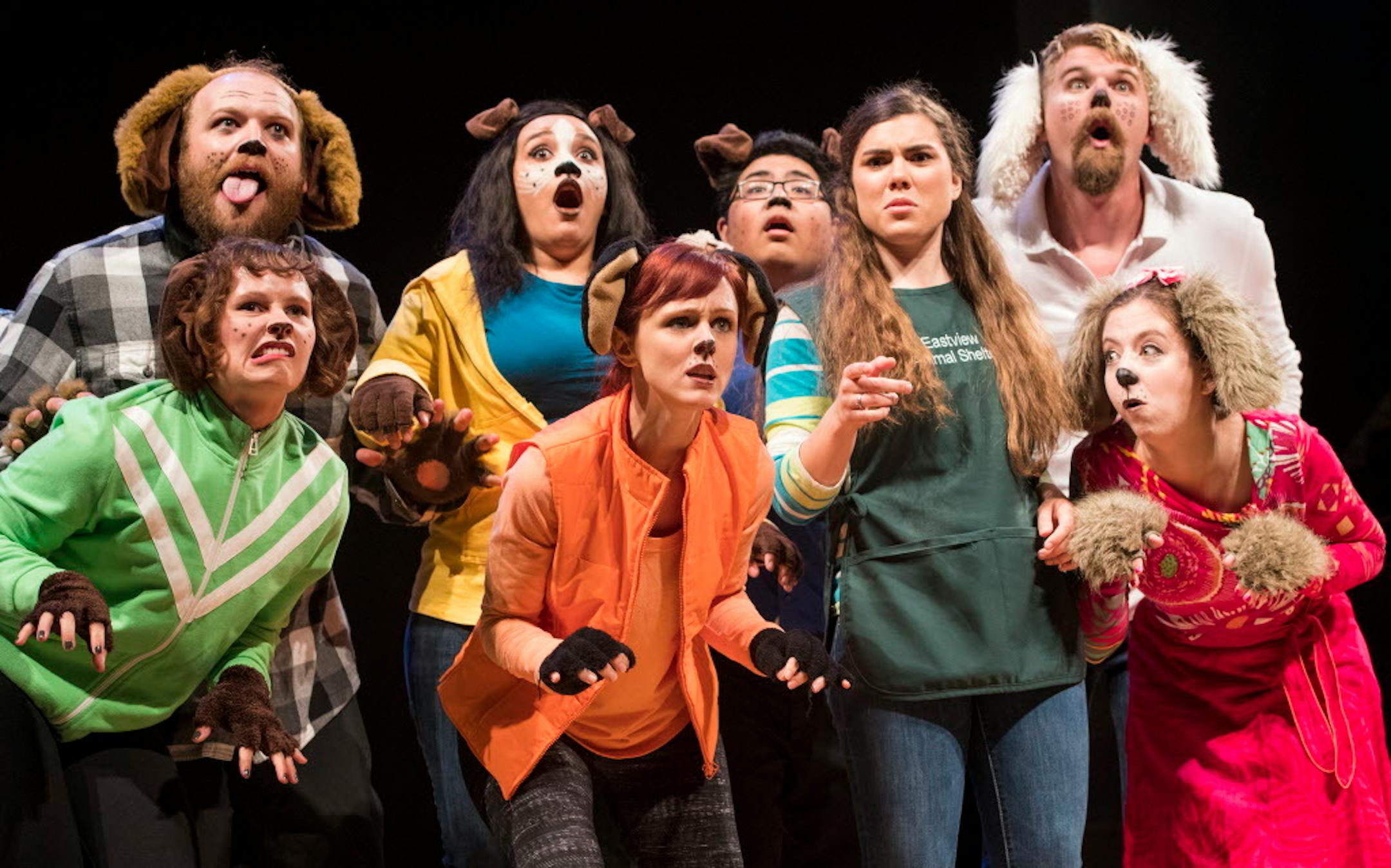
![The cast of "The Pound: A Musical for the Dogs" previewed a scene from the production at the Rarig Center on Monday night. ] Isaac Hale ï isaac.hale@startribune.com Theatre groups took the stage at the Rarig Center in Minneapolis, MN, on Monday, July 25, 2016, and previewed 3-minute acts the stage productions they'll be performing at the upcoming Fringe Festival. Approximately 30 groups took their turns showcasing productions with a variety of formats, topics and genres.](https://arc.stimg.co/startribunemedia/5Z3YEMCE7FGS4SQWAVHGRLXDH4.jpg?&w=1080)
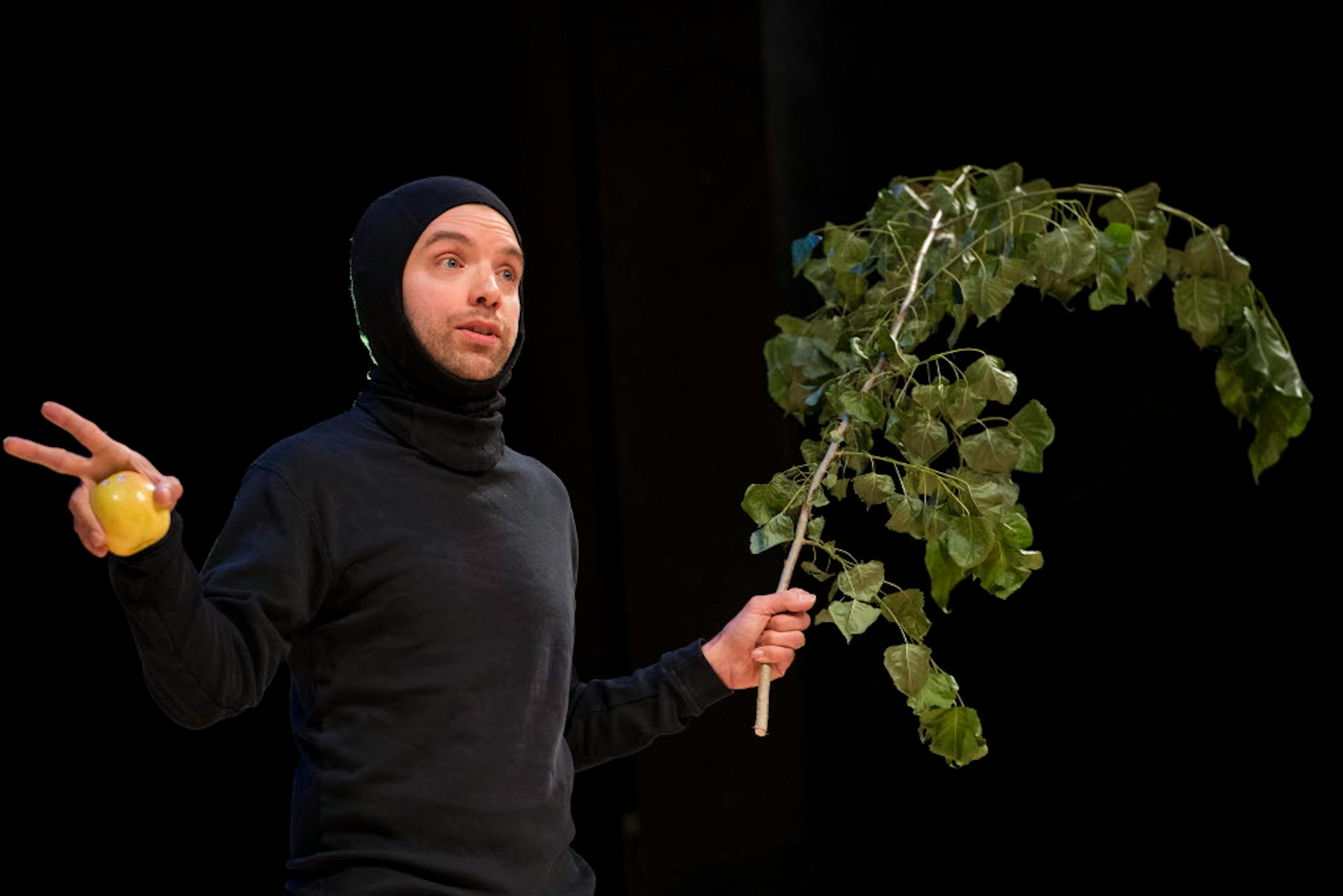
![Ben San Del, left, and Joshua Scrimshaw, playing an apple tree, previewed a scene from "Apple Picking" at the Rarig Center on Monday night. ] Isaac Hale ï isaac.hale@startribune.com Theatre groups took the stage at the Rarig Center in Minneapolis, MN, on Monday, July 25, 2016, and previewed 3-minute acts the stage productions they'll be performing at the upcoming Fringe Festival. Approximately 30 groups took their turns showcasing productions with a variety of formats, topics and genres.](https://arc.stimg.co/startribunemedia/YGJNHLAPWRSCTVO7MIEUK44U7M.jpg?&w=1080)
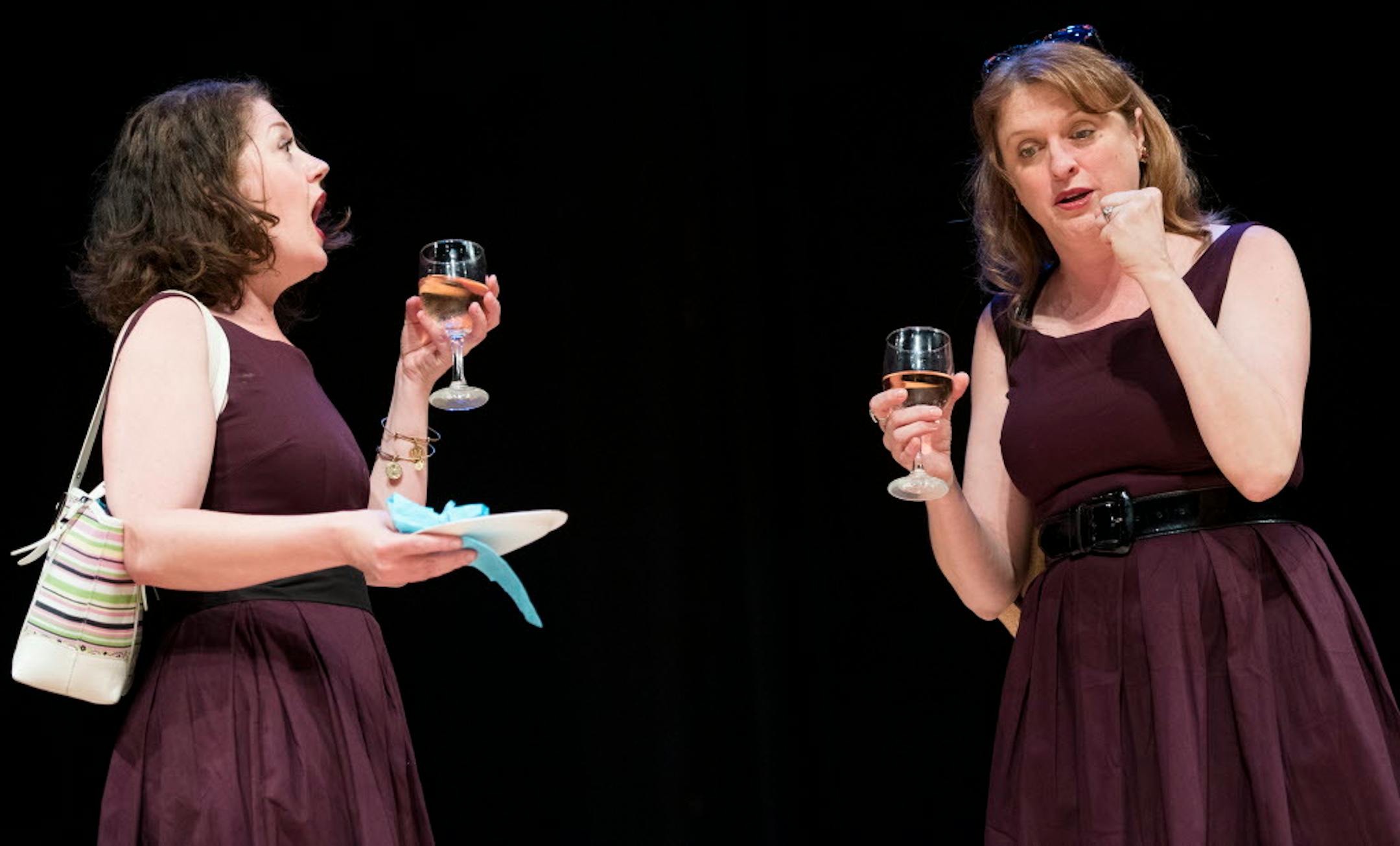
![Carolyn Pool, left, and Shanan Custer previewed a scene from "Sometimes There's Wine" at the Rarig Center on Monday night. ] Isaac Hale ï isaac.hale@startribune.com Theatre groups took the stage at the Rarig Center in Minneapolis, MN, on Monday, July 25, 2016, and previewed 3-minute acts the stage productions they'll be performing at the upcoming Fringe Festival. Approximately 30 groups took their turns showcasing productions with a variety of formats, topics and genres.](https://arc.stimg.co/startribunemedia/XRRSZWC7E2VTOODFP4XYUOZ5A4.jpg?&w=1080)
![Kate Callen, left, playing a zombie, and Conor Sullivan preview a scene from "I 'Heart' Brains" at the Rarig Center on Monday night. ] Isaac Hale ï isaac.hale@startribune.com Theatre groups took the stage at the Rarig Center in Minneapolis, MN, on Monday, July 25, 2016, and previewed 3-minute acts the stage productions they'll be performing at the upcoming Fringe Festival. Approximately 30 groups took their turns showcasing productions with a variety of formats, topics and genres.](https://arc.stimg.co/startribunemedia/E6AWWSHXT65X7VZNPNZOKEERTI.jpg?&w=1080)
![From left, Brain Hesser, Derek Ewing, Marci Lucht and Rachel Flynn previewed a scene from "Good Friday with Dillinger" at the Rarig Center on Monday night. ] Isaac Hale ï isaac.hale@startribune.com Theatre groups took the stage at the Rarig Center in Minneapolis, MN, on Monday, July 25, 2016, and previewed 3-minute acts the stage productions they'll be performing at the upcoming Fringe Festival. Approximately 30 groups took their turns showcasing productions with a variety of formats, topic](https://arc.stimg.co/startribunemedia/IRV5HTPXOGTX2D2TUDLZOAPU6Y.jpg?&w=1080)
![Angie Martin, left, and Casey Haeg previewed a scene where a couple fights over music during a car ride in "Couple Fight II: Friends and Family" at the Rarig Center on Monday night. ] Isaac Hale ï isaac.hale@startribune.com Theatre groups took the stage at the Rarig Center in Minneapolis, MN, on Monday, July 25, 2016, and previewed 3-minute acts the stage productions they'll be performing at the upcoming Fringe Festival. Approximately 30 groups took their turns showcasing productions with a](https://arc.stimg.co/startribunemedia/B3RNK2UTQ5D7WCCSDU3YCM4VQM.jpg?&w=1080)
![Joshua Scrimshaw, playing an apple tree, previewed a scene from "Apple Picking" at the Rarig Center on Monday night. ] Isaac Hale ï isaac.hale@startribune.com Theatre groups took the stage at the Rarig Center in Minneapolis, MN, on Monday, July 25, 2016, and previewed 3-minute acts the stage productions they'll be performing at the upcoming Fringe Festival. Approximately 30 groups took their turns showcasing productions with a variety of formats, topics and genres.](https://arc.stimg.co/startribunemedia/7KOOV3BERQOISPTZHKXAENXBDM.jpg?&w=1080)


