

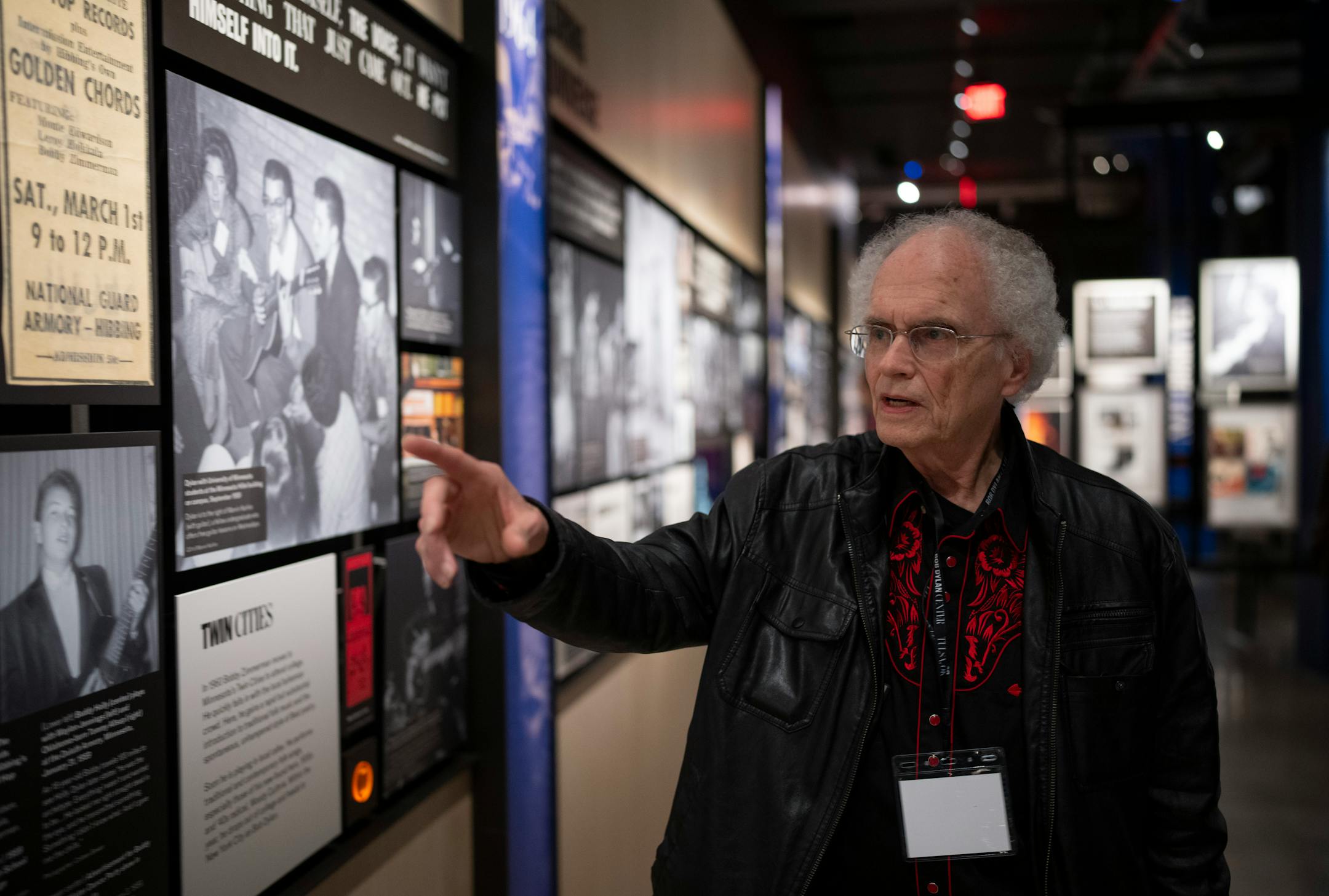
An "Inventing Bob Dylan" exhibit includes a picture of his high school rock band, the Golden Chords. The highlight is an interview with Chords drummer LeRoy Hoikkala. He died in 2020 but his daughter signed her name at The Bob on opening weekend.
A "Twin Cities" display concentrates on Dylan's days at the University of Minnesota, with a rare photo of him at the campus' Hillel House (the only young man wearing a tie and sport jacket, no less) and a shot of him performing with Spider John Koerner at the 10 O'Clock Scholar coffeehouse in Dinkytown.
In a film clip in the upstairs theater, Twin Cities musician Tony Glover talks about how he and Dylan recorded a soundtrack for a 1961 underground movie, "Autopsy on Operation Abolition." Their songs can be heard in the clip but since Dylan was under contract to Columbia Records, he was credited as "B.L. Jefferson," a nod to bluesman Blind Lemon Jefferson.
Three pocket-sized notebooks are filled with teeny handwritten lyrics for "Blood on the Tracks," which were probably crafted at Dylan's farm near Hanover, Minn., in 1974.
Biographical notes that Dylan penned for a 1964 concert at Chicago's Orchestra Hall seem to be partly fiction but wholly creative. Titling it "My Life in a Stolen Moment," Dylan says he wrote his first song in fifth grade ("For Mother") and received a B-plus for it. He says he flunked a University of Minnesota science class for refusing to watch a rabbit die. He claims to have been jailed on suspicion of armed robbery and held for four hours on a murder rap.
Dylan's little black book from 1964 is open to a page with comedian Lenny Bruce's Hollywood address and phone number — and, not surprisingly, notes for some lyrics.
A 1964 handwritten letter from Johnny Cash is addressed to "Friend Bob."
An undated postcard from Pete Seeger explains that he didn't diss Dylan for going electric at the 1965 Newport Folk Festival but rather was "furious at the distorted sound … I shoulda said 'Howling Wolf goes electric, why can't Bob?'"


