![Leaves blow around, whipped up by high winds as people walk along the 10th Avenue Bridge after an official reopening ceremony Tuesday, Nov. 16, 2021 in Minneapolis, Minn. The 1929-era bridge over the Mississippi River has been rehabilitated and a new water main relocated under the river.]](https://arc.stimg.co/startribunemedia/RCFKIUA3WQXQ5RAVPIDZE6QDVM.jpg?&w=1080)
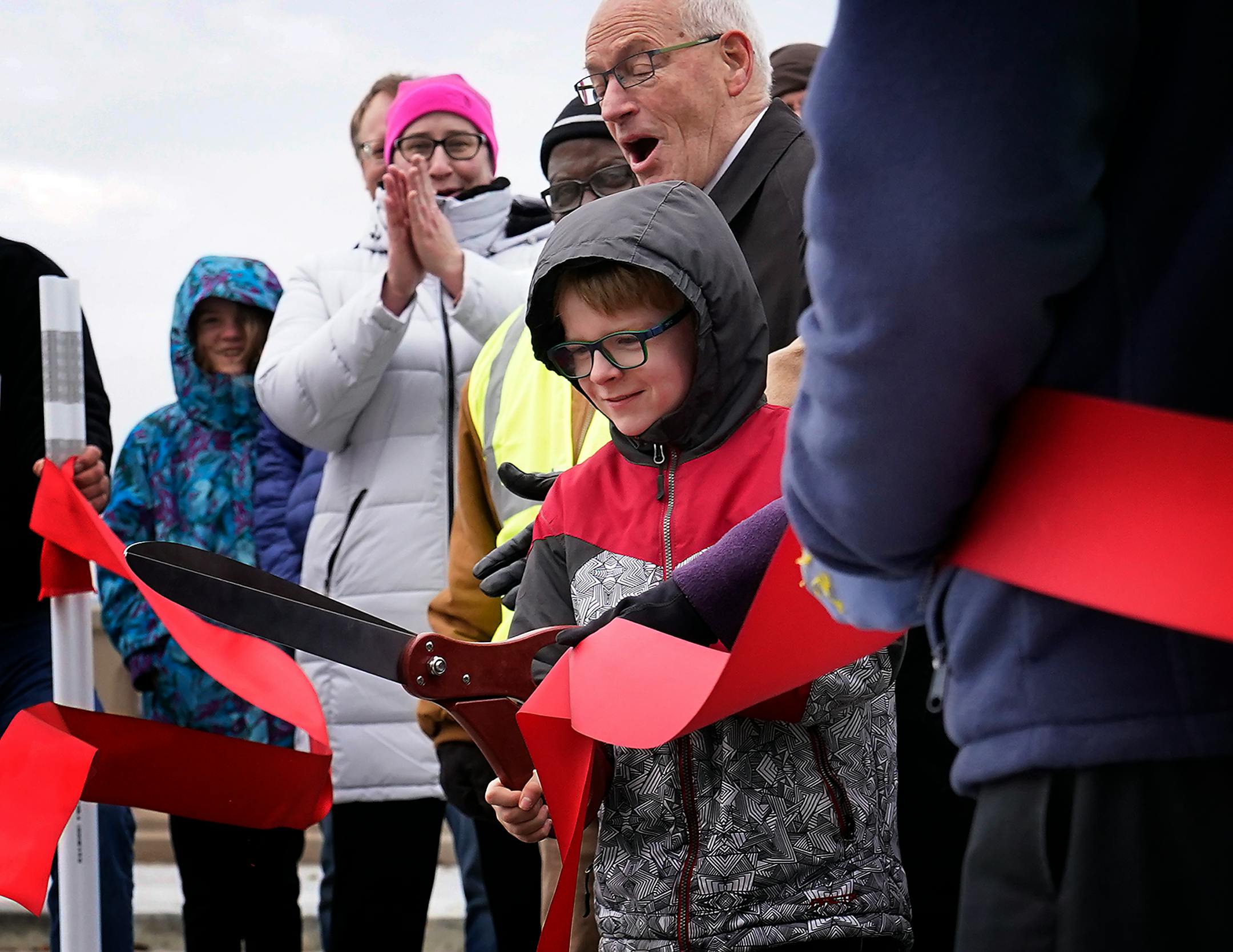
With the snip of scissors cutting a red ribbon, Minneapolis city officials on Tuesday opened the historic 10th Avenue bridge marking the end of a $60 million rehabilitation project that took almost two years.
Barricades will come down Wednesday allowing traffic and pedestrians to cross the span adjacent to Interstate 35W that connects the Marcy Holmes and Cedar-Riverside neighborhoods, and provides a direct route for scores of University of Minnesota students needing to cross the Mississippi River each day.
"It will be very much a time saver," said Adam Dickey, a U of M junior studying at the Carlson School of Management who on Tuesday strolled across the bridge before its official opening.
For the past two years, Dickey has had to find alternate routes from his student apartment to class, a trip he makes two to three times a day. "I've have had to find other ways. This will save 10 to 15 minutes."
First opened in 1929, the 2,174-foot-long bridge with its seven distinctive arches had not received a lot of attention in its lifetime. The sidewalk and bridge railings were replaced in the 1950s, and the driving surface was replaced in the 1970s. Those were the last major upgrades to the bridge, which is on the National Register of Historic Places.
Before COVID the bridge was used by about 10,000 vehicles and 2,000 bicyclists and pedestrians daily. It connects SE. 10th Avenue on the east side of the Mississippi River with S. 19th Avenue on the west side and had been closed since March 2020. In the many months that followed, crews fixed leaking expansion joints and drainage elements that caused concrete components to deteriorate, particularly in the arches and support columns which had cracks and exposed rebar in places.
While they were at it, crews also removed a failing water main on the underside of the bridge. It was replaced with a new one five feet in diameter placed beneath the river. The bridge deck was also reconfigured with bike lanes and pedestrian-friendly sidewalks, adding another chapter to the bridge's storied history.
"We have multi-modal transportation for the first time," said Bryan Dodds, deputy public works director and city engineer.