

Novel.
As a noun, "an invented prose narrative that is usually long and complex and deals especially with human experience through a usually connected sequence of events." As an adjective, "original or striking especially in conception or style."
Combining these dictionary definitions, an insightful writer might weave a story about the era's defining issues, like a pandemic. Or race relations, religious or political demagoguery, or the deepening divide between rural and urban America.
One totemic tome about just one of these themes would be significant.
Writing about all of them? Extraordinary.
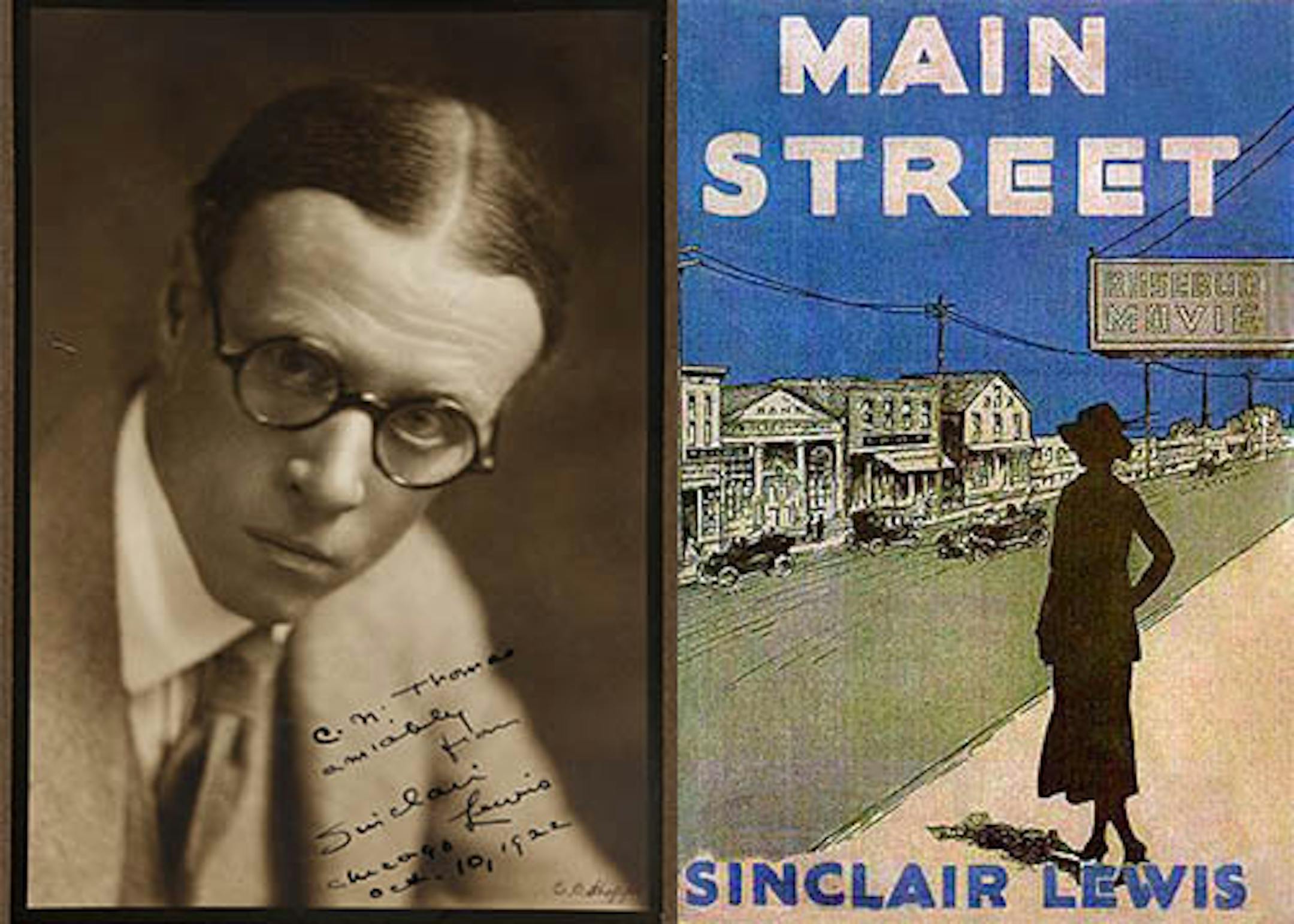
Yet one Minnesotan did. Only his seminal sentences weren't written amid today's turbulence but beginning a century or so ago. Or 1920, to be exact, in the case of "Main Street," a searing satirical depiction of small-town Midwestern life. Actually, small-town life in Minnesota, to be more pointed — which writer Sinclair Lewis clearly was, spearing his hometown of Sauk Centre in the unsparing classic.
His protagonist (and antagonist to the locals in Gopher Prairie, "Main Street's" stand-in for Sauk Centre) is Carol Kennicott, a college grad who leaves St. Paul to marry the town doctor. Her aspiration to bring beauty and culture to the hamlet becomes desperation as some of the small town's small minds resent, and reject, her repeated attempts at improvement.
The novel was a literary sensation. Its author became one, too, winning a Pulitzer Prize before becoming the first American to win the Nobel Prize for Literature. Lewis wasn't just a literary figure, but a cultural one, captured on the covers of Time (twice) and Newsweek, with the headline: "Sinclair Lewis: Out to Jolt the Nation."


