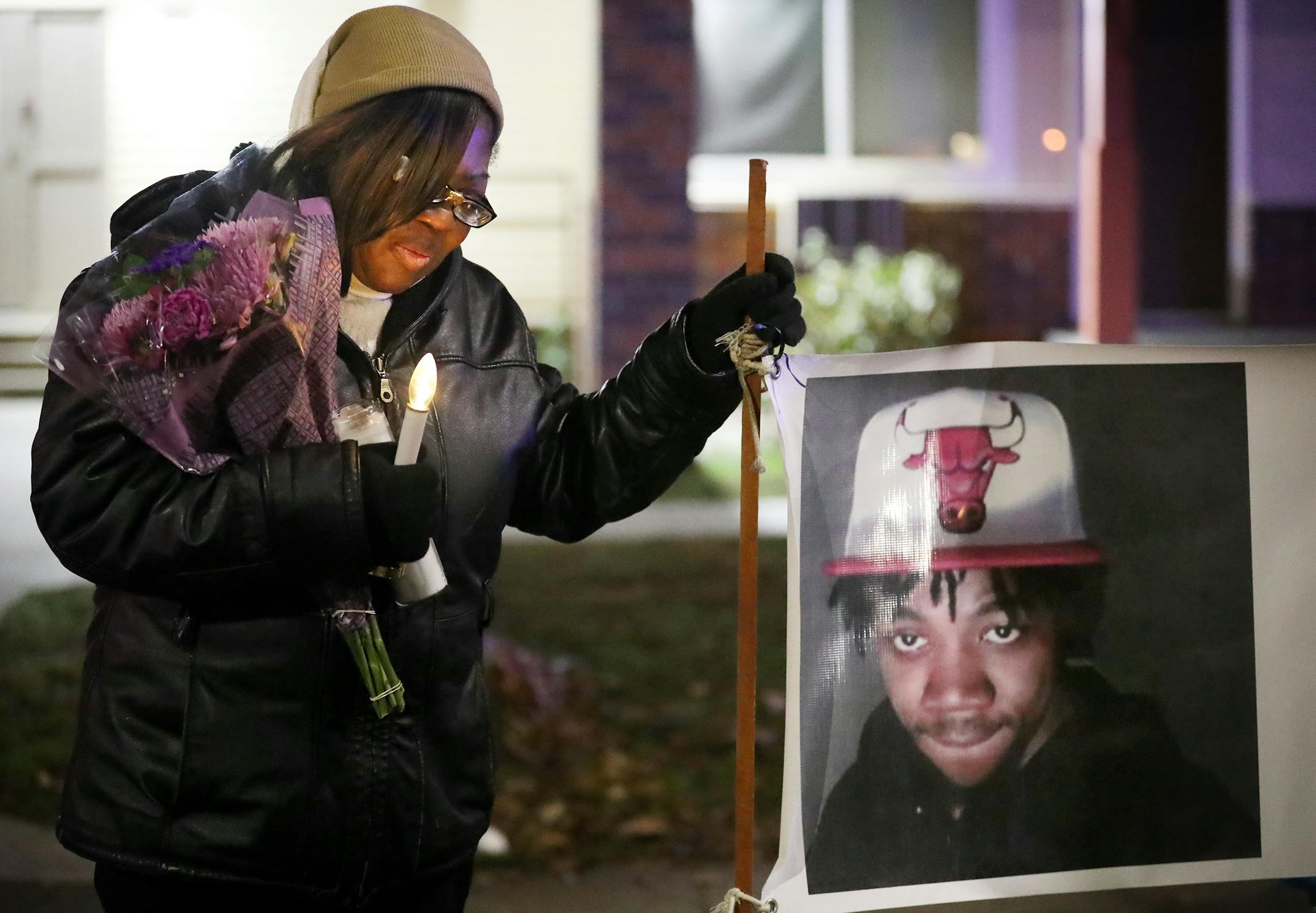
Jamar Clark’s eyes peer down on Plymouth Avenue.
His face, forever 24, is plastered to a tree on this North Side street, overlooking the spot where he was fatally shot by Minneapolis police during a brief confrontation in 2015.
Irma Burns returns to the space, now a manicured plot adorned with white crosses and a stone angel, when she wants to feel close to her son.
A decade later, the pain remains acute.
“Some days I can’t get up out of the bed,” said Burns, 63. “I don’t wish this on my worst enemy.”
Clark’s killing marked a watershed moment in the Twin Cities police accountability movement. Protesters maintained an unprecedented 18-day occupation outside the Fourth Precinct police station and hundreds marched in his name, shutting down Interstate 94 amid demands for authorities to release video evidence of the shooting.
Public outrage about the case hastened Hennepin County’s elimination of the secretive grand jury process for charging decisions in police use-of-force cases and heightened public consciousness about police brutality, years before George Floyd’s death by the same Police Department sparked a global racial reckoning.
“We were able to exert political power,” said Nekima Levy Armstrong, a civil rights attorney and then-president of the Minneapolis NAACP.