

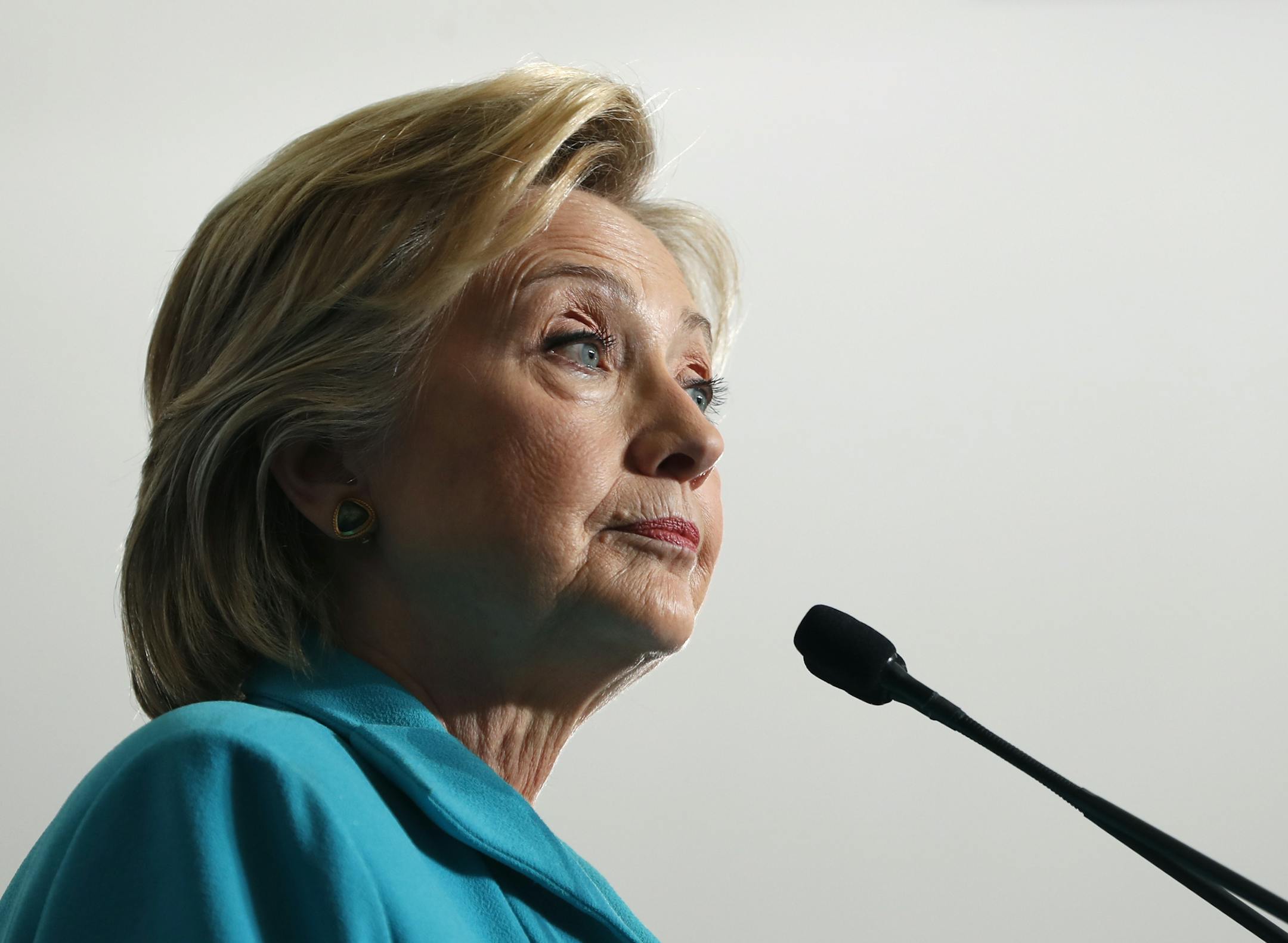
Like many politicians, Hillary Clinton does not enjoy giving news conferences, and of late she has decided not to bother; the last one she held was in December. But this symptom of her strained relationship with the press is itself becoming a source of displeasure from reporters, and she and her campaign find themselves being asked about it again and again.
The Clinton campaign protests that she has done hundreds of interviews, which is basically true. An NPR analysis found that while Clinton has indeed done 350 interviews in 2016, most of them were for television or radio (where they're usually shorter), many were with local outlets, and some were with people who weren't actually journalists.
In any case, it's obvious that reporters aren't going to let this go, and they're being encouraged by Republicans. That increases the chances that in order to put the issue to rest she'll give in and have a news conference. Should that happen, it will probably be much less interesting and enlightening than we'd hope for, because news conferences are actually not a uniquely revealing format for candidates. Skilled politicians can bob and weave to avoid questions they'd prefer not to answer. The fact that each reporter will get one crack at the candidate encourages them to come up with a dramatic "gotcha" that might get replayed on the news. So while news conferences sometimes produce memorable moments, they seldom produce anything genuinely enlightening.
But it doesn't have to be that way. Here are some questions reporters could ask, questions that aren't about the current state of the polls, or about saying "people don't like you — how do you explain that?" (which Clinton gets asked innumerable times) or about trying to get her to say something nasty about Donald Trump. Good questions might help illuminate the job she'd be doing as president, or some facet of policy or her own thinking. Here are 10 examples:
• There's no question that the "vast right-wing conspiracy" you described almost 20 years ago will be mobilized in force to undermine your presidency. There will be lawsuits, a blizzard of Freedom of Information Act requests, constant congressional investigations, and who knows what else. From what you've seen, how does that opposition affect the work the administration does? Are there lessons from how your husband's administration and Barack Obama's administration dealt with it — not to mention your own experience with things like Benghazi and the e-mail controversy — that you plan to apply?
• You've said it was a mistake to use a private e-mail system while you were in the State Department, and you apologized for it. One of the issues that controversy raised is the question of the security of intra-government communication. If you become president, how do you think people who work for you should communicate electronically, and what would you like to change about the way federal government systems operate now? Are you going to be giving special instructions about what people should and shouldn't use e-mail for?
• You often point to the successes that your husband's administration had, particularly on the economy. But there's a case to be made that he was mostly lucky to be in office when the first tech bubble inflated. How much control do you think the president really has over the state of the economy? How do the limits of that influence affect the policy choices you'll make?
• The Affordable Care Act has been a great success in many ways, but the exchanges are experiencing problems now, with some insurers departing because they say they aren't making enough money. Can you name two or three of the most important changes you'd like to make to the law to shore it up? Do you think it's possible to get Republicans, who have voted to repeal the ACA over 50 times, to ever pass a bill to improve it when they're so determined to destroying it completely?


