

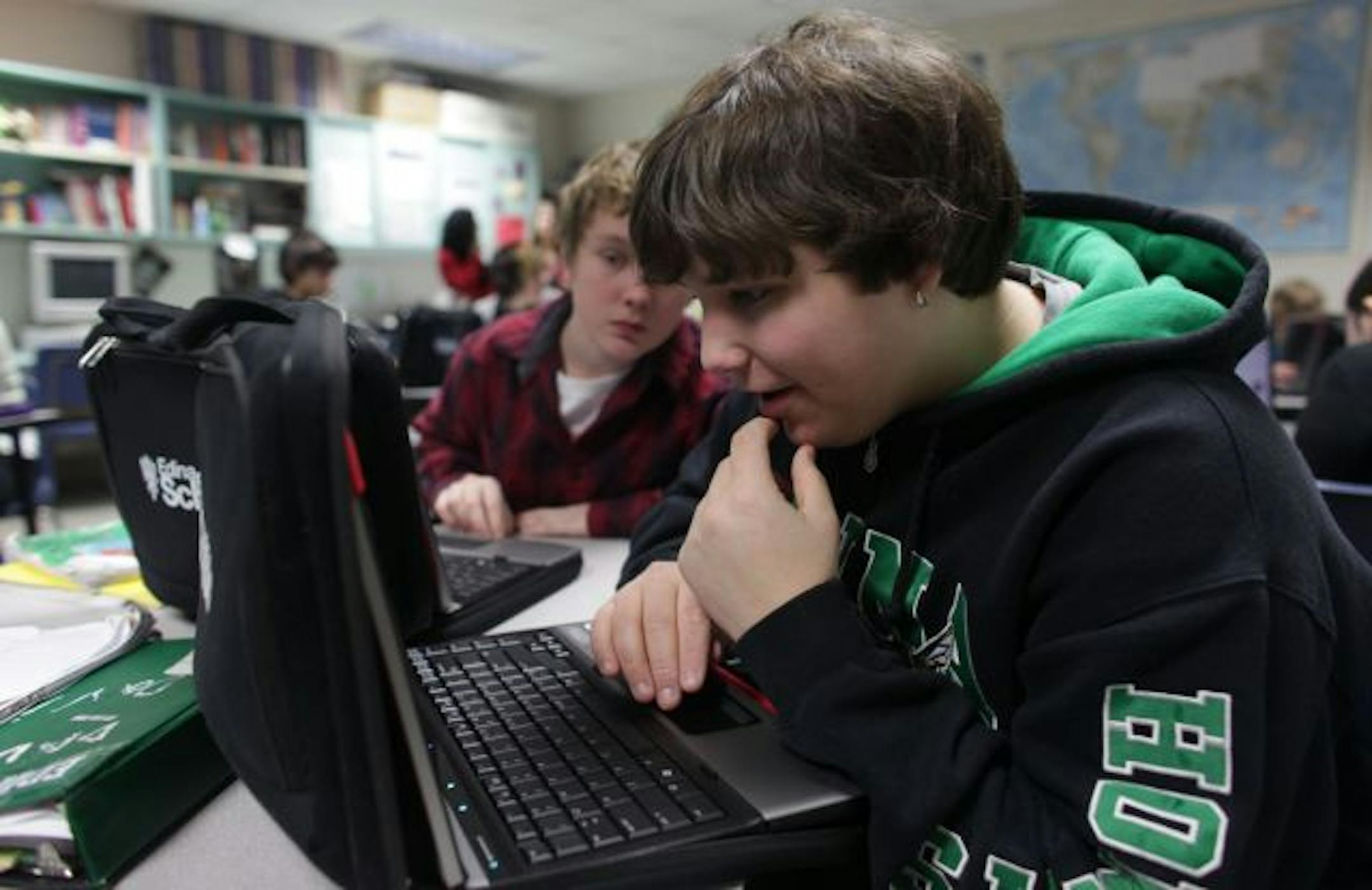
A computer for every student: It's a dream of many K-12 school leaders, who predict that students will soon use personal laptops or similar devices in class every day.
But who will pay for them?
Fighting to stay relevant in an increasingly tech-savvy society, some metro-area school districts have spent big bucks to buy take-home laptops for students in entire classes -- even entire schools.
But several have run into the same problem: They can't afford to keep buying all those laptops.
In the Stillwater district, considered a local technology pioneer, the school board recently discontinued a program that had put a take-home laptop in the hands of every student at Oak-Land Junior High. In Edina, a similar pilot project with 150 eighth-graders ended after a year. In Hopkins, a program that sent laptops home with about 650 elementary students a year was retired this spring.
"It was an extraordinarily beneficial program for those classes and teachers," said Sid Voss, the Hopkins district's director of educational technology. "But we also knew it was affecting our ability to maintain the technology resources for students across the district. ... We were really being squeezed."
Instead, those districts and others are taking a variety of steps to increase technology access: Buying more laptops that stay on campus. Opening up school wireless networks so students can get online with their own Internet devices. Working with vendors to give families discounts on computers.
And some districts are looking at cheaper iPads or netbooks for one-to-one computing programs.


