Zift Medical has a small footprint, but it's hoping to have a major impact in aesthetic medicine.
The four-year-old med-tech start-up has eschewed staff in favor of contract work and outsourcing. Rather than create a headquarters, Zift is crashing with colleagues at Fridley's Resolution Medical who had extra office and clean-room space. Instead of pinning its hopes on venture capital, Zift Medical is raising money itself and spending judiciously.
The result is that this two-person start-up has conceived, designed and begun human testing of a tiny medical device while raising $3 million. Zift hopes to sell the device one day to an established player in aesthetic medicine, like Botox-maker Allergan or breast-implant maker Sientra.
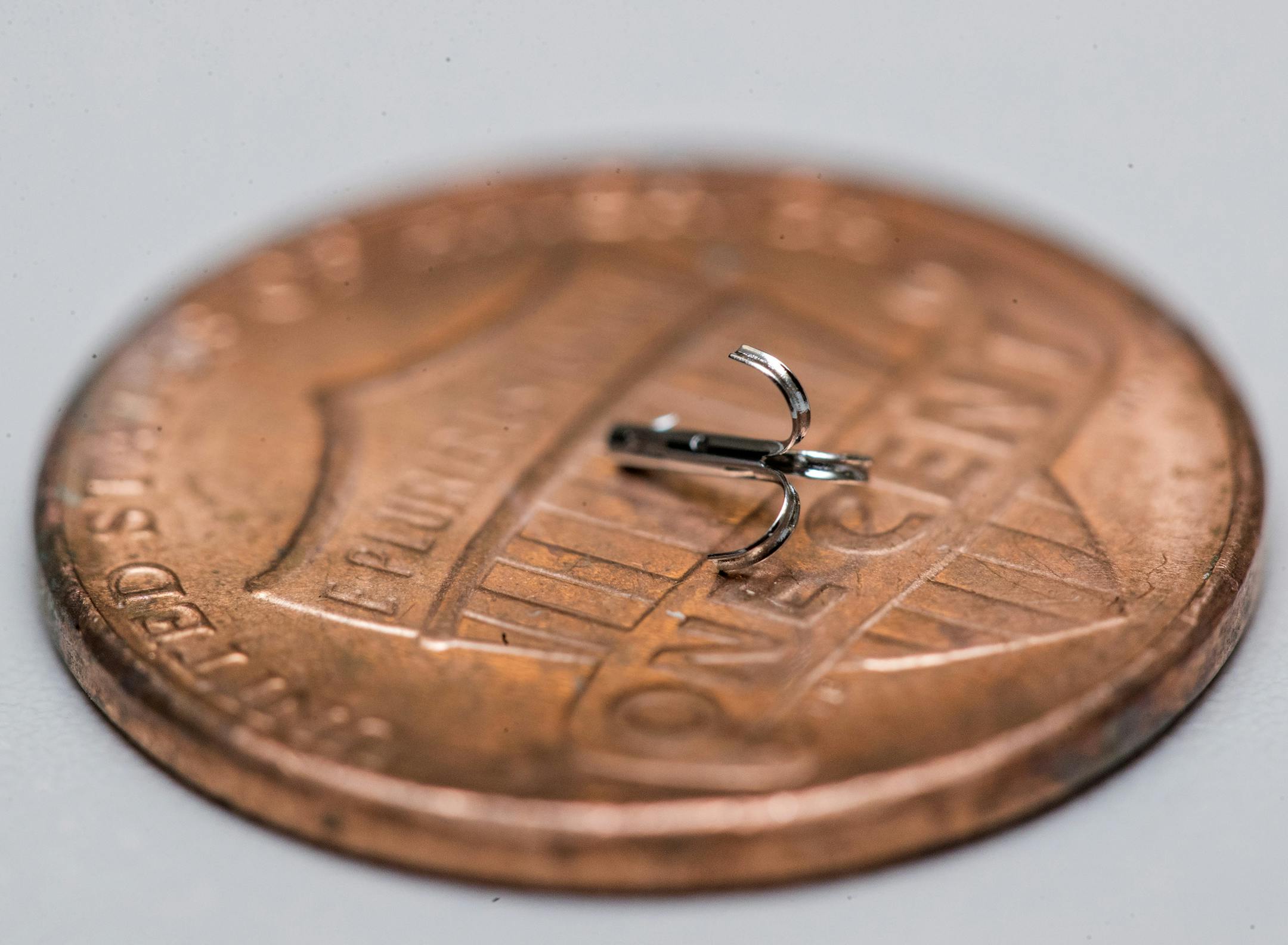
Zift's device, which is about the size of a gnat when implanted, is intended as a cheaper, less painful way to get brow-lift surgery. Ongoing experiments will determine how long it works. But even Zift's first-in-human experiments are different from standard industry practice, thanks to a Food and Drug Administration program that is allowing the first implants to happen in the U.S. instead of overseas.
"Initially, we were thinking we'd end up in Paraguay or something for the clinical trial," said Zift Medical CEO Eric Simso, an industry veteran who founded the company with engineer and fellow med-tech vet David Blaeser. "It is so nice to be able to go across town [to view] a procedure, and then the follow-up is all done ... in Edina."
Zift Medical used an alternative pathway to get the FDA to approve its first-in-human study. Known as an early feasibility study investigational device exemption, or EFS IDE, the approval is allowing Zift to do its initial pilot study of 20 people from Minnesota and Wisconsin to gather early data on proof of principle and safety.
Ultimately, the company's innovative approach and efficient cost structure will matter less than the ultimate question: Does the Zift device work as intended?
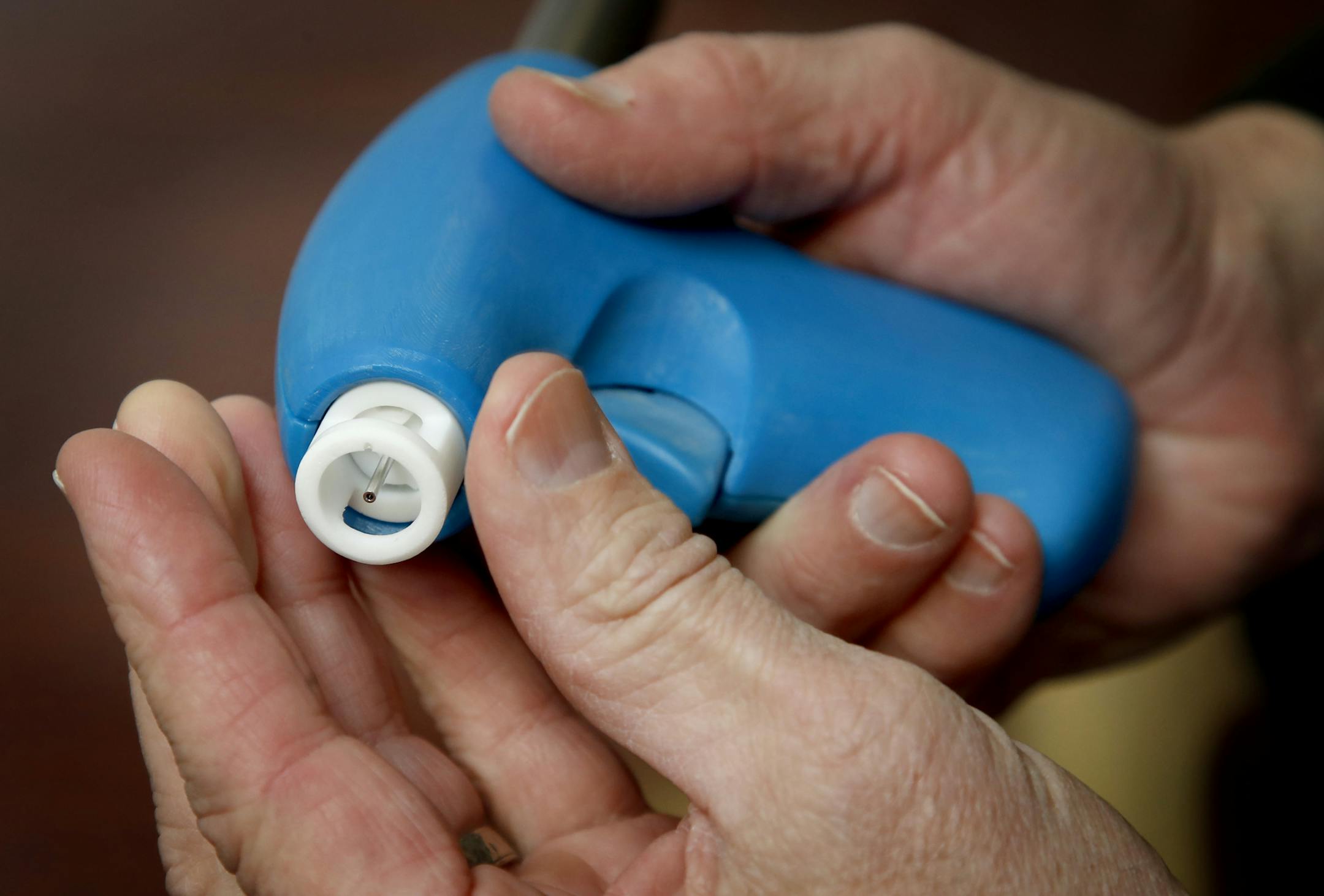
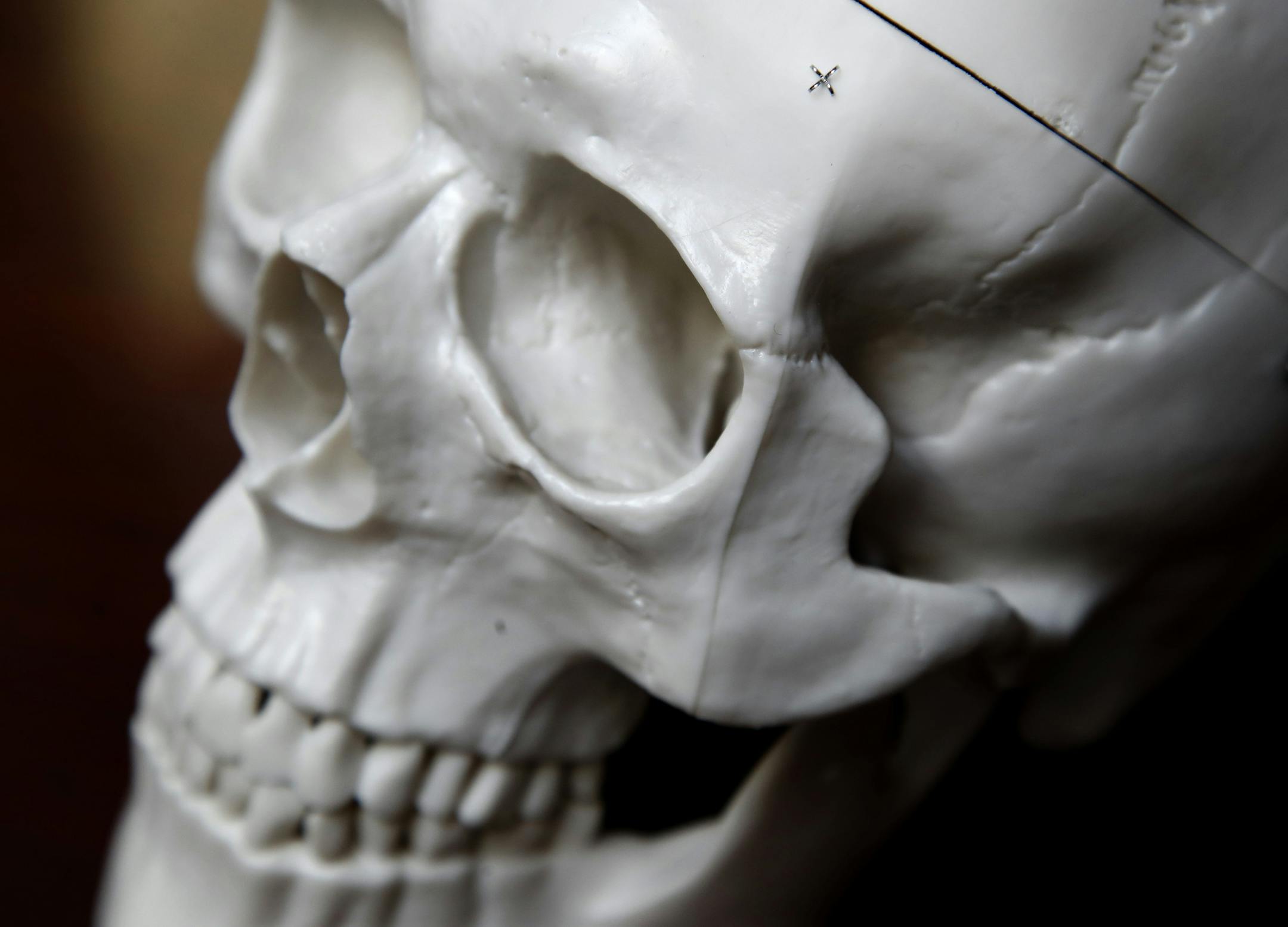
The device consists of a thin nitinol tube about as wide as the tip of a disposable pen, which is placed in a millimeter-wide "incision" in the forehead and then fired a few millimeters into the skull using a hand-held tool that looks a bit like a glue gun.