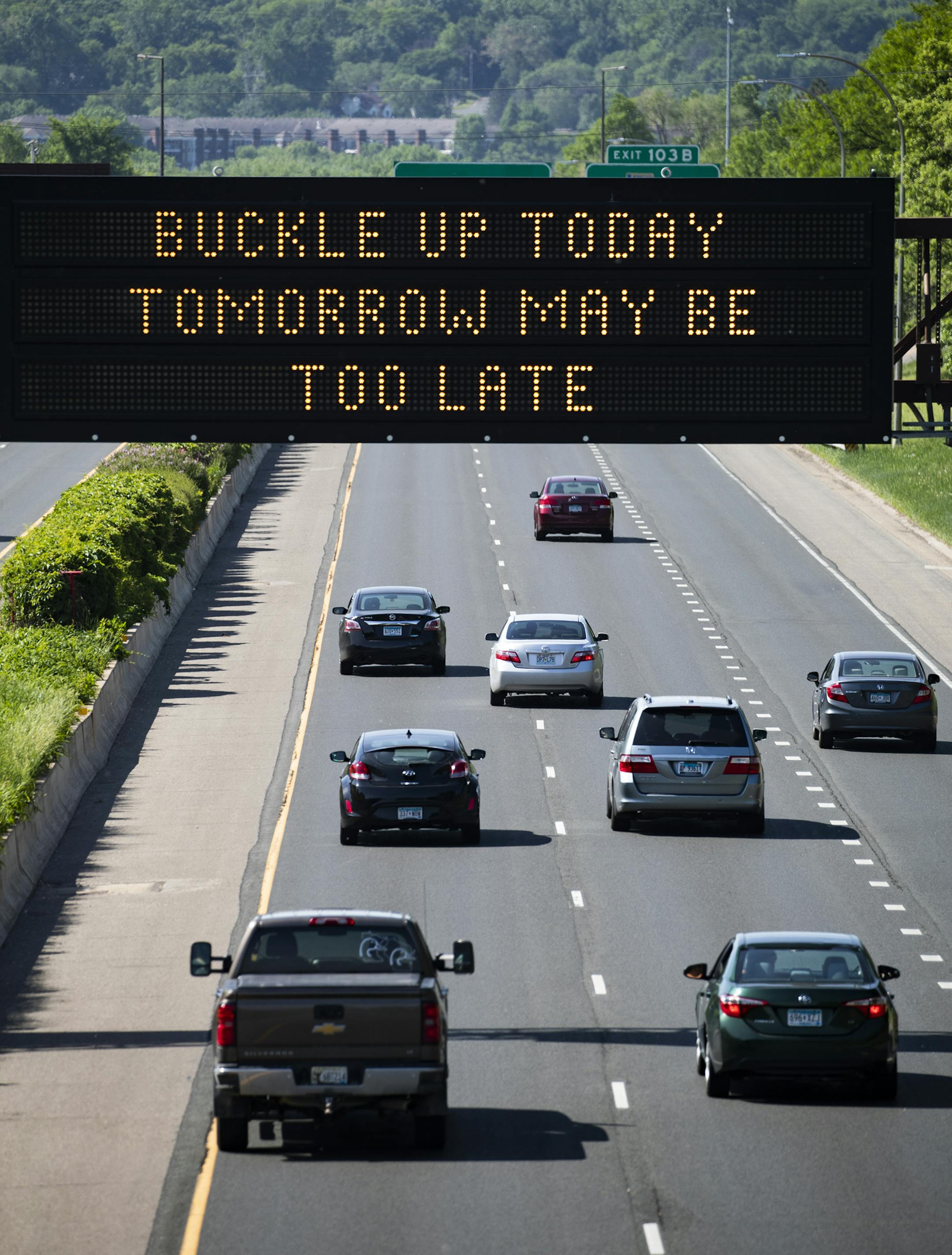
Shreya Dixit, a promising 19-year-old honor student from Eden Prairie, was killed nearly 11 years ago by a distracted driver on Interstate 94 while returning home from the University of Wisconsin.
Her family was consumed with grief, but they also vowed to educate the public about the dangers of distracted driving.
"I would have gone crazy if I didn't do something," said Vijay Dixit, Shreya's father. "This is what I'm going to do until my last breath."
A big part of that effort involves working with the state's Toward Zero Death (TZD) initiative, which aims to eliminate highway fatalities in Minnesota. Skeptics might dismiss such a notion, as motorists increasingly text, e-mail and post on social media while driving. And a measure to curtail distracted driving fizzled at the Legislature this spring.
But since the state departments of Transportation, Public Safety and Health launched the TZD initiative in 2003, roadway deaths in Minnesota have decreased to 358 last year, a decline of 45 percent. Modeled after a safety program in Sweden, TZD uses education, engineering, enforcement of safety laws and enhanced emergency medical and trauma services to pare highway deaths.
"It is absolutely working," said Dixit. "Achieving zero deaths is a difficult goal, but states like Minnesota that have committed to that goal see the numbers [of deaths] are going down."
Minnesota runs counter to national trends. While traffic deaths across the country declined by 40 percent between 1985 and 2011, the number has increased since then to 37,461 in 2016. Minnesota was the only state in the Midwest to report a decline in traffic fatalities last year; Wisconsin, Ohio, Michigan, Indiana and Illinois all saw increases.
Liisa Ecola, an analyst with the California-based RAND Corp., was initially skeptical about the Vision Zero program in Sweden. "But they've made enormous improvements on what was already a very good record. I think that's very convincing," she said.